How to Promote Affiliate Products Without Being Pushy
Many beginners worry that affiliate marketing will make them sound like a salesperson.
They do not want to annoy readers. They also do not want people to think they only care about earning a commission.
That concern is understandable.
Good affiliate marketing should not feel pushy. It should feel helpful.
- Your job is not to pressure someone into buying.
- Your job is to help them understand a problem, compare possible solutions, and make a better choice.
When you learn how to promote affiliate products effectively, your content becomes more useful and your recommendations feel more trustworthy.
The goal is not to hide the promotion. It is to make the recommendation a natural part of genuinely helpful content.
New to the overall process? Start with the complete Affiliate Marketing for Beginners guide to learn how affiliate programs, tracking links, content, and commissions work together.
Affiliate disclosure: This article may contain affiliate links. If you purchase through one of these links, I may earn a commission at no additional cost to you. I only recommend resources that I believe may be useful for beginners.
Why Affiliate Promotions Can Feel Pushy
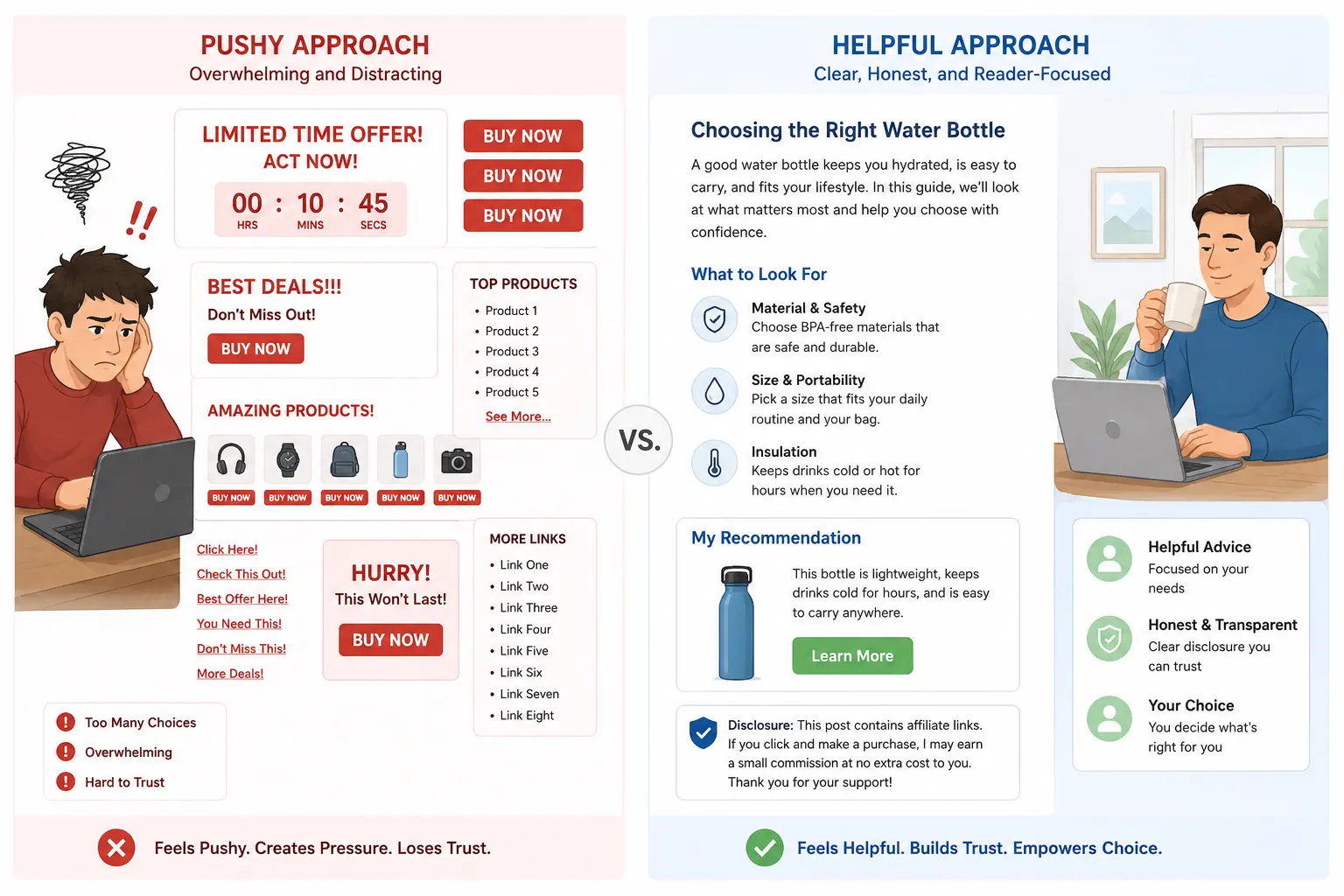
Affiliate promotions often feel pushy when the product appears before the help.
A reader visits a page because they have a question. They may want to solve a problem, learn a skill, save time, or avoid a mistake.
If the first thing they see is a large button telling them to buy something, they may leave.
Too many links, bold promises, or urgent messages can also make readers uncomfortable.
People usually become more open to a recommendation after they understand three things:
- You understand their problem.
- You have given them useful information.
- The product is relevant to what they need.
The best way to promote affiliate products is to build the recommendation into helpful content.
Before adding more affiliate links, build useful pages around these affiliate marketing content ideas so each recommendation has a clear purpose.
Start With the Reader’s Problem
Effective affiliate product promotion begins with understanding what the reader needs, not with choosing the product that pays the highest commission.
Before choosing a product, start with the reader.
Ask what they are trying to achieve.
A beginner may be looking for a simple website builder, email marketing service, keyword tool, training course, or content planner.
- Your article should first explain the problem.
- Show why it matters and
- What the reader should look for in a solution.
Only then should you introduce a product.
Instead of saying, “Buy this tool because it is great,” you can say, “Here are the features that matter, and here is one option that may suit a beginner.”
The second approach gives the reader more control.
How to Promote Affiliate Products With Helpful Content
One of the easiest ways to avoid sounding pushy is to lead with useful information.
A good article should still help the reader even if they never click your affiliate link. A clear content marketing strategy helps you balance education, trust-building and suitable promotions.
Understanding how affiliate marketing works can help you see why useful content should come before the product recommendation.
You could create:
- Step-by-step tutorials.
- Beginner guides.
- Product comparisons.
- Checklists.
- Common mistake articles.
- Frequently asked question posts.
- Resource pages with carefully selected tools.
For example, an article about choosing an email marketing service should explain what beginners need. It could cover ease of use, pricing, templates, automation, support, and list limits.
After explaining those points, you can recommend one or two suitable services.
The product supports the lesson. It does not replace the lesson.
Recommend Products That Fit the Topic
An important part of learning how to promote affiliate products is choosing offers that closely match the reader’s problem.
Your recommendation will feel more natural when you choose the right affiliate program for your audience, topic, and experience level.
Do not add an affiliate product simply because it pays a commission.
The product should match the subject of the page.
A visitor reading a post about keyword research may be interested in a keyword tool. They are less likely to want an unrelated website theme or training product.
Before adding a recommendation, ask:
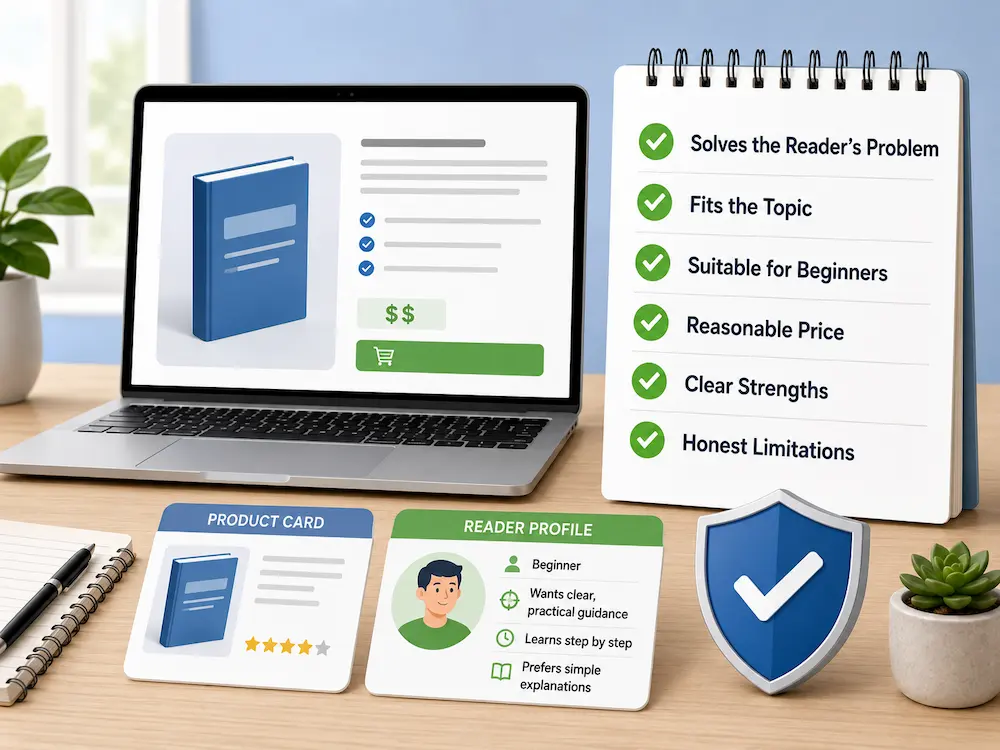
- Does it solve the problem discussed in the article?
- Would I mention it without an affiliate program?
- Is it suitable for the reader’s experience level?
- Does the price make sense for my audience?
- Can I explain its strengths and limits?
If the answer is no, leave it out.
A suitable product may be available through a company’s own program or through a larger platform. Read what an affiliate network is before deciding which type of account to open.
Promoting fewer products can create more trust than placing links everywhere.
Explain Who the Product Is For
Honest affiliate recommendations explain both the benefits and the limits of a product.
A trustworthy recommendation should not claim that a product is right for everyone.
An important part of learning how to promote affiliate products is explaining exactly who may benefit from the offer and who may be better suited to another option.
Explain who may benefit from it.
You could say:
“This tool may suit beginners who want a simple dashboard and guided setup.”
You could also explain who may not need it:
“It may not suit experienced users who need advanced reporting or complex automation.”
This wording helps the right people recognise whether the product matches their needs.
Honest limits do not weaken a recommendation. They often make it stronger.
A detailed product review gives you room to explain both the benefits and limitations of an offer before asking the reader to take action. See how to write a product review that puts the reader’s decision first.
Show the Product in a Real Situation
Readers understand a recommendation better when they can see how the product may be used.
Instead of listing features, connect them to real tasks.
- A keyword research process can help find questions for future posts.
- An email service can send welcome messages.
- A planning tool can organise content ideas and deadlines.
Screenshots, examples, and short walkthroughs can make a product easier to understand.
You do not need dramatic results. A modest example is often more believable.
- Show the process.
- Explain what the product does.
- Let the reader decide whether it is useful.
Use Soft Calls to Action
A call to action tells the reader what they can do next.
It does not need to sound urgent.
When you understand how to promote affiliate products naturally, your calls to action become helpful next steps instead of sales pressure.
Pushy calls to action often use pressure:
- Buy now before it is too late.
- You cannot succeed without this.
- This is the only tool you will ever need.
A softer call to action offers a choice:
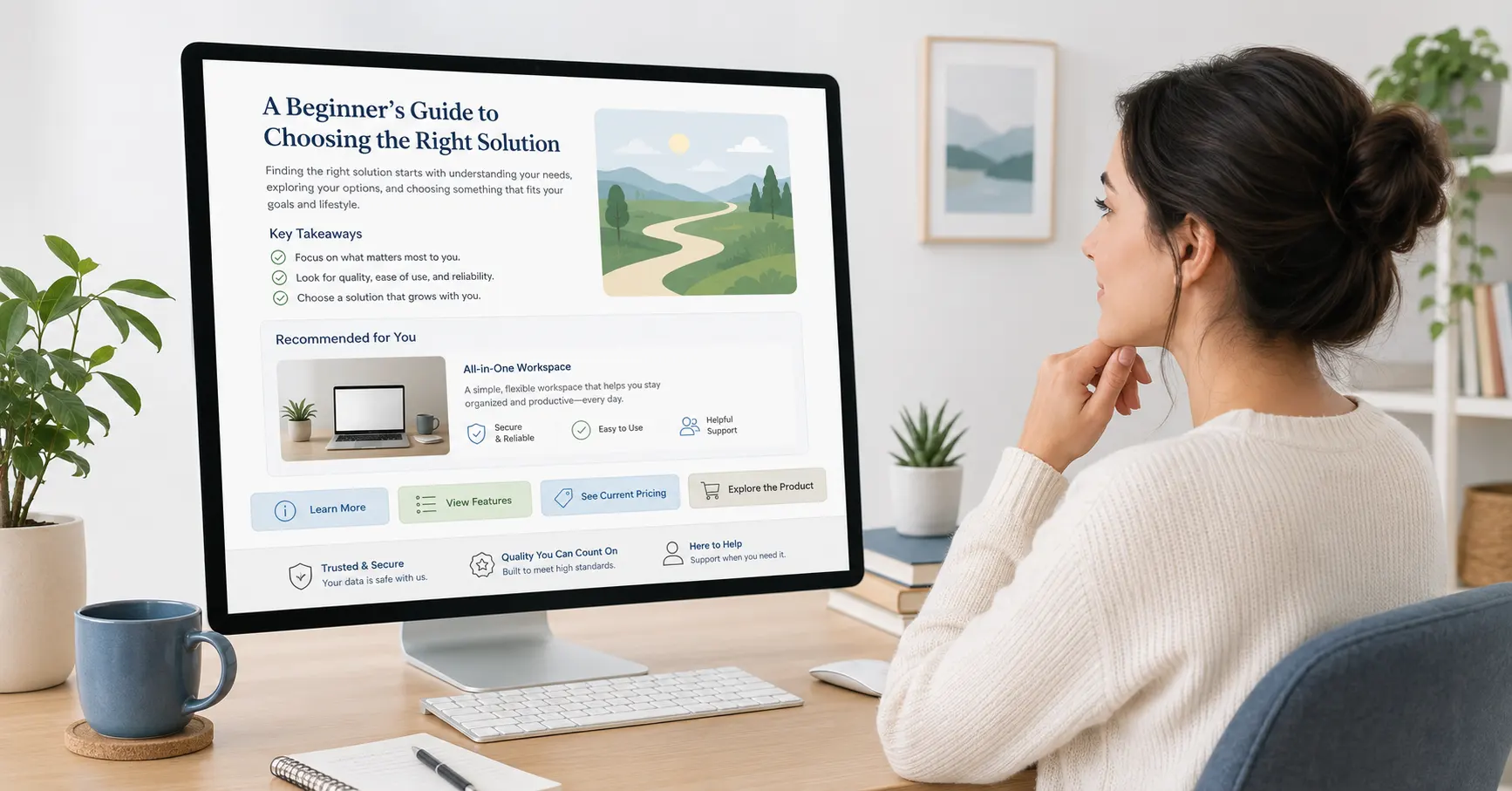
- Learn more about the tool.
- See the current features and pricing.
- Explore whether it suits your needs.
- Take a closer look at how it works.
These phrases support the reader rather than push them.
Place the call to action after a useful explanation. The reader then understands why the link is there.
Share Personal Experience Carefully
Personal experience can make affiliate content more useful.
Explain what you liked, what you found difficult, and what type of user may benefit.
However, do not pretend you have used a product when you have not.
You can still write helpful content based on careful research. Just make that clear.
For example:
“Based on the listed features, this may suit beginners who need a simple starting point.”
Avoid exaggerated claims about income, speed, or guaranteed results. Affiliate products are tools or resources. They cannot promise success on their own.
Include a Clear Affiliate Disclosure
Readers should know when a link may earn you a commission.
Place a clear affiliate disclosure where people can see it before they reach an affiliate link.
A simple disclosure could say:
“This post may contain affiliate links. If you make a purchase through one of these links, I may earn a commission at no extra cost to you.”
Do not hide the disclosure at the bottom of the page or use unclear wording.
Transparency helps readers understand the relationship.
Knowing how to promote affiliate products responsibly includes making your affiliate relationship clear before asking readers to consider a recommendation.
It also shows that you are not trying to hide your reason for including the link.
The FTC’s disclosure guidance explains that financial relationships should be disclosed clearly and in a place readers can easily notice.
Read our Affiliate Disclosure for more information about how affiliate links are used on this website.
Clear disclosures and honest recommendations are essential parts of ethical affiliate marketing because they allow readers to make informed decisions.
Being upfront about commissions can make a recommendation feel more transparent, not more sales-focused. See these simple affiliate disclosure examples for wording you can adapt.
Balance Affiliate and Non-Affiliate Content
Not every post needs to promote something.
Some articles should focus only on education. You may publish a guide, checklist, or common question post without recommending a product.
This balance shows that your website exists to help readers, not only to generate clicks.
An educational article can link to a deeper comparison. That comparison can then include relevant affiliate links.
This creates a natural path:
Helpful article → deeper guide → product recommendation → reader decision
Promote Affiliate Links Through Email Without Constant Selling
Email can help promote affiliate products, but every message should not be a sales email.
Email is also a useful way to practise how to promote affiliate products through education, useful advice, and carefully timed recommendations.
Send useful tips, short lessons, updates, checklists, and links to helpful articles.
When you recommend a product, connect it to the email topic.
An email about planning weekly content could mention a tool that organises ideas.
You can also send readers to a helpful article instead of directly to a product page.
The article can explain the product, identify who it suits, and include your disclosure.
This is one of the safest ways to learn how to promote affiliate links without making every message feel like a pitch.
Ways to Promote Affiliate Products Across Different Channels
There are several ways to promote affiliate products, but each platform requires a slightly different approach.
Your website gives you space to explain a problem, compare options, and publish detailed tutorials.
Email helps you build an ongoing relationship with readers. A beginner social media marketing plan can introduce people to useful tips and lead them toward deeper content.
When learning how to promote affiliate links on social media, avoid publishing a product link without context.
Each social platform requires a slightly different approach. For an example of combining useful posts, Groups, audience engagement and responsible promotions, read the complete guide to promoting affiliate products on Facebook.
Start with a useful tip, short demonstration, checklist, or answer to a common question.
For example, instead of posting:
“Here is my affiliate link. Buy this tool.”
You could say:
“Choosing your first email service can feel confusing. I created a beginner guide covering the features and costs worth checking before you decide.”
The social post can then lead to your full article. The article provides the explanation, disclosure, and product recommendation.
This approach is also useful when learning how to promote affiliate links without being spammy.
Give people a reason to care before asking them to click.
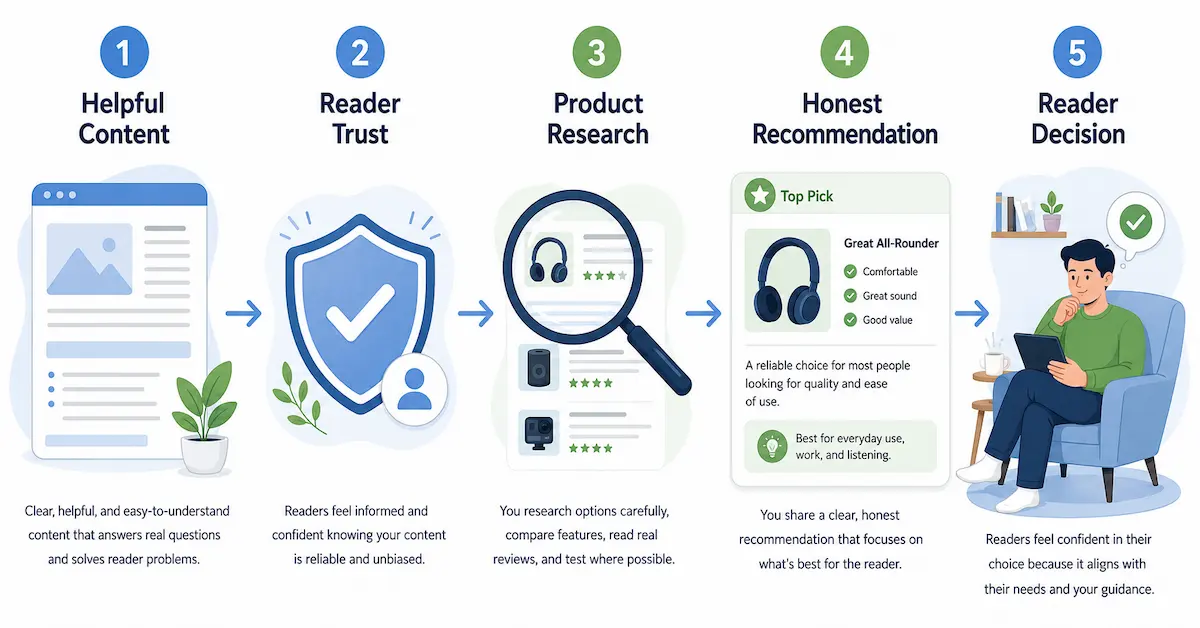
Use a Simple Help-First Formula
A simple affiliate promotion strategy can be used across blog posts, emails, videos and social media content:
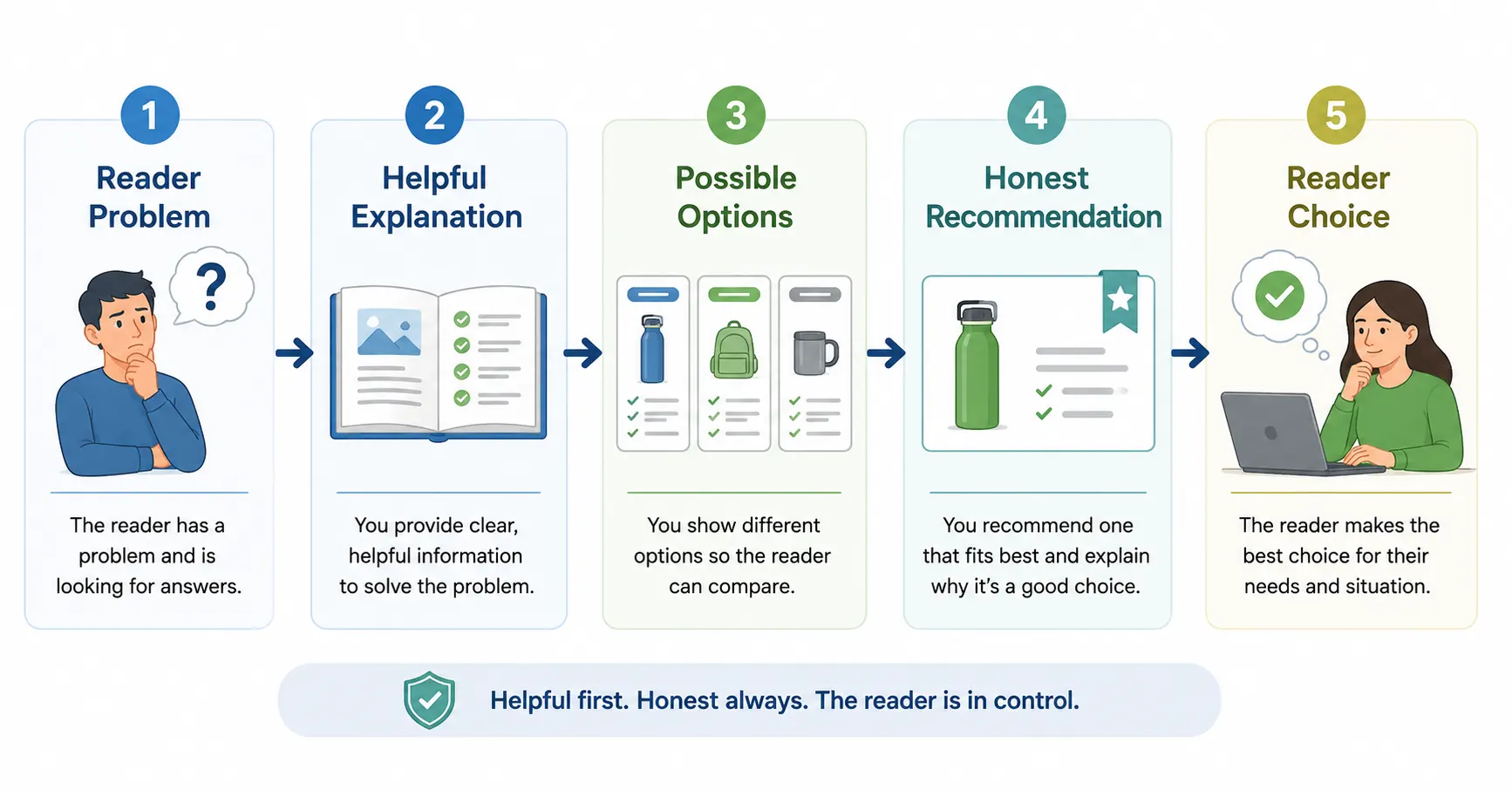
Problem → Helpful explanation → Possible options → Honest recommendation → Reader choice
For example, imagine a beginner does not know how to choose an affiliate program.
Explain commission types, payment rules, cookie duration, support, and product quality.
Show the types of programs available. Then mention a program or resource that may suit them.
Finish by inviting the reader to learn more without pressure.
This formula keeps the reader’s needs at the centre of the content.
You can also learn how to build trust with your online audience through honest content, clear disclosures, and careful product recommendations
A Simple Example of a Natural Affiliate Recommendation
Imagine you are writing an article about starting an email list.
A pushy version might say:
You need this email platform. Click here and sign up today.
A helpful version could say:
Beginners usually need an email service that is simple to set up, offers basic automation, and fits a small budget.
Several platforms provide these features. One option worth exploring is [product name], especially for beginners who prefer a guided setup.
Check its current features and pricing before deciding whether it suits your needs.
The second version works better because it:
- Explains what the reader should look for.
- Connects the product to a real need.
- Avoids claiming it is suitable for everyone.
- Encourages the reader to check the details.
- Leaves the final decision with the reader.
That is the difference between helpful guidance and sales pressure.
Before adding links to your content, learn what affiliate links are and what happens after someone clicks.
Build Trust Before Expecting Sales
Learning how to promote affiliate products successfully also means accepting that trust and sales often grow slowly.
A new reader may not click a link during their first visit. They may read several posts, join your email list, or return later.
That is normal.
Trust grows when your content stays useful and consistent.
Focus on answering real questions, updating old recommendations, checking broken links, and removing products you no longer trust.
A reader who trusts your judgement is more likely to consider a future recommendation.
The goal is not to force a quick sale. The goal is to become a useful source of information.
Readers who are unsure whether affiliate marketing is trustworthy may also benefit from this guide explaining whether affiliate marketing is legitimate.
Affiliate Promotion Mistakes That Can Damage Trust
Even a useful product can feel suspicious when it is promoted badly.
Pushy promotions are only one of several affiliate marketing mistakes beginners make.
When learning how to promote affiliate products, it is equally important to recognise the practices that can weaken trust and make useful recommendations appear unreliable.
Avoid these common mistakes:
Repeating the Same Link Too Often
Adding the same affiliate link to every paragraph can make the article feel written for clicks rather than readers.
Place links only where they support the information.
Creating False Urgency
Do not use countdowns, limited-time warnings, or scarcity claims unless they are genuine and supplied by the product provider.
Making Guaranteed Claims
Avoid promising that a product will create income, traffic, or success.
Explain what the product does, but do not guarantee the reader’s results.
Hiding the Affiliate Relationship
A hidden or unclear disclosure can weaken trust.
Tell readers when you may earn a commission and place the disclosure before the first affiliate link.
Recommending Too Many Products
A long list of unrelated offers can overwhelm beginners.
Recommend a small number of options and explain the differences between them.
Copying the Product’s Sales Page
Do not repeat exaggerated marketing claims.
Use your own words and explain how the product may fit the reader’s situation.
Get More Help Building Your Affiliate Marketing Plan
Knowing how to recommend products naturally is only one part of affiliate marketing.
You also need to choose a suitable niche, understand your audience, create helpful content, attract visitors, and build trust over time.
CB Profit Club provides additional training and support for people who want to build their affiliate marketing skills step by step.
Review what is included, consider your current goals, and decide whether it is the right next step for you. Learn more about how the ClickBank Profit Club model works.

Frequently Asked Questions
Can I promote affiliate products without sounding salesy?
Yes. Focus on helping the reader solve a problem before recommending a product. Explain why it may help, who it suits, and any limits it has. Use a calm call to action that lets the reader decide.
How often should I include affiliate links in an article?
There is no fixed number. Add a link only where it helps the reader take a logical next step. A few relevant links are usually better than repeating the same link throughout the post.
Should every blog post contain an affiliate product?
No. Publish a mix of educational, trust-building, and promotional content. Some posts can answer questions without promoting anything. Those articles can still lead readers to related guides later.
What is the best way to disclose an affiliate link?
Use a clear disclosure near the beginning of the content and before the first affiliate link. State that you may earn a commission if the reader purchases through the link, at no extra cost to them.
Can beginners promote products they have not personally used?
They can discuss products based on careful research, but they should be honest about their experience. Do not claim personal results or hands-on use when that is not true. Encourage readers to check current product details before deciding.
Final Thoughts
Learning how to promote affiliate products without being pushy starts with one simple change.
Help first. Recommend second.
- Understand the reader’s problem.
- Create useful content.
- Suggest products only when they fit.
- Explain who they are for, disclose your affiliate relationship,
- and give readers space to choose.
This approach may feel slower than aggressive sales tactics. However, it builds stronger trust and creates a better experience for your audience.
Continue with the complete beginner affiliate marketing guide for a step-by-step explanation of choosing a niche, finding programs, creating content, attracting visitors, and building trust.
The most effective affiliate marketers do not chase every possible click.
They become helpful guides that readers choose to return to.
Continue Your Online Business Journey
Explore more resources to help you build and grow your online business.
Recommended Reading
New Here?
Start with the beginner roadmap and learn the fundamentals of affiliate marketing and online business.
Start HereReady For The Next Step?
Discover the complete system I use to build and grow an online business.
Join Profit Club