


Common Mistakes Beginners Make Online
Starting an online business is exciting.
It can feel like a fresh start.
You may have ideas, goals, and a strong reason to begin.
But it can also feel confusing.
- There is advice everywhere.
- One person tells you to start a blog.
- Another says to use social media.
Someone else says you need paid ads, funnels, tools, email software, affiliate programs, or digital products. This checklist explains what you need to start an online business and what can wait.
Before long, it feels hard to know what actually matters.
This is where many beginners get stuck.
- They do not fail because they are lazy.
- They often fail because they focus on the wrong things too early.
In this article, we will look at common online business mistakes beginners should avoid.
These are the mistakes that can waste time, drain money, and slow your progress.
The good news is this.
Once you know what to watch for, you can make better choices from the start.
Affiliate disclosure: This article may contain affiliate links. If you purchase through one of these links, I may earn a commission at no additional cost to you. I only recommend resources that I believe may be useful for beginners.
Mistake 1: Trying Too Many Things at Once
One of the biggest online business mistakes is trying to do everything at once.
A beginner starts a blog.
- Then they open a YouTube channel.
- Then they try TikTok.
- Then they join several affiliate programs.
- Then they buy a course.
- Then they change niche. A clearer approach is to choose an online business niche and give it enough time to test.
- Then they start again.
This creates a lot of activity.
But it does not create much progress.
Starting an online business takes focus.
- You do not need to be everywhere at the beginning.
- You do not need every platform.
- You do not need every tool.
- You need a simple plan you can follow.
Start with one main business model.
- Choose one clear niche.
- Pick one main traffic method.
- Create useful content for one type of person.
- Once that starts working, you can add more later.
Simple is not weak.
Simple is often what helps beginners stay consistent.

Mistake 2: Choosing the Wrong Niche
Choosing the wrong niche is another common problem.
Some beginners choose a niche only because they think it will make money.
They may see others earning from finance, weight loss, software, travel, or online business.
So they jump in without thinking it through.
Many online business mistakes begin with choosing a niche based only on its income potential rather than considering the audience, available products and your ability to create helpful content.
Money matters.
But it should not be the only reason you choose a niche.
- If you do not understand the topic, content becomes hard.
- If you do not care about the audience, trust becomes hard.
- If you are not willing to keep learning, you may lose interest quickly.
A better niche has three things.
- It has an audience with problems.
- It has products, services, or solutions people already buy.
- It is a topic you can keep learning and talking about.
You do not need to be an expert on day one.
But you should be interested enough to grow into the topic.
For example, an online business for beginners niche works well when you can explain things simply.
You can help people understand websites, email lists, affiliate marketing, content, and traffic.
That gives you plenty of helpful topics to write about.
Before committing to a niche or business idea, take time to research your market. Understanding your potential customers, competitors and existing demand can help you make better decisions and avoid building a business around assumptions.
Mistake 3: Not Knowing Who You Are Helping
Many beginner online business mistakes happen because the audience is not clear.
Some people try to write for everyone.
But when you write for everyone, your message becomes weak.
Your content should help a specific type of person.
- Are you helping beginners?
- Are you helping older adults?
- Are you helping people with no budget?
- Are you helping small business owners?
- Are you helping people who want to make money from affiliate marketing?
If older or retired beginners are part of your audience, their goals may be different from someone starting a traditional career. This guide looks at practical ways seniors can earn money online from home without relying on unrealistic promises.
Each audience has different problems.
- A beginner may need simple steps.
- A small business owner may need traffic.
- Someone with no budget may need free tools.
- Someone interested in affiliate marketing may need help choosing products.
When you know your audience, your content becomes easier to write.
A clear online value proposition can connect the audience you serve with the problem your business is designed to solve.
- Your headlines become clearer.
- Your product recommendations feel more natural.
- Your website feels more helpful.
Before creating more content, ask yourself this question:
Who am I trying to help?
Then write as if you are speaking directly to that person.
Rather than guessing who your content is for, learn how to identify your target audience using research, customer problems and a simple audience profile.
Mistake 4: Selling Too Early Online
Selling too early online is one of the fastest ways to lose trust.
Many beginners join an affiliate program and immediately add links everywhere.
- They write short posts that mostly promote products.
- They tell people to buy before giving real help.
This is one of the most common affiliate marketing mistakes.
Before adding links throughout your content, it helps to understand what an affiliate link actually does and when it should be used.
People do not usually buy from a stranger straight away.
- They want help first.
- They want useful information.
- They want to feel understood.
- They want to trust your recommendation.
That does not mean you should avoid selling.
An online business needs to make money.
But your offer should come after value.
For example, a helpful blog post can explain a problem first.
- Then it can show possible solutions.
- Then it can mention a tool, product, or training that may help.
That feels natural.
It feels useful.
It does not feel forced.
Build trust first. These practical steps explain how to build trust online before making product recommendations.
Then make the offer.

Mistake 5: Making Big Claims
Another mistake beginners make online is making claims they cannot support.
This often happens in money-related niches.
People may say things like:
- “Make money fast.”
- “Earn while you sleep.”
- “Guaranteed results.”
- “Anyone can make thousands online.”
These claims may sound exciting.
But they can damage trust.
Online business takes time.
Results are not guaranteed.
People have different skills, budgets, time, and experience.
It is much better to be honest.
- You can still be positive.
- You can still show people what is possible.
But avoid hype.
Say what is realistic.
Explain that beginners need to learn, test, improve, and stay consistent.
Honesty is powerful. It helps people believe you.It also makes your content feel more real.
Unrealistic income promises are also one reason people conclude that affiliate marketing is a scam. In most cases, the real problem is dishonest promotion, hidden financial relationships or unsuitable products—not the commission-based business model itself.
Mistake 6: Having No Clear Business Plan
A simple online business plan can keep your niche, audience, content and first offer moving in the same direction.
Many beginners start without a plan.
- They create random content.
- They promote random products.
- They change direction often.
This is a major online business mistake to avoid.
You do not need a complicated plan.
But you do need a simple direction.
A basic online business plan should answer a few key questions.
- Who are you helping?
- What problem are you helping them solve?
- What content will you create?
- How will people find your content?
- How will you build trust?
- How will your site eventually make money?
Without a plan, it is easy to waste time.
You may spend weeks changing colours, testing plugins, or looking for tools.
But none of that matters if your business does not have a clear purpose.
If you already know the direction you want to take but need help turning it into action, follow this 90-day business action plan for beginners.
Keep your plan simple.
You can improve it as you go.
The goal is not perfection.
The goal is direction.
You don’t need a formal 30-page document. A simple online business plan for beginners can help keep your audience, content, traffic and first offer moving in the same direction.
A plan gives you direction, but you still need time to put it into practice. Creating a simple weekly online business routine can help you decide what deserves your attention now and what can wait.
Mistake 7: Ignoring Website Structure
Website mistakes for beginners are very common.
A website can look nice but still be confusing.
Visitors should understand your site quickly.
- They should know where to start.
- They should know what your main topics are.
- They should be able to move from one helpful page to another.
A messy website makes people leave.
It can also make it harder for search engines to understand your content.
A simple structure works best.
If you are building your site now, this beginner guide explains how to create a clear website structure step by step.”
- Have a clear Start Here page.
- Create pillar pages for your main topics.
- Add supporting blog posts under each pillar.
- Link related posts together.
- Use clear menus.
- Use simple page titles.
For example, if your main topics are Online Business Foundation, Affiliate Marketing, and Traffic & Growth, your website should guide people through those areas.
A simple internal linking strategy for beginners can help organise those pages and guide visitors from one useful article to another.
This helps readers.
It also helps your SEO.
Good structure makes your content easier to find, easier to read, and easier to trust.
Not sure what the basic pages should be? Use this guide to the essential pages every online business website needs.
Mistake 8: Having No Traffic Plan
Use the main Traffic and Growth guide to choose one realistic traffic method instead of relying on visitors to appear automatically.
No traffic plan is one of the biggest reasons beginners get frustrated.
They publish a few posts and expect visitors to arrive.
But traffic does not usually happen by accident.
You need a way to bring people to your content.
- This could include SEO.
- It could include Pinterest.
- It could include YouTube.
- It could include social media.
- It could include email.
- It could include guest posting or content sharing.
The mistake is trying to use all of them at once.
Choose one or two traffic methods at the start.
If you are blogging, SEO is a smart long-term option.
But SEO takes time.
- You need keyword-focused content.
- You need helpful articles.
- You need internal links.
- You need patience.
This is where blogging mistakes for beginners often happen.
- They write without keywords.
- They do not link posts together.
- They stop before search engines have time to notice the site.
Have a simple traffic plan.
Then give it time to work.
Mistake 9: Not Building Trust Online
Building trust online matters more than many beginners realise.
People are careful.
- They do not want to be tricked.
- They do not want fake promises.
- They do not want to feel pushed into buying.
Trust is built through helpful content.
- It is built through honest recommendations.
- It is built through clear explanations.
- It is built through being consistent.
One way to build trust is to be open about your journey.
You do not need to pretend you know everything.
- If you are learning, say so.
- If you are sharing beginner-friendly advice, keep it simple.
- If you recommend a product, explain who it is best for.
Also explain who it may not suit.
That kind of honesty stands out.
People often connect with real experience more than perfect branding.
For practical ways to correct this mistake, review these trust-building strategies for online marketing and identify which credibility signals your website is currently missing.
Mistake 10: Buying Too Many Tools
Buying too many tools is one of the easiest mistakes to make.
There are tools for everything.
- Website builders.
- Page builders.
- Keyword tools.
- Email tools.
- AI tools.
- Social media tools.
- Affiliate tools.
- Analytics tools.
Some tools are useful.
But tools can also become a distraction.
A tool does not replace a clear strategy.
Avoiding unnecessary online business mistakes means choosing tools only when they support a clear task, solve a genuine problem or help you reach your current goal.
Before buying anything, ask yourself a few questions.
- Do I need this right now?
- Will I use it this week?
- Does it help my current goal?
- Can I start with a free option?
- Will this make my business simpler or more confusing?
In the beginning, you only need the basics.
- You need a website or platform.
- You need a way to create content.
- You need a way to collect emails.
- You need a way to track progress.
- You can add better tools later.
A simple checklist of what you need to start an online business can help you focus on the essentials and avoid buying tools before they serve a clear purpose.
Do not build your business around software.
Build it around helping people.
If choosing software is becoming confusing, this guide explains how to choose the right online business tools and keep recurring costs under control.

Mistake 11: Copying Other People Too Closely
It is fine to study other websites.
In fact, you should.
You can learn from their layout, topics, headlines, and offers.
But there is a big difference between learning and copying.
Copying makes your site feel weak.
It also stops you from developing your own voice.
- Your voice matters.
- Your journey matters.
- Your examples matter.
- Your way of explaining things matters.
If you are building an online business for beginners, your content should feel human.
It should sound like you.
- You can still use SEO.
- You can still follow proven structures.
But your content should not feel like a copy of someone else’s site.
Share what you are learning.
That is also why I decided to document my own beginner affiliate marketing journey rather than pretend I already had all the answers.
Explain things in plain language.
Use real examples.
That is how your content becomes more useful.
Mistake 12: Giving Up Too Soon
Giving up too soon is one of the most common online business mistakes.
Many beginners quit before anything has time to work.
- They publish a few articles.
- They get little traffic.
- They feel discouraged.
- Then they stop.
But online business takes time.
- SEO takes time.
- Content takes time.
- Affiliate marketing takes time.
- Trust takes time.
- Skills take time.
Your first posts may not be great.
That is normal.
Your first product recommendation may not make a sale.
That is normal too.
You improve by doing the work.
- Every post helps you learn.
- Every mistake teaches you something.
- Every update makes your site stronger.
Do not judge your progress after one week.
Think in months.
Give yourself time to build.
Mistake 13: Waiting Until Everything Is Perfect
Some beginners never really start.
- They keep changing their logo.
- They keep adjusting colours.
- They keep looking for the perfect theme.
- They keep planning but never publishing.
This feels productive.
But it often becomes a delay.
Your website does not need to be perfect to help someone.
- Your first articles do not need to be perfect.
- Your first email opt-in does not need to be perfect.
- You can improve as you go.
Start with a simple version.
Publish helpful content.
Watch what works.
Then make updates.
Progress beats perfection.
If waiting for the perfect conditions is holding you back, it may help to look at why now can be the right time to start your own online business and improve it gradually as you learn.
A basic website with useful content is better than a perfect website with nothing published.
Mistake 14: Not Learning the Basics First
Some beginners skip the foundation.
- They want advanced tactics too early.
- They look at funnels, ads, automation, webinars, and complex systems.
Automation becomes more useful once you understand the basics it is supposed to support.
When you reach that stage, this guide to marketing automation for small business explains how to automate repetitive tasks without losing sight of your audience.
Those things can be useful later.
But they are not the starting point.
- First, learn the basics.
- Understand your niche.
- Understand your audience.
- Create helpful content.
- Build a simple website structure.
- Learn basic SEO.
- Build an email list.
- Recommend products honestly.
These simple steps matter.
Many mistakes made when starting an online business happen because beginners rush past the basics and move into advanced strategies too early.
A strong foundation makes everything else easier.
How to Avoid These Online Business Mistakes
Mistakes are normal.
Every beginner makes some.
The goal is not to avoid every mistake.
The goal is to avoid the ones that slow you down most.
Here is a simple way to stay on track.
- Choose one niche.
- Help one clear audience.
- Create useful content.
- Build a simple website.
- Have a basic traffic plan.
- Start building trust.
- Only buy tools you actually need.
- Stay consistent long enough to see progress.
This is not flashy.
But it works better than chasing every new idea.
Online business is not about doing everything.
It is about doing the right things in the right order.
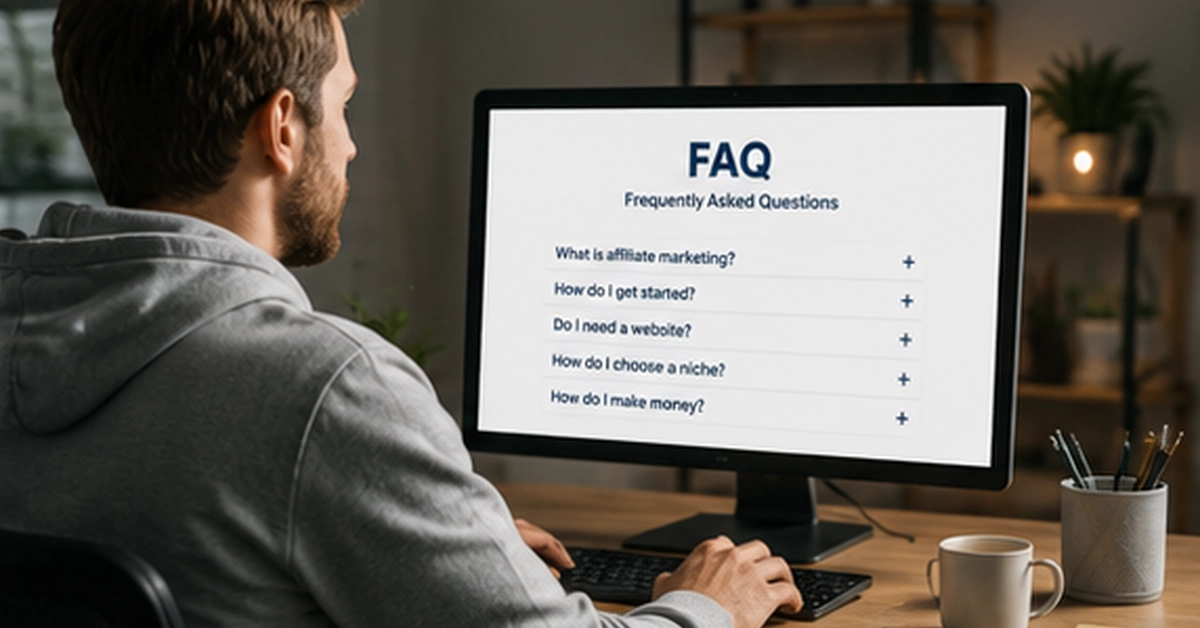
Frequently Asked Questions
What are the most common mistakes beginners make online?
The most common mistakes include trying too many things at once, choosing a niche only for money, selling too early, buying too many tools, ignoring website structure, and giving up too soon. Most of these mistakes happen because beginners do not start with a clear plan.
Why do beginners fail with online business?
Many beginners fail because they expect fast results. They may jump between ideas, promote products too early, or quit before their content has time to grow. Online business usually takes time, practice, trust, and consistent effort.
Is it a mistake to start without a website?
Not always. You can test an idea using free platforms first. But over time, having your own website is a smart move. A website gives your online business a home, helps build trust, and gives you more control than relying only on social media.
Should beginners avoid affiliate marketing?
No, affiliate marketing can be a good option for beginners. The mistake is promoting too many products too soon. It works better when you choose helpful products, create useful content, and build trust before asking people to buy.
Is buying too many tools a beginner mistake?
Yes, buying too many tools early can waste money and create confusion. Tools should support your plan. They should not replace it. Start with the basics, then add tools when you know what problem they solve.
How can I avoid beginner online business mistakes?
Start with one niche, one business model, and one main traffic method. Create helpful content, build trust, and avoid chasing every new idea. A simple plan will help you stay focused and make better decisions.
Still not sure where to begin?
That is normal. Most beginners feel the same way at first. A step-by-step training can help you move forward with more confidence.
Take a look here at the CB Profit Club Training
Final Thoughts
There are many mistakes beginners make online.
Some are small.
Others can slow your progress for months.
The biggest problems usually come from rushing, guessing, copying, overspending, or giving up too soon.
- You do not need to be perfect.
- You do not need to know everything.
- You do not need every tool.
- You just need a simple plan and the patience to follow it.
Improve as you go.
That is how a beginner online business becomes stronger over time.
Next:
If you want a simple path to follow, the next step is to read the main beginner guide here:
How to Start an Online Business for Beginners
Continue Your Online Business Journey
Explore more resources to help you build and grow your online business.
Recommended Reading
New Here?
Start with the beginner roadmap and learn the fundamentals of affiliate marketing and online business.
Start HereReady For The Next Step?
Discover the complete system I use to build and grow an online business.
Join Profit Club
