How to Build Trust Online When Starting an Online Business
Learning how to build trust online is one of the most important parts of starting an online business.
People may find your website.
They may read your content.
They may click your links.
But if they do not trust you, they are unlikely to stay, subscribe, follow your advice, or buy through your recommendations.
This is especially important in a beginner online business, where people may not know who you are yet.
The good news is that you do not need to be famous to build trust online.
- You do not need a huge following.
- You do not need years of experience.
- You need to be honest, helpful, clear, and consistent.
Trust is built through small actions over time. The way you write, the products you recommend, the pages on your website, and the promises you make all play a part.
Affiliate disclosure: This article may contain affiliate links. If you purchase through one of these links, I may earn a commission at no additional cost to you. I only recommend resources that I believe may be useful for beginners.
Why Trust Matters Online
Online visitors are careful.
- They have seen scams.
- They have seen fake income claims.
- They have seen poor products.
- They have seen websites that only seem interested in making a quick sale.
So when someone lands on your website, they are often asking silent questions.
- Can I trust this person?
- Do they understand my problem?
- Are they trying to help me?
- Are they just trying to sell me something?
- Is this website safe and credible?
Your content should answer those questions in a positive way. A consistent content marketing strategy helps you publish useful answers instead of random promotional posts.
If your site is clear, helpful, and honest, people are more likely to feel comfortable reading more.
That is why online business trust matters so much.
To build trust online, your content and website need to answer these concerns with clear information, honest expectations and a consistent reader-first approach.
Before people buy, they usually need confidence. They need to believe that your advice is genuine and that your recommendations are made with their best interests in mind.
In simple terms, trust comes before selling.
Be Honest About Where You Are
One of the biggest mistakes beginners make is pretending to be more experienced than they are. Review these other common online business mistakes that can weaken trust.
If you are still learning, you do not need to act like a top expert.
That can actually hurt your credibility online.
Instead, be honest about where you are.
You might say things like:
- “I am learning this as I build.”
- “This guide is written for beginners.”
- “This is what helped me understand the process.”
- “I recommend looking at this if you want a simple starting point.”
That sounds real.
And people connect with real.
In many cases, beginners trust other beginners because the language feels easier to understand. You may be only a few steps ahead of your reader, but that can still be useful.
The key is not to fake results or pretend you know everything.
Share what you know.
Explain what you are learning.
Be clear when something is your opinion or experience.
That honesty helps build online business credibility.
Write Helpful Content First
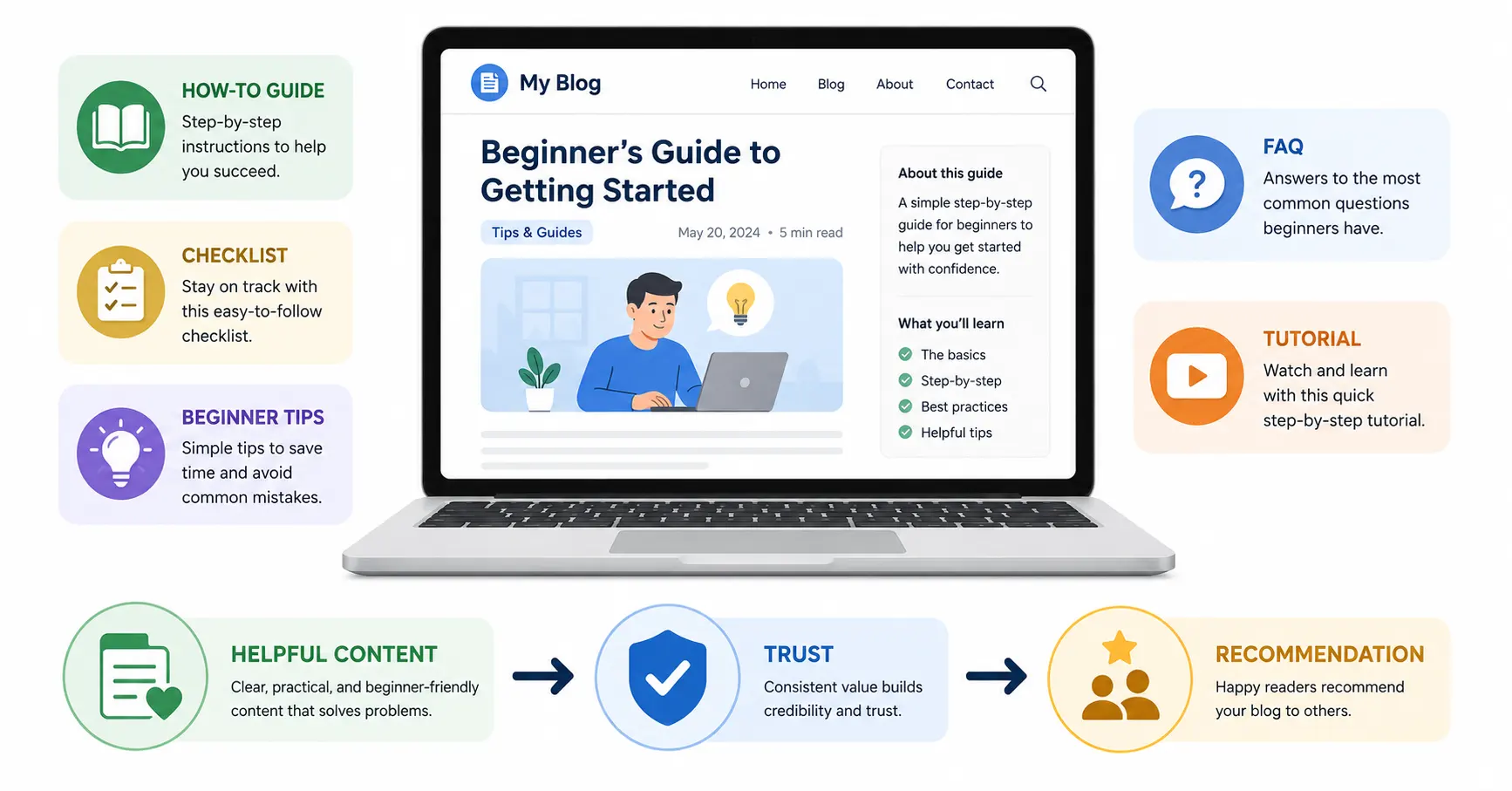
Helpful content is one of the simplest ways to build trust online before recommending a product.
Before asking someone to buy, help them understand.
- Answer common questions.
- Explain terms simply.
- Share examples.
- Break big topics into smaller steps.
For example, instead of only saying “start affiliate marketing,” explain:
- What affiliate marketing means.
- How affiliate links work.
- Why trust matters.
- What mistakes to avoid.
- How to choose a product carefully.
- What beginners should focus on first.
This type of trust-building content gives readers value before you ask for anything in return.
It also shows that you understand their situation.
Trust is easier to build when your content reflects the reader’s actual concerns. Start by learning how to identify your target audience.
For beginners starting an online business, this is especially important. Most readers are not looking for complicated theory. They want simple explanations, practical steps, and honest guidance.
Helpful content builds confidence.
Confidence builds trust.
Trust makes your recommendations stronger later.
Avoid Fake Claims
This is very important.
- Do not promise fast money.
- Do not say “anyone can get rich.”
- Do not claim results you cannot prove.
- Do not make every product sound perfect.
Online business can work.
Affiliate marketing can work.
Blogging can work.
But it takes effort, learning, testing, patience, and consistency.
Being realistic makes your content stronger.
It also protects your reputation.
Many beginners have already been exposed to unrealistic claims online. If your content feels calm, balanced, and honest, it can stand out.
Honest content is much more powerful than hype.
One of the safest ways to build trust online is to explain possible benefits without promising results that you cannot guarantee.
- You can still be positive.
- You can still encourage people.
But keep your promises realistic.
The ACCC’s guidance on false or misleading claims also recommends using accurate, easy-to-understand information and being prepared to support your claims with facts or evidence.
For example, instead of saying:
“This system will make you money quickly.”
You could say:
“This may help you understand the process more clearly and give you a better starting point.”
That kind of wording feels more trustworthy.
Use a Clear Affiliate Disclosure
If you use affiliate links, tell people.
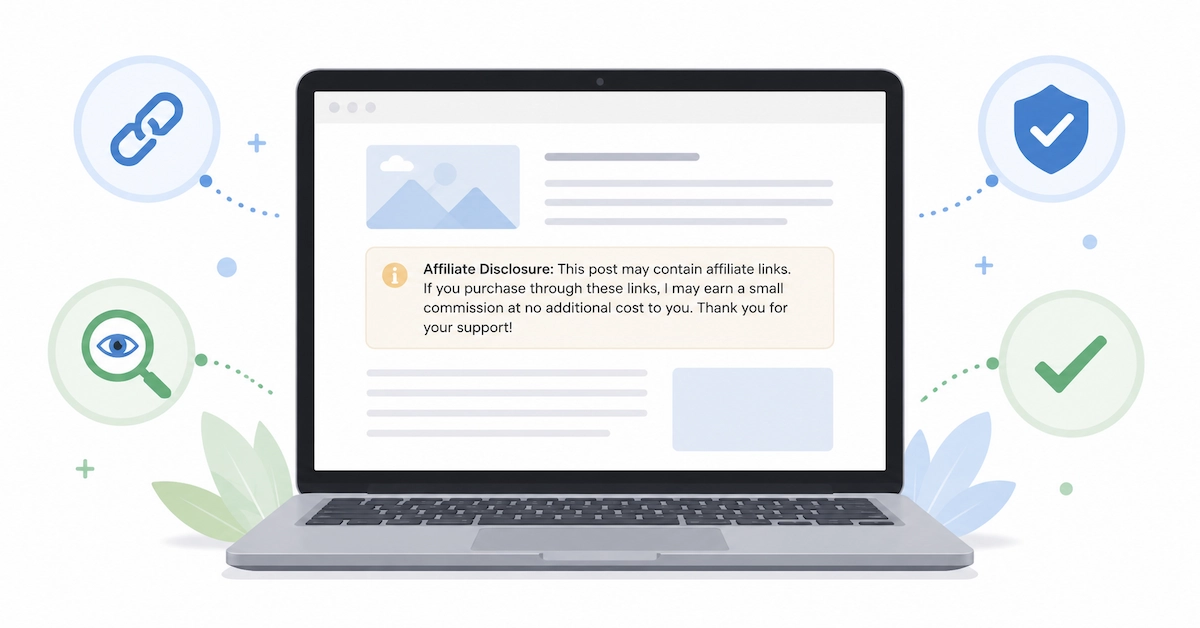
A clear affiliate disclosure is not something to hide. It helps your website look more honest and professional.
You can place a simple disclosure near the top of your post or before your affiliate links.
For example:
“This post may contain affiliate links. If you buy through my link, I may earn a commission at no extra cost to you.”
That is simple.
- It is honest.
- It also lets readers know how your website may earn income.
An affiliate disclosure does not have to be complicated, but it should be easy to find and easy to understand.
If your site recommends products, tools, training, or services, disclosure is part of building trust online.
Readers are more likely to respect you when you are upfront.
Recommend Products Carefully
Do not promote every product you find.
That can make your website feel weak and sales-focused.
Instead, recommend products carefully. Learn how to promote affiliate products without being pushy or turning every article into a sales pitch.
- Choose offers that match your audience.
- Explain who the product is for.
- Also explain who it may not suit.
This is especially important in affiliate marketing because your reputation is connected to what you recommend.
If you promote poor products, readers may stop trusting your advice.
Careful product recommendations show that you are thinking about the reader, not just the commission.
You build trust online when readers can see that your recommendations are based on relevance and usefulness rather than the size of a potential commission.
A balanced recommendation often feels more honest than a hard sell.
For example, instead of saying:
“This is perfect for everyone.”
You could say:
“This may suit beginners who want a simple starting point, but it may not suit someone looking for advanced training.”
That sounds more believable.
It also helps the reader make a better decision.
Build a Trustworthy Website
Trust is not only about what you write.
Your website also matters.
A trustworthy website should feel simple, clear, and easy to use.
You do not need a perfect design, but your site should not feel confusing or unfinished.
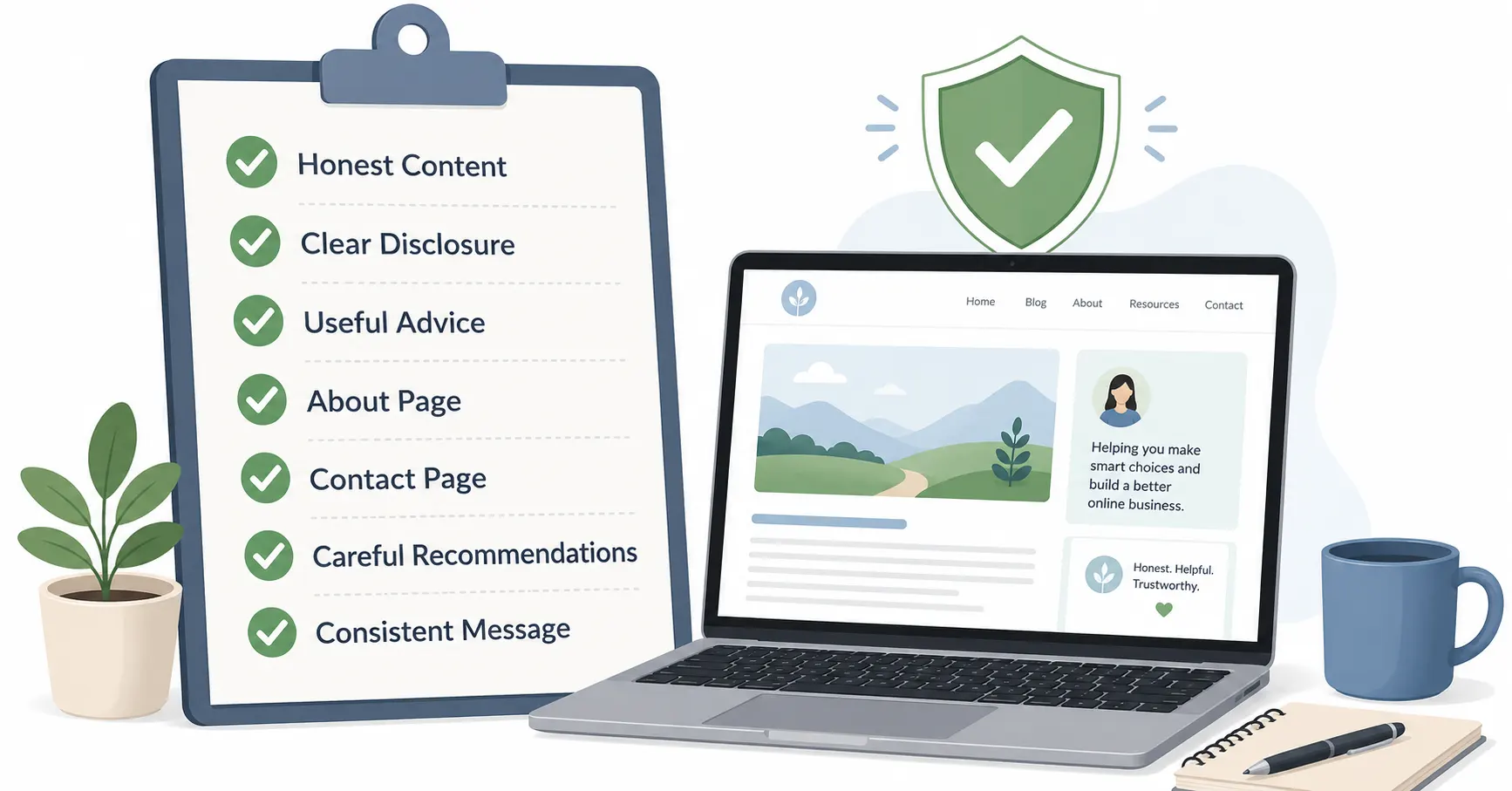
Important online trust signals for a beginner website include:
- A clear menu.
- Readable fonts.
- Helpful page titles.
- A simple layout.
- A visible About page.
- A Contact page.
- Legal pages.
- Clear affiliate disclosure.
- No excessive popups.
- Working links.
- Easy navigation.
A clean design, working links and easy navigation help build trust online because visitors can quickly understand who you help and where to find important information.
If someone lands on your site and does not understand what it is about, they may leave quickly.
A simple website feels safer.
A confusing website creates doubt.
When building an online business as a beginner, keep your website clean and focused. Make it easy for visitors to understand who you help and what they should read next.
As readers become more comfortable with your website, some may want to hear from you again. This guide shows how to build an email list without making the process overly complicated.
Create a Helpful About Page
Your About page is one of the most important trust pages on your website.
It helps people understand who you are and why your site exists.
It does not need to be long or complicated.
A good About page can explain:
- Who you are.
- What your website is about.
- Who you help.
- Why you started.
- What readers can expect.
- What your main topics are.
If you are building in public, say that.
Your story can help people connect with you.
You do not need to pretend to be someone else. You can simply explain that your site is designed to help beginners understand online business, affiliate marketing, and traffic growth in a simple way.
That can be enough to make your website feel more personal and credible.
Add a Contact Page and Legal Pages
A Contact page helps your website look more real.
Even if most visitors never use it, having one shows that there is a real person behind the site.
Your Contact page can be simple.
It may include a contact form, an email address, or a short message explaining how people can reach you.
Legal pages also help with online business credibility.
Common legal pages include:
- Privacy Policy.
- Terms and Conditions.
- Affiliate Disclosure.
- Disclaimer.
These pages help explain how your website works, how you handle information, and how you may earn income.
They are not the most exciting pages on your site, but they are important for website trust.
A site with no About page, no Contact page, and no legal pages can feel less reliable.
If you are building these pages from scratch, this guide to business website pages explains what each core page should do
Share Your Learning Journey
A beginner journey can be powerful.
- You can share what you are learning.
- You can share mistakes.
- You can share progress.
- You can share tools you are testing.
- You can share why you chose a certain path.
This makes your website feel more personal.
It also separates you from generic content.
Many people starting online feel overwhelmed. When they see someone explaining things in a simple, honest way, it can make the process feel less intimidating.
You do not need to share everything.
But sharing useful lessons from your journey can help build trust with your audience.
For example, you might write about:
- A mistake you made when choosing a niche.
- A tool you found helpful.
- A product you decided not to promote.
- A simple lesson from building your website.
- A better way to plan content.
This kind of content feels real because it comes from experience.
Sharing genuine lessons can help you build trust online by showing readers the person, decisions and learning process behind the website.
Use Consistent Messaging
Trust grows when your message is consistent.
- Do not change your topic every week.
- Do not promote unrelated products.
- Do not jump from one audience to another.
Stay focused.
If your site is about online business for beginners, keep most of your content around that topic.
That does not mean every article must be the same.
But your overall message should be clear.
Trust is easier to build when your value proposition is clear, realistic and consistent with the help you actually provide.
For example, your main topics may include:
- Online business foundation.
- Affiliate marketing.
- Traffic and growth.
- Website setup.
- Content creation.
- Email marketing.
- Beginner tools and resources.
When your content stays focused, readers know what to expect.
This makes your website easier to understand.
It also helps your internal linking, your pillar pages, and your overall site structure.
Build Trust Before Selling
Many beginners want to promote products straight away.
That is understandable.
After all, the goal of an online business is usually to earn income.
But selling too early can hurt trust.
Before asking readers to buy, help them first.
- Teach them something useful.
- Explain the problem.
- Show them what to look for.
- Give them a reason to trust your recommendation.
Then, when you mention a product, it feels like a helpful suggestion rather than a pushy sales pitch.
This is especially important with affiliate marketing. The guide Is Affiliate Marketing Legit? explains how disclosure, realistic expectations and suitable products separate legitimate recommendations from misleading promotion.
People are more likely to click your links when they believe your advice is honest.
They are more likely to return to your site when they feel helped, not pressured.
Trust before selling is a better long-term strategy.
Simple Ways to Build Trust With Your Audience
If you are wondering how to build trust when starting online, begin with the basics.
You do not need a complicated strategy.
Start with simple actions that make your website more helpful and credible.
You can:
- Write useful beginner-friendly content.
- Use honest language.
- Avoid fake income claims.
- Recommend products carefully.
- Add a clear affiliate disclosure.
- Create an About page.
- Create a Contact page.
- Add legal pages.
- Keep your website clean and easy to use.
- Stay consistent with your topic.
- Share your learning journey.
- Put the reader first.
These small steps help build trust with your audience over time.
Trust is not created in one article.
It is built through everything your visitor sees and experiences on your site.
Helpful presentations delivered through webinar automation can also support trust-building by teaching before recommending a product or next step.
Once these beginner principles are in place, explore these more detailed trust-building strategies in online marketing to strengthen social proof, brand credibility and reputation management.

FAQ: Building Trust Online
How do you build trust when starting online?
You can build trust by being honest, creating helpful content, using clear disclosures, avoiding fake claims, and recommending products carefully. You do not need to be an expert, but you do need to be clear and genuine.
Why is trust important in an online business?
Trust is important because people are careful online. If they do not trust your website, your content, or your recommendations, they are unlikely to stay, subscribe, or buy from you.
Can I build trust if I am still a beginner?
Yes, you can build trust even if you are still a beginner. You do not need to pretend to be an expert. You can share what you are learning, explain things simply, and be honest about your journey. This can make your content feel more relatable to other beginners.
Do I need an About page to build credibility online?
Yes, an About page can help build credibility online because it explains who you are, who your website helps, and why your site exists. It gives readers a better reason to connect with you.
Can affiliate marketing hurt trust?
Affiliate marketing can hurt trust if you promote poor products, hide your affiliate relationship, or make unrealistic claims. However, it can build trust when you use a clear affiliate disclosure and only recommend products that genuinely fit your audience.
Want a simple way to start learning online business?
If you are new to affiliate marketing or building an online business, the best thing you can do is follow a clear beginner-friendly plan.
Check out my recommended CB Profit Club training here
Final Thoughts
Trust is built through small actions repeated over time.
It does not come from one blog post, one product recommendation, or one clever sales message. It comes from the way you show up across your whole website.
- Be honest about what you know.
- Be helpful before you try to sell.
- Be clear with your advice.
- Use simple language that beginners can understand.
- Recommend products carefully.
- Avoid fake results, unrealistic promises, and exaggerated claims.
- Show your learning journey and let people see that there is a real person behind the website.
These small things may seem basic, but they matter.
When someone visits your site for the first time, they are trying to decide whether your content is worth reading. They want to know if your advice is genuine, if your recommendations are fair, and if your website feels safe and trustworthy.
That is why website trust is so important.
If you want to build trust online, start by helping people before asking them to buy.
- Answer their questions.
- Explain things clearly.
- Point them in the right direction.
- Be upfront about affiliate links.
- Create useful content that solves real problems.
Over time, this helps build online business credibility.
When people trust you, your content works better.
- Your emails feel more useful.
- Your product recommendations feel more natural.
- Your affiliate links are more likely to be clicked for the right reasons.
And your website becomes more than just a collection of articles. It becomes a helpful resource people can return to.
Building trust online is not a quick trick or a shortcut.
It is part of the foundation of a real online business.
If you are starting as a beginner, do not worry about looking perfect. Focus on being useful, honest, and consistent.
Trust grows when readers feel that you are trying to help them make better decisions.
That is the kind of trust that can support your content, your recommendations, and your online business over the long term.
Next step:
Read the full beginner guide here:
How to Start an Online Business for Beginners
Continue Your Online Business Journey
Explore more resources to help you build and grow your online business.
Recommended Reading
New Here?
Start with the beginner roadmap and learn the fundamentals of affiliate marketing and online business.
Start HereReady For The Next Step?
Discover the complete system I use to build and grow an online business.
Join Profit Club