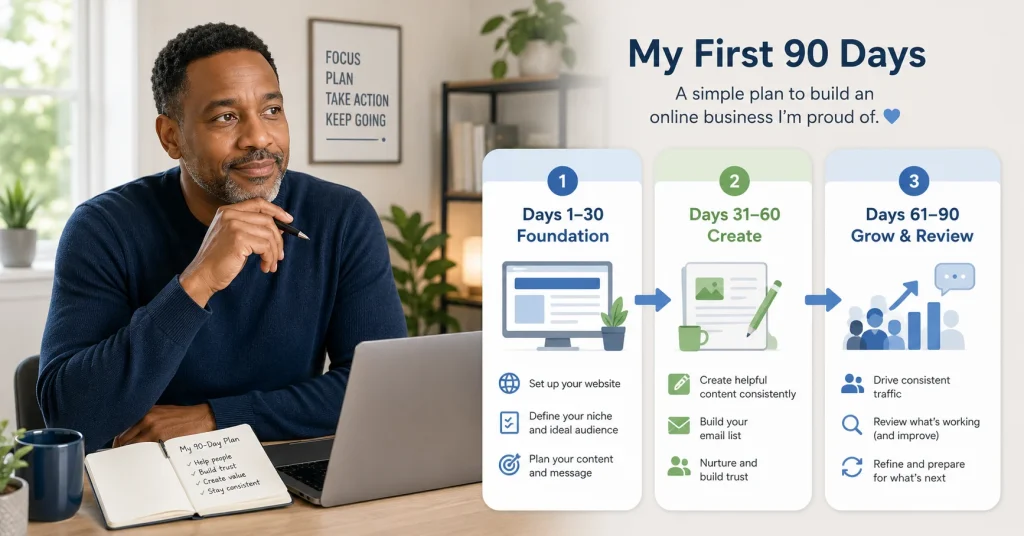

Build Momentum With a 90-Day Business Action Plan You Can Actually Follow
Starting an online business can feel exciting at first.
Then reality sets in.
There are websites to build, pages to create, articles to write, emails to organise, keywords to research and dozens of other things competing for your attention.
The problem is usually not a lack of things to do… It is knowing what to do first.
That is where a business action plan can help.
Instead of trying to build everything at once, you can break your first three months into smaller stages. Each stage has a purpose, and every week gives you a manageable set of priorities.
You do not have to finish your entire business in 90 days. That is not the goal.
The goal is to finish your first 90 days with a stronger foundation, some useful content published, a simple way to reach your audience and enough experience to know what you should work on next.
If you are still working through the basics, you may also want to begin with the Online Business Foundation guide before following this roadmap.
Affiliate disclosure: This article may contain affiliate links. If you purchase through one of these links, I may earn a commission at no additional cost to you. I only recommend resources that I believe may be useful for beginners.
Why Use a 90-Day Plan?
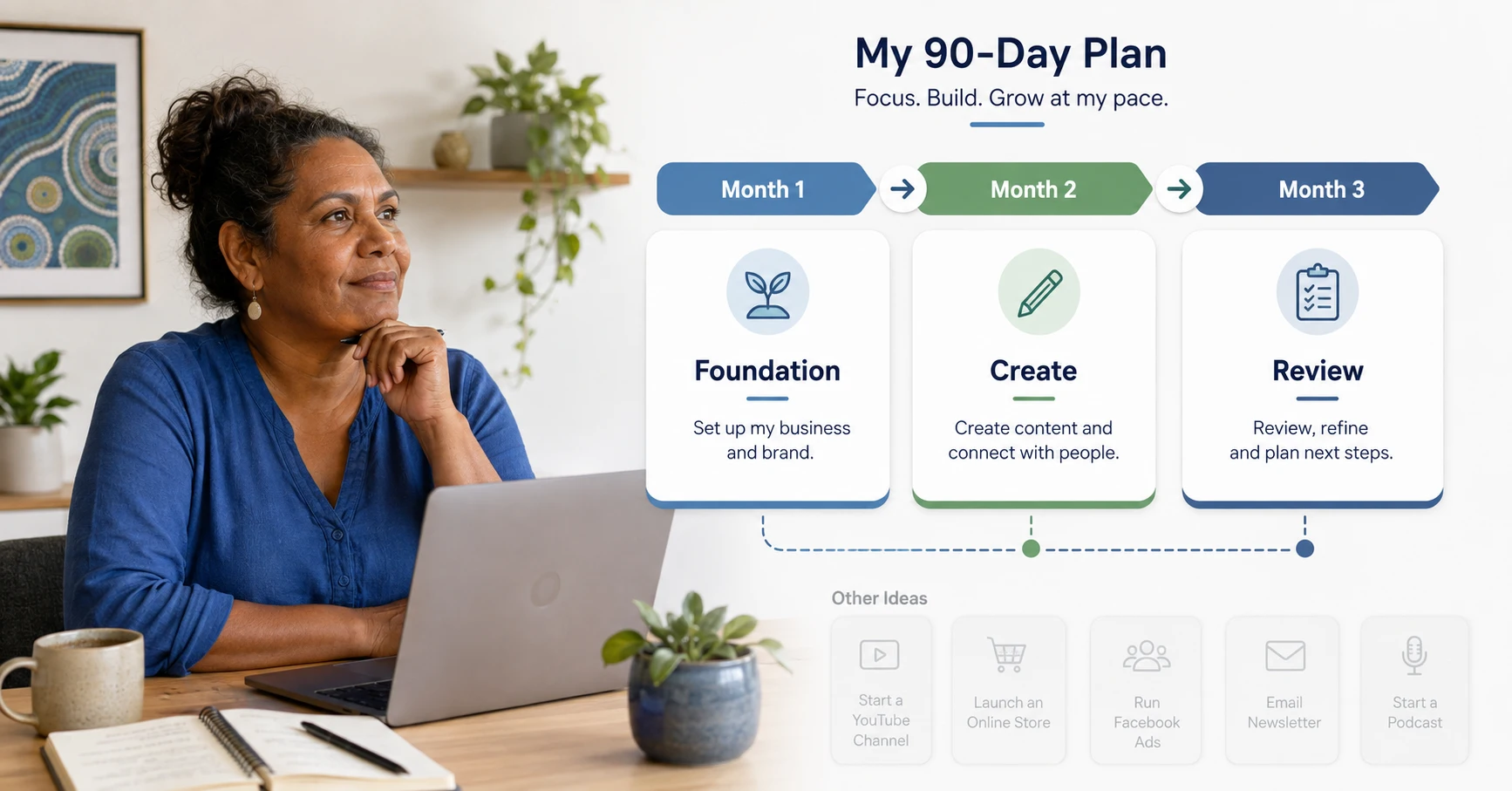
A year can feel too far away when you are just getting started.
A week can be too short to see meaningful progress.
Ninety days sits somewhere in the middle.
It gives you enough time to build something useful without making the plan feel endless.
A simple business action plan also helps stop one of the biggest beginner problems: jumping from one idea to another.
You may see a new social media strategy today, an AI tool tomorrow and a different business model next week.
Before long, you are busy but not necessarily moving forward.
Your 90-day plan gives you something to return to. It also helps you keep your business priorities visible when new ideas, tools and opportunities begin competing for your attention.
Ask yourself:
Does this new idea help me complete the priorities I have already chosen?
If the answer is no, you can put it aside for later.
That one habit can save you a surprising amount of time.
The Australian Government’s business guidance also recommends using specific, measurable, achievable, relevant and time-bound goals and then identifying the actions, time-frame, resources and review process needed to achieve them.
Before Day 1: Decide What You Are Building
Do not begin your 90 day business plan by making a giant task list.
Start with direction.
Before deciding on individual tasks, think about your broader online business goals and then choose one or two realistic 90 day goals that will move you in the right direction.
If you’re still deciding what your business should focus on, this guide explains how to choose an online business niche without becoming stuck looking for the perfect idea.
Write down simple answers to these questions:
- Who do I want to help?
- What broad problem am I helping them with?
- What type of online business am I building?
- What will be my main platform?
- How might the business eventually earn income?
- What is the most important thing I want to achieve during these 90 days?
It can also help to create a simple online value proposition that explains who you help, the problem you address and what makes your approach useful.
Your answers do not have to be perfect.
They simply need to give you a starting point.
For example:
During the next 90 days, I want to create a beginner-friendly website, publish my first useful articles, start building an email list and begin learning how to attract targeted visitors.
That is much more useful than:
I want to make money online.
- One gives you direction.
- The other gives you very little to work with.
If you have not yet worked out the bigger picture, start by creating a simple online business plan.

Days 1–30: Build Your Foundation
Your first month should be about clarity and foundations, not traffic or income.
This stage of your business action plan is where you decide what your online business stands for and create the basic structure needed to support it.
Week 1: Clarify Your Niche and Audience
Choose the main subject you want to build around.
Then think about the person you want to help.
You do not need an incredibly narrow niche on your first day, but avoid trying to help everybody.
Once you have a general direction, take some time to identify your target audience so the rest of your plan is built around people you genuinely want to help.
For example, instead of simply:
Online business
you might focus on:
Helping beginners understand how to build a simple online business without complicated technology or hype.
That gives you much more direction.
Week 2: Choose Your Business Model
Decide how the business could eventually generate revenue.
It might include:
- Affiliate marketing
- Services
- Digital products
- Advertising
- Memberships
- Courses
- A combination of these later
You do not need several income streams immediately. One simple model is enough.
For many beginners, affiliate marketing can be a useful starting model because you can concentrate on building an audience and recommending existing products rather than creating your own product immediately.
Week 3: Create Your Online Home
Now create the basic website structure.
Do not spend the entire month changing colours, fonts and logos.
Start with the essential pages your visitor needs.
That normally includes:
- Home
- About
- Contact
- Start Here
- Blog
- Privacy Policy
- Affiliate Disclosure
- Other appropriate legal pages
Your website should make it reasonably easy for someone to understand who you help and where they should go next.
Week 4: Plan Your First Content
Before publishing random articles, choose several useful questions your audience is likely to ask.
- Start with perhaps five to ten topics.
- Organise them around your main subject.
Your first month is not about looking impressive. It is about getting the pieces into place.
A good small business action plan should make the next task clearer rather than giving you another complicated document to maintain.
When you’re ready to turn the plan into a website, a simple online business website structure can help you organise the main pages and supporting content before the site becomes complicated.
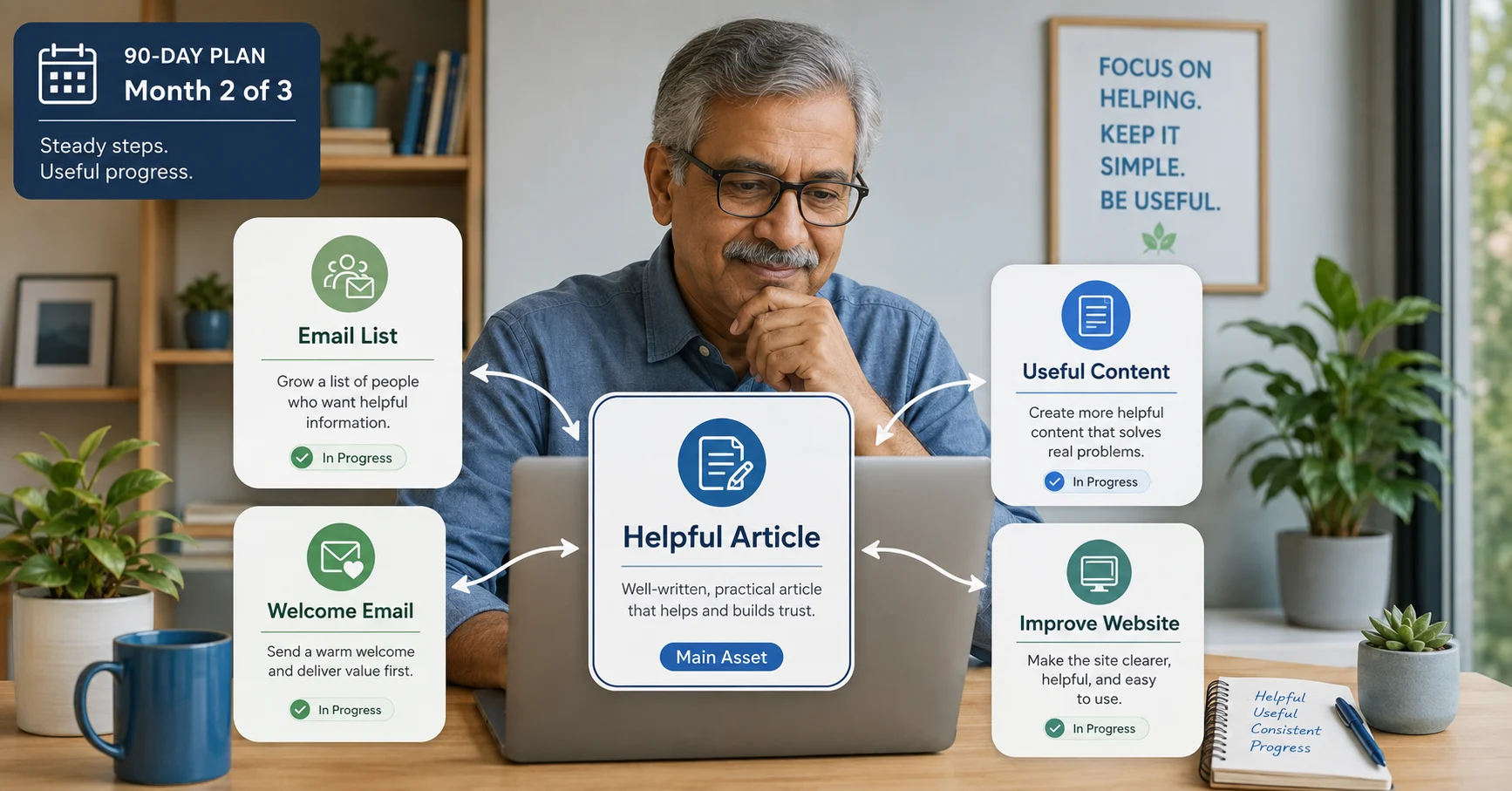
Days 31–60: Create Useful Assets
Your second month is where planning begins turning into something people can actually find and use.
A common mistake in business action plan examples is filling the plan with administrative jobs while forgetting to create anything for the customer.
For an online business, your most useful early assets may include:
- Helpful articles
- An email list
- A useful free resource
- A simple email welcome sequence
- Videos or other useful content
- Clear recommendations
Weeks 5 and 6: Publish Helpful Content
Choose your strongest beginner questions and start answering them.
Do not worry about publishing every day.
You don’t need to plan every article in advance, but a basic content marketing strategy can help turn your audience’s questions into a manageable publishing plan.
One genuinely useful article is better than several rushed ones.
- Aim to explain things clearly.
- Use examples.
- Break large subjects into smaller steps.
- Answer the question the reader came for.
If you are building around search traffic, begin learning basic keyword research and search intent as part of this process.
You are building a library, not trying to win a publishing race.
Week 7: Start Your Email List
Visitors will not always return to your website on their own. An email list gives people a way to stay connected with you.
If email will form part of your plan, you can start with a simple approach to building an email list rather than waiting until the site has a large audience.
Keep the beginning simple.
You need:
- An email service.
- A signup form.
- A reason for someone to subscribe.
- A welcome email.
Later, you can develop more advanced email campaigns and automation.
For now, concentrate on creating a useful connection with the person who has trusted you with their email address.
Week 8: Improve What You Have Built
Do not automatically spend Week 8 creating more.
Review what already exists.
Check:
- Are your pages easy to navigate?
- Do your articles link to related information?
- Does your About page explain who the site helps?
- Are your disclosures visible?
- Can people join your email list?
- Are there broken links?
- Is your message consistent?
This is where your 90 day business action plan begins becoming a real working system rather than a collection of unfinished pieces.

Days 61–90: Start Building Traffic and Learning
The third month is where many beginners become impatient.
- They have built a website.
- They have published some content.
- Now they want traffic.
- That is understandable.
But avoid suddenly changing everything because visitors have not arrived quickly enough.
The final stage of your plan should concentrate on learning how people discover your content and measuring what is beginning to happen.
Weeks 9 and 10: Choose a Main Traffic Method
Do not try five traffic strategies at the same time. Choose one main method to learn first.
That could be:
- SEO
- YouTube
- Another platform that suits your audience
If you are building a blog, learning beginner SEO is a logical long-term strategy.
Understand keyword research, search intent, titles, internal links and useful content before worrying about advanced SEO techniques.
Week 11: Promote What You Already Created
Beginners sometimes think every marketing activity requires new content.
It does not.
One helpful article could become:
- An email
- Several social posts
- A checklist
- A short video
- A discussion topic
- A follow-up article
Reuse the useful ideas you have already created.
That can make content creation much more manageable.
Week 12: Review the First 90 Days
This week matters.
Do not measure your success only by income.
At this stage, look at what you have actually built.
Perhaps you now have:
- A clearer niche
- A working website
- Essential website pages
- Several useful articles
- An email list
- A few subscribers
- Basic analytics
- A better understanding of SEO
- A more consistent weekly routine
Those are real assets.
- Your results might still be small.
- That is normal.
- You are building a foundation.
Give Each Week One Main Priority
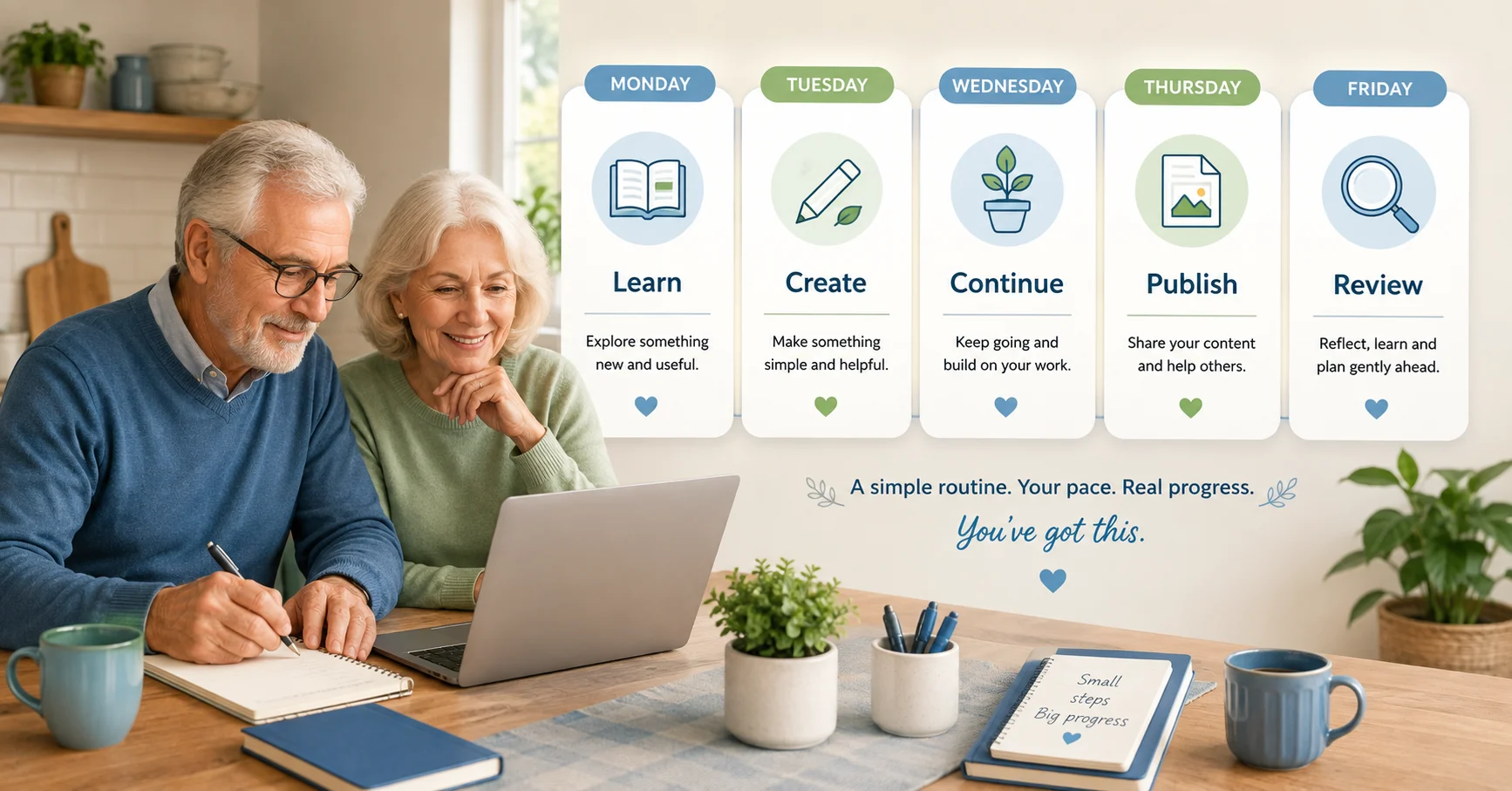
Breaking the larger plan into a simple weekly action plan can reduce the number of decisions you have to make each day.
Instead of waking up and asking:
What should I work on today?
you already know this week’s priority.
For example:
Monday: Learn or research.
Tuesday: Create.
Wednesday: Continue creating.
Thursday: Publish or implement.
Friday: Review, improve and plan the next week.
You do not have to follow that exact schedule. Build one around the amount of time you realistically have available.
Someone with five hours a week should not copy the schedule of someone working full-time on their business.
Consistency matters more than pretending you have unlimited time.
Once you’ve chosen your weekly priority, a simple routine can make it easier to turn that priority into regular action. This guide to time management for small business owners shows how to organise the work around the time you actually have available.
Do Not Turn Your Plan Into Another Form of Procrastination
There is one warning worth mentioning.
Planning can feel productive even when you are avoiding the work.
- You can keep changing your spreadsheet.
- You can create a beautiful business action plan template.
- You can reorganise your task manager.
- You can research how to write a business action plan for another week.
Eventually, however, something has to be published.
- Something has to be tested.
- Something has to leave your notebook.
A simple plan you follow is worth much more than a perfect plan you never begin.
What Should You Measure After 90 Days?
Your numbers will depend on your business.
Your Business Action Plan should set the stage for reviewing your performance metrics.
You do not need complicated reports to track your progress. A few simple measurements can show you whether the work you are doing is beginning to move the business forward.
For a new content-based online business, useful early measurements might include:
- Pages or posts published
- Search impressions
- Website visitors
- Email subscribers
- Email open rates
- Internal-link clicks
- Affiliate-link clicks
- Content that attracts the most attention
- Tasks completed
- Skills learned
Revenue may eventually be one of your measurements too. But do not make it your only measurement in your first three months.
If you’re unsure what those early measurements actually tell you, these seven checks explain how to validate a business idea without treating revenue as the only measure.
There are many steps between opening a new website and developing a sustainable business.
Look for progress. Then look for what needs improving.
Review, Adjust and Plan the Next 90 Days
Your first plan should never become permanent simply because you wrote it down.
Look at what happened.
- What worked?
- What took much longer than expected?
- What did you enjoy?
- What confused you?
- Which content attracted attention?
- What did readers respond to?
- What should you stop doing?
Your next 90-day plan should be based partly on what you learned during the first one.
- Perhaps your next 90 days will concentrate more heavily on content.
- Perhaps it will focus on traffic.
- Perhaps your priority will be growing your email list or improving older articles.
You do not need to know that on Day 1.
You simply need to learn enough during the first 90 days to make a better decision on Day 91.
Want More Structure as You Build?
If you are a beginner and would prefer step-by-step guidance while learning affiliate marketing, list building and the foundations of an online business, you may want to look at the CB Profit Club.
Take a look at the CB Profit Club here.
Training can give you structure, but remember that no program can guarantee your results.
You still need to learn, apply what makes sense for your situation and give yourself time to develop the skills involved.

Frequently Asked Questions
What is a business action plan?
A business action plan turns larger business goals into specific tasks, priorities and timeframes. For a beginner online business, it can help you decide what to work on first instead of trying to build everything at once.
Is 90 days long enough to start an online business?
Ninety days can be enough to establish useful foundations, publish initial content, begin an email list and start learning a traffic method. It is not a promise that the business will become profitable within 90 days.
What should be included in a 90 day business plan?
A beginner 90 day business plan might include goals for your niche, audience, website, content, email list, traffic strategy and regular progress reviews. Keep the number of priorities realistic.
Should I use a business action plan template?
You can, but it does not need to be complicated. A simple document showing the goal, action required, deadline and progress can be enough. The value comes from following the plan, not making the template elaborate.
What if I fall behind on my 90-day plan?
Adjust it. Your plan should help you make decisions, not punish you for missing a deadline. Move unfinished priorities forward, remove unnecessary tasks and continue with the work that matters most.
What should I do after my first 90 days?
Review what you completed and what you learned. Look at your content, traffic, email list, website and working routine. Then choose the two or three priorities that should shape your next 90 days.
Final Thoughts
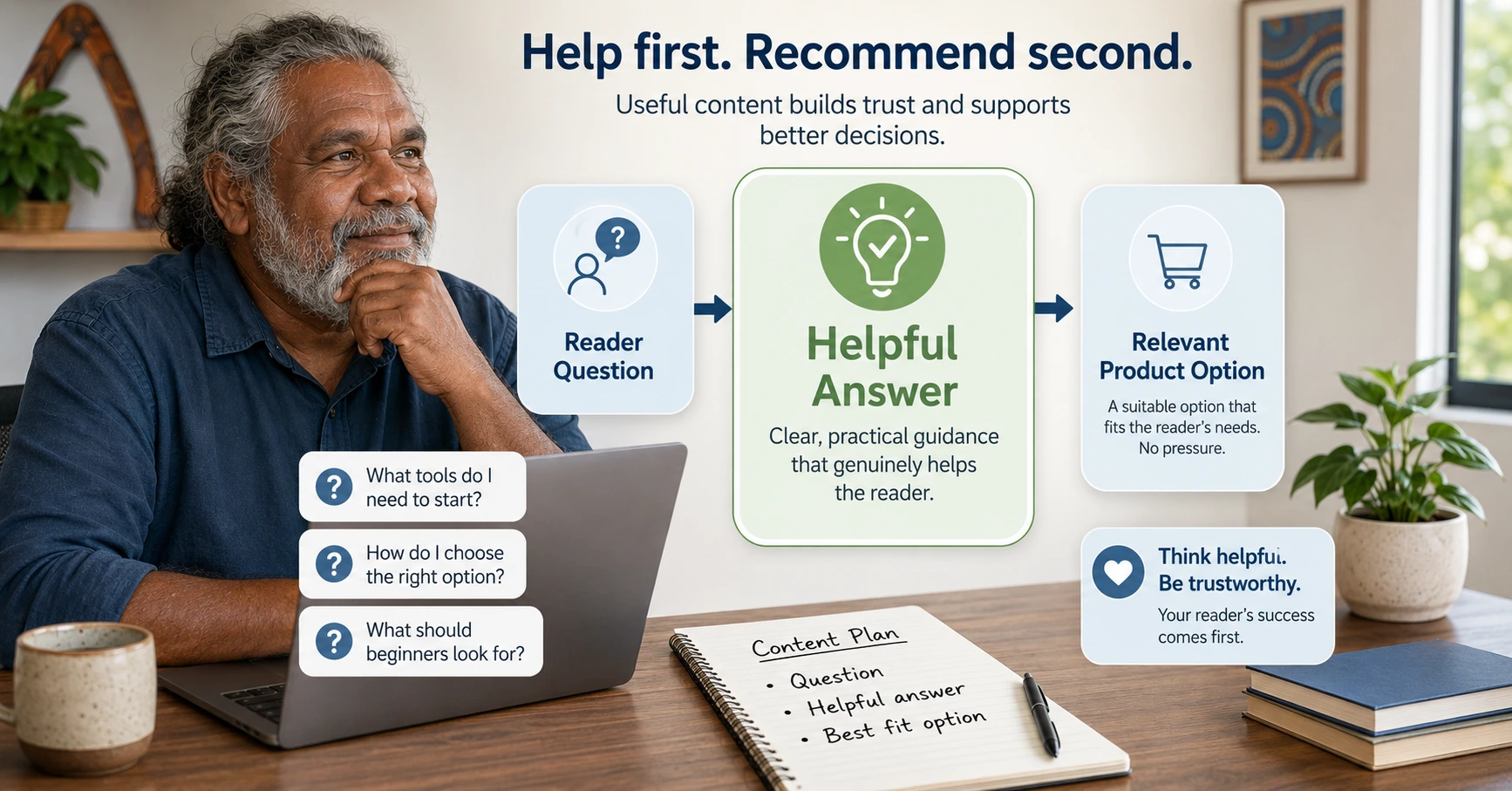
A 90-day plan is not about trying to build a complete online business in three months. It is about giving yourself enough structure to know what to work on next while still allowing time to learn, adjust and make steady progress. If you are still putting the basic pieces together, the Online Business Foundation guide can help you understand the essential steps before you move further into content, traffic and growth.
And that is worth remembering as you look back over your first 90 days. Progress does not mean having everything finished or reaching every goal you set at the beginning. It means you have started building something more organised, useful and sustainable than you had before.
- You do not need to build your entire online business in three months.
- You do not need hundreds of articles.
- You do not need thousands of visitors.
- And you certainly do not need everything to be perfect.
What you want after 90 days is something more valuable: direction and momentum.
- You want to understand your audience better.
- You want a website that has started becoming useful.
- You want content that answers real questions.
- You want the beginning of an email list.
- You want to know more about how people may find you.
- Most importantly, you want to have moved from thinking about building an online business to actually building one.
Take the first month to build your foundation.
Use the second to create useful assets.
Use the third to start building traffic and learning from what happens.
Then review everything and begin again with better information.
That is the real purpose of a 90-day business action plan.
It does not have to predict exactly where your business will go.
It simply needs to help you take the next sensible step.
Next step…
Explore more resources to help you build and grow your online business. Start with the beginner roadmap and learn the fundamentals of affiliate marketing and online business. Discover the complete system I use to build and grow an online business.
Continue Your Online Business Journey
Recommended Reading
New Here?
Ready For The Next Step?