

11 Affiliate Marketing Mistakes Beginners Make and How to Avoid Them
Affiliate marketing mistakes can cost beginners more than lost commissions.
They can waste months of work, weaken reader trust, and make a good business model feel impossible.
You might publish articles, add affiliate links, and wait for results. When nothing happens, it is easy to assume affiliate marketing does not work.
In most cases, the business model is not the problem.
A few common mistakes are holding the website back.
This guide explains the affiliate marketing mistakes beginners make most often and shows you how to correct them.
For a complete overview of the business model, read my Affiliate Marketing for Beginners guide.
Affiliate disclosure: This article may contain affiliate links. If you purchase through one of these links, I may earn a commission at no additional cost to you. I only recommend resources that I believe may be useful for beginners.
What Are Affiliate Marketing Mistakes?
Affiliate marketing mistakes are choices that make it harder to attract visitors, build trust, or earn commissions.
Some mistakes involve poor product choices.
Others involve weak content, unclear targeting, or unrealistic expectations.
Most beginner mistakes are fixable.
- You do not need to start again every time something goes wrong.
- You need to identify the problem, make one clear change, and keep moving.
Quick Affiliate Marketing Mistake Checklist
Before publishing or promoting an offer, ask:
- Does this product match my audience?
- Have I explained how the product helps?
- Is my affiliate disclosure easy to see?
- Does the article provide value without the link?
- Do I have a plan for attracting traffic?
- Am I tracking clicks and results?
- Would I recommend this product to someone I know?
If several answers are no, improve the content before adding more promotions.
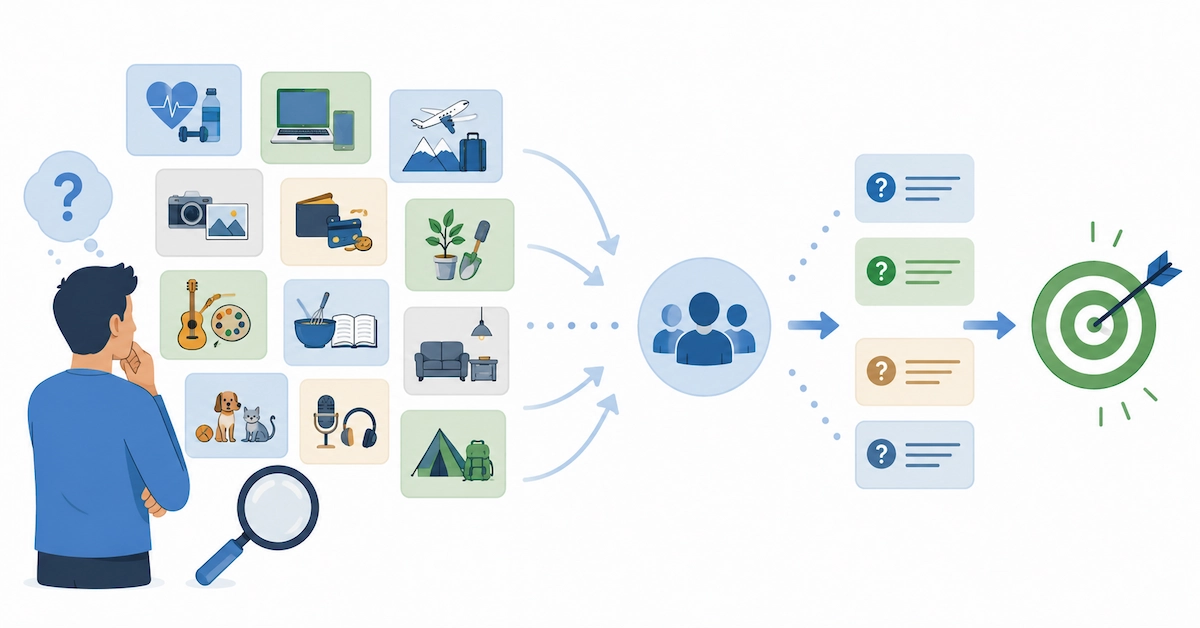
1. Choosing a Niche That Is Too Broad
A broad niche can look attractive because it gives you more products to promote.
It also gives you more competition and less focus.
For example, “health” is too broad for most beginners. It covers exercise, food, sleep, supplements, medical topics, and much more.
A focused niche gives you a clearer audience. Compare the best affiliate marketing niches for beginners before committing to a broad market.
- “Simple home exercise for people over 50” is easier to understand.
It also makes content planning much easier.
Choose a group of people, a common problem, and a useful type of solution.
You can expand later.
Start with a topic you can explain clearly today.
2. Promoting Too Many Unrelated Products
Some beginners join every affiliate program they can find.
Large networks can make many offers available from one dashboard, which makes careful selection even more important.
Understanding what an affiliate network is can help you use these platforms without joining unsuitable programs.
They add links to software, courses, gadgets, books, and services. Many of those products have no clear connection.
This makes the website feel random.
Readers may wonder whether you truly use the products or simply want commissions.
Imagine a website that teaches beginner blogging but suddenly recommends fitness supplements, travel luggage, and cryptocurrency tools.
Even if those products pay good commissions, they do not support the reader’s original goal.
A better approach would be recommending web hosting, an email service, keyword tools, or beginner training.
These products naturally fit the content.
Promote fewer products at the beginning. This guide explains how to promote affiliate products naturally after the content has helped the reader.
- Choosing affiliate products should begin with your audience’s needs, not the available commission.
- Choose products that match your audience and support your main topic.
Each recommendation should have a clear reason behind it.
A smaller, relevant product list usually builds more trust than a large, mixed list.
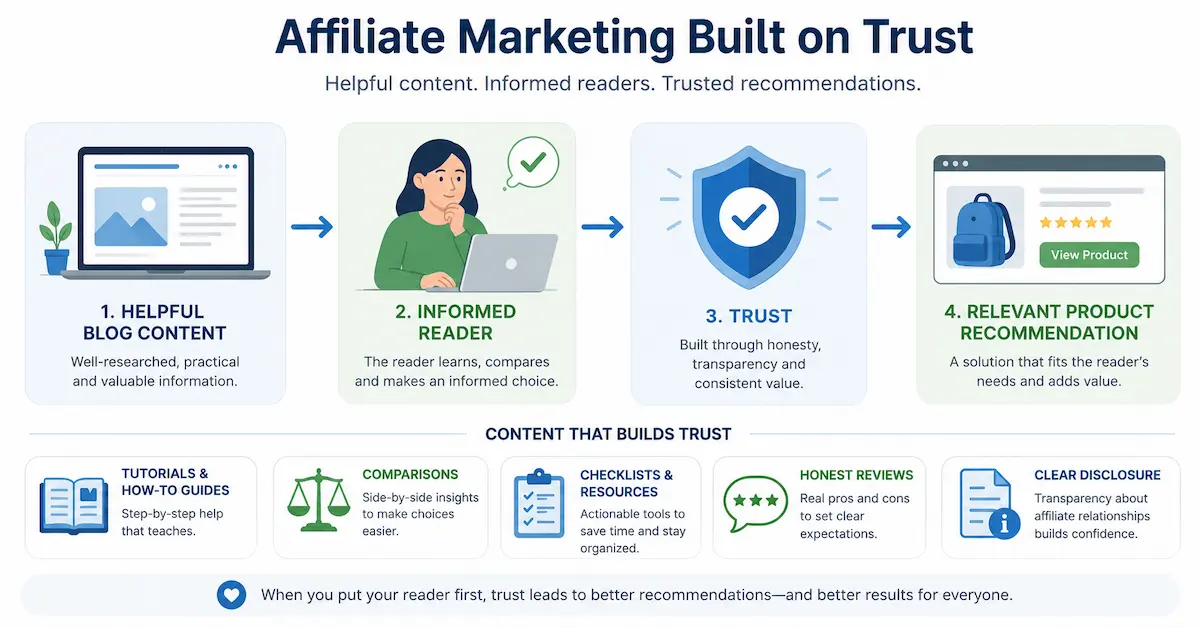
3. Trying to Sell Before Building Trust
New affiliate marketers often publish a few posts and start pushing offers.
The reader has not had time to understand who they are or why their advice matters.
People rarely buy because a link exists.
They buy when the content helps them make a better choice.
- Start by answering real questions.
- Explain confusing topics.
- Compare options fairly.
- Show both strengths and weaknesses.
Your content should help even when the reader does not buy anything.
Trust grows when people feel informed instead of pressured.
This is why learning how to build trust online should come before pushing affiliate offers.
Building trust in affiliate marketing takes time, but it can improve clicks, conversions, and long-term loyalty.
These behaviours help explain why some people believe affiliate marketing is a scam. The business model itself is legitimate, but hidden relationships, exaggerated claims and unsuitable products can make an affiliate promotion appear dishonest.
4. Choosing Products Only for High Commissions
A large commission can look exciting.
Choosing products only for their commission rate is one of the most damaging affiliate marketing mistakes beginners can make.
However, a high payout doesn’t make a poor product useful.
Your reputation stays attached to every recommendation you make. If readers buy something disappointing, they may not trust your next suggestion.
Check the product before promoting it.
Use a clear checklist when choosing an affiliate program so you can compare product quality, commission terms, support, and audience fit.
Look at the sales page, price, refund policy, customer support, product quality, and company reputation.
Ask one simple question:
- Would I feel comfortable recommending this product to someone I know?
If the answer is no, do not promote it.
A smaller commission from a suitable product can be more valuable over time.

5. Ignoring the Audience’s Real Problems
You may understand the topic but still miss what the reader needs.
Beginners sometimes create content around what they want to discuss. They do not check what people actually search for.
That creates a gap between the article and the reader’s problem.
Spend time learning the questions your audience asks.
Look at search suggestions, forums, social groups, product reviews, and competitor comments. Notice repeated frustrations and concerns.
Then create content around those exact problems.
For example, a beginner may search:
- How do affiliate links work?
- Do I need a website?
- How long does affiliate marketing take?
- Which affiliate programs accept beginners?
- Can I start without a large audience?
Clear answers attract the right visitors.
6. Publishing Thin or Generic Content
Generic content repeats basic facts without helping the reader take action.
It may define affiliate marketing but never explain what to do next.
Useful content needs more depth.
A simple content marketing strategy can help you plan useful guides instead of publishing random promotional pages. A thin article might say, “Choose a good affiliate program and promote it.”
A useful article would explain how to check commission rates, cookie duration, payment rules, product quality, and affiliate restrictions.
Include examples, steps, checklists, warnings, comparisons, or personal observations. Explain why each step matters.
Do not add words only to make the article longer.
Every section should answer a question or remove confusion.
Before publishing, ask:
- What can the reader do after reading this section?
If the answer is unclear, improve the section.
Want a Simple Place to Start?
Learning affiliate marketing becomes easier when you follow a clear path.
If you would like to see the training I am looking at, you can read more of the CB Profit Club breakdown here.
It explains what the program includes, who it may suit, and what beginners should consider before joining.
7. Creating Content Without a Traffic Plan
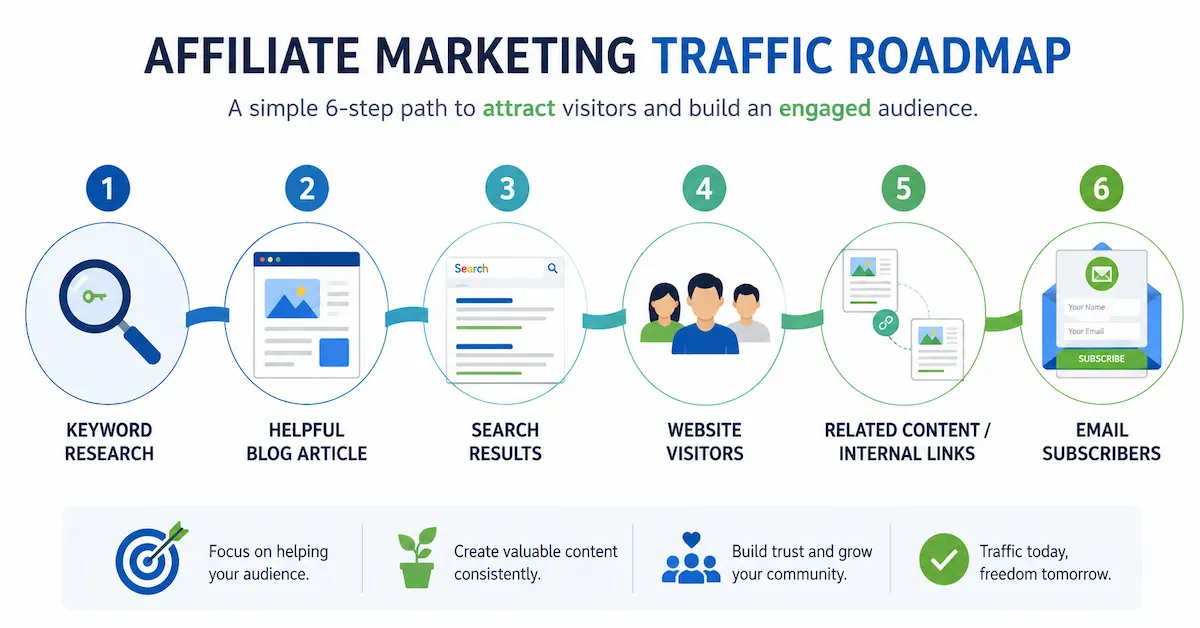
Good content cannot help anyone when nobody finds it.
Many beginners focus only on publishing. They do not decide how people will reach each article.
One of the most common affiliate marketing mistakes is treating traffic as something that will appear after publishing.
Every article should have a clear path to discovery. That path might come from Google search, email, social media, YouTube, or another trusted source.
Choose one main traffic method first. Blog SEO
can work well for helpful content by connecting articles with relevant searches. Social media, YouTube, email, and online communities can also support your plan.
You do not need to use every platform.
My Traffic and Growth for Beginners guide explains how SEO, content, email, and other free methods can work together.
A simple affiliate marketing traffic plan could include:
- Publish one useful search-focused article each week.
- Share each article through one social platform.
- Link related posts together.
- Build an email list from the beginning.
- Update older posts as you learn more.
Consistency matters more than appearing everywhere.
8. Hiding or Forgetting the Affiliate Disclosure
Some beginners worry that a disclosure will stop people from clicking.
Hiding the relationship creates a bigger problem.
Readers deserve to know when you may earn money from a recommendation. Clear disclosure also helps you build an honest website.
You can also read my guide explaining where affiliate disclosures should appear on blog posts and recommendation pages.
Place the disclosure where readers can easily see it.
The FTC’s guidance on affiliate marketing disclosures also recommends making your affiliate relationship clear and placing the disclosure close to the relevant recommendation or link.
Do not hide it on a legal page only. Add a clear statement near the beginning of any post containing affiliate links.
Use plain language.
For example:
This post contains affiliate links. I may earn a commission if you buy through these links, at no extra cost to you.
Honesty makes your recommendations stronger, not weaker.
Not sure what a clear disclosure should actually say? These affiliate disclosure examples show several simple ways to explain the relationship.
9. Expecting Fast and Easy Income
Affiliate marketing can create income. It rarely creates instant income.
If you are unsure about the business model, read Is Affiliate Marketing Legit? for a realistic explanation of how affiliate marketing works and what beginners should expect.
Many people ask how hard affiliate marketing for beginners really is. The basic process is easy to understand, but building useful content, steady traffic, and reader trust takes time.
It becomes easier when you follow one clear plan and improve your skills step by step.
Unrealistic expectations cause beginners to quit too early.
They may publish five articles, see little traffic, and assume they failed.
Treat the first stage as a learning period.
Your early goals can include publishing ten useful posts, joining two suitable programs, learning basic SEO, and getting your first email subscribers.
These goals create a foundation.
Income can follow, but it should not be your only measure of progress.
10. Jumping Between Strategies
A new method always looks easier than the current one.
- One week, you may focus on blogging.
- The next week, you may switch to short videos.
- Then you may buy a course about paid advertising.
Constant switching prevents progress.
Choose one audience, one content format, and one main traffic method for a set period.
Give the plan enough time to produce useful data.
You can still learn new skills. Just avoid rebuilding your entire business every time you see a new promise.
A simple plan followed for six months often beats five plans followed for two weeks each.

11. Failing to Track and Improve Results
Publishing is only the beginning.
You need to know which articles attract visitors, which links receive clicks, and which offers produce results.
Without tracking, you may repeat work that does not help.
Start with basic information.
Track:
- Website visits
- Search terms
- Popular articles
- Affiliate link clicks
- Email sign-ups
- Conversions reported by affiliate programs
Do not check these numbers every hour.
Review them monthly. Look for patterns.
- An article with traffic but few clicks may need a clearer recommendation.
- A post with clicks but no sales, may be promoting the wrong product.
Use results to improve your next decision.
Understanding what affiliate links are can help you avoid missing tracking codes, broken destinations and incorrect link placement.
A Simple Plan to Avoid These Mistakes
Avoiding these common affiliate marketing mistakes does not require a complicated system.
Follow this basic process:
- Choose a focused audience.
- List their main problems and questions.
- Select a few trusted products that match those problems.
- Create helpful content before adding heavy promotion.
- Choose one main traffic method.
- Disclose affiliate relationships clearly.
- Track results and improve older content.
- Stay consistent long enough to learn what works.
This plan will not remove every challenge.
It will help you avoid the mistakes that cause many beginners to lose focus.

Frequently Asked Questions
What is the biggest mistake new affiliate marketers make?
One of the biggest affiliate marketing mistakes is promoting products before building trust.
Readers need useful information before they need a sales link. Focus on solving problems, answering questions, and explaining choices clearly.
Recommendations will feel more natural after your content proves helpful.
How many affiliate products should a beginner promote?
There is no perfect number.
Start with a small group of products that closely match your audience. Two to five suitable offers may be enough for an early website.
Learn each product well before adding more.
How long does affiliate marketing take to work?
Results vary by niche, content quality, traffic method, and consistency.
Some people earn an early commission within months. Others take longer.
Focus first on publishing useful content and building steady traffic instead of expecting a fixed deadline.
Do I need a website to avoid affiliate marketing mistakes?
A website is not required for every method, but it gives you a stable place for detailed content.
You control the pages, links, and email sign-up process.
Social platforms can help, but their rules and reach can change.
Should beginners use paid advertising for affiliate marketing?
Paid advertising can work, but it increases risk.
Beginners may spend money before understanding their audience, offer, or conversion process.
Organic content is often a safer place to learn. Test paid traffic only after checking the affiliate program’s advertising rules.
Ready to Look at a Structured Training Option?
Avoiding mistakes becomes easier when you can follow a structured list-first affiliate marketing process instead of piecing everything together alone.
If you are looking for step-by-step affiliate marketing training you can check out my CB Profit Club breakdown.
It explains what the program includes, who it may suit, and what beginners should check before deciding.
Final Thoughts
Affiliate marketing mistakes do not mean you have chosen the wrong business model.
They usually show where your plan needs more focus.
- Choose a clear audience.
- Recommend fewer, better products.
- Publish useful content.
- Disclose your affiliate links.
- Build one traffic method at a time.
Most importantly, give yourself time to improve.
You do not need to know everything before you begin. You need a simple plan and the patience to follow it. Review the complete guide on how to start affiliate marketing when you are ready to put the steps in order.
Next…
For the complete start-to-finish process, visit the
Affiliate Marketing for Beginners pillar guide.
Continue Your Online Business Journey
Explore more resources to help you build and grow your online business.
Recommended Reading
New Here?
Start with the beginner roadmap and learn the fundamentals of affiliate marketing and online business.
Start HereReady For The Next Step?
Discover the complete system I use to build and grow an online business.
Join Profit Club