
You Can Start Today: 7 Affiliate Marketing Content Ideas for Beginners
Creating content can feel like one of the hardest parts of affiliate marketing when you are new. You may understand the basic idea of joining a program and receiving a tracking link, but then another question appears:
What do you actually publish?
The good news is that you do not need to be a professional writer, experienced video creator, or marketing expert. Good affiliate marketing content starts with something simpler: helping a person understand a problem, compare an option, or take the next step.
Instead of asking, “How can I get somebody to click my affiliate link?” ask, “What would genuinely help this reader make a better decision?”
That small change can make your content more useful and your product recommendations feel more natural.
Among the different affiliate marketing strategies available to beginners, creating genuinely useful content is one of the easiest to understand. You identify something your audience needs help with, provide a useful answer, and introduce a relevant product only when it makes sense.
If you are still learning how the whole business model fits together, start with my Affiliate Marketing for Beginners guide. It explains the wider process of choosing a niche, finding suitable products, building trust, attracting traffic, and improving over time.
Affiliate disclosure: This article may contain affiliate links. If you purchase through one of these links, I may earn a commission at no additional cost to you. I only recommend resources that I believe may be useful for beginners.
What Does Good Affiliate Content Do?
Useful affiliate content helps your audience first and creates a natural opportunity to recommend a relevant product or service second.
It might be a guide, review, tutorial, email, video, comparison, resource page, or social post. The format matters less than whether it answers a question, solves a problem, or helps someone decide what to do next.
The recommendation comes after the help.
The best affiliate marketing content therefore has a clear purpose before an affiliate link is ever added.
This is also why content plays such an important role within many affiliate marketing strategies. It can give people a reason to discover your website, learn from you, return for more information, and understand why a particular product may be useful to them.
If every page begins with a product and then tries to find a reason to promote it, your site can quickly feel sales-focused. If you begin with the reader’s need, the recommendation has a reason to be there.
Start With Affiliate Marketing Content Ideas Your Reader Actually Needs
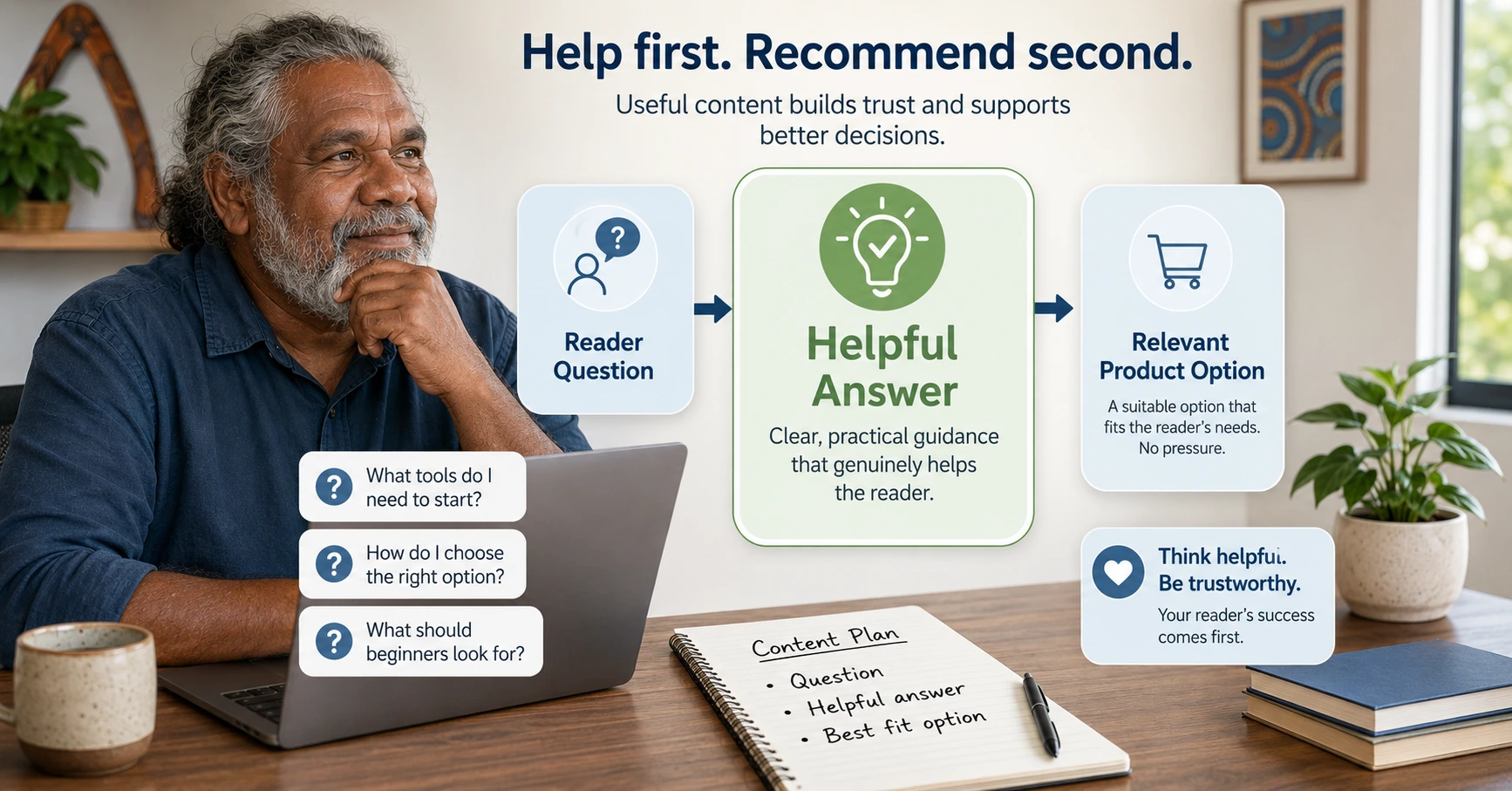
One of the easiest ways to find affiliate marketing content ideas is to write down the questions your audience is already asking. A beginner interested in online business may ask:
- How do affiliate links work?
- Which email marketing tool should I use?
- How do I choose an affiliate program?
- Is this product suitable for a beginner?
- What is the difference between two similar tools?
Each question can become a useful post, email, or video.
Planning affiliate marketing content around genuine questions can also help you avoid creating articles simply because you feel you need something new to publish.
If you are still deciding who you want to help, my guide to affiliate marketing niches for beginners can help you narrow your topic before creating a large content library.
You do not need one hundred ideas. Start with ten real questions. Those can give you enough material for your first group of useful content.
1. Beginner Guides and How-To Articles
Beginner guides are a practical place to start because they let you take a broad subject and break it into manageable steps.
Examples include:
- starting affiliate marketing,
- choosing a niche,
- building an email list,
- or adding affiliate links to a blog post.
Good affiliate marketing content writing does not need complicated language. Beginners often benefit from…
- short explanations,
- practical examples,
- and clear steps.
Imagine you are explaining the subject to one person who has never done it before.
- Explain what each step means,
- why it matters,
- and what they can do next.
A helpful guide can also become a strong internal-linking page because you can point readers toward deeper articles for individual steps.
2. Honest Product Reviews
A review can work well when a reader is already considering a product and wants help deciding whether it is suitable.
A useful review should explain what the product does, who it suits, its strengths, limitations, and possible alternatives.
- If you have used it, explain your experience.
- If not, do not imply that you have.
Reviews work best when they answer the questions someone asks before buying. My complete guide explains how to write a product review with a quick verdict, real evidence, pros and cons, disclosure and a natural call to action.
When you create affiliate marketing content around a particular product, giving readers both its advantages and limitations can make the review far more useful.
Before spending time creating reviews, make sure the program itself is worth promoting. My guide to choosing an affiliate program gives you a checklist covering product quality, audience fit, commissions, tracking, payment terms, rules, and support.
The strongest review is not the one with the most praise. It is the one that helps the reader decide.
3. Comparison Posts
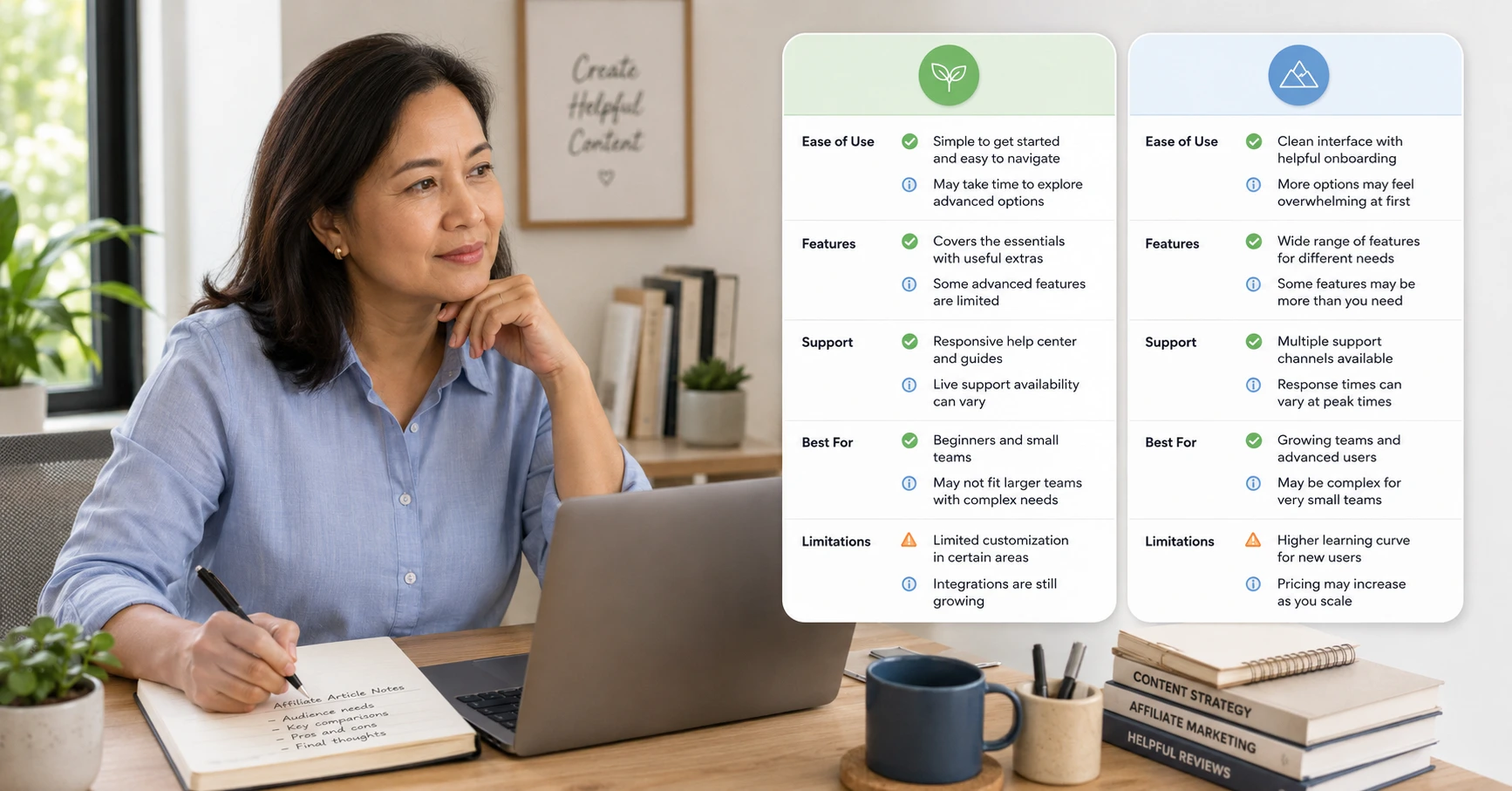
Comparison articles are useful when two or more products solve a similar problem.
Instead of simply declaring one product the winner, compare the things that matter to the reader:
- Price.
- Ease of use.
- Main features.
- Beginner suitability.
- Support.
- Free trials.
- Limitations.
- Best use case.
Someone choosing an email platform may not need the product with the most features. They may need the easiest option for their current stage. That is where practical affiliate marketing content examples become useful: you are translating features into a decision.
A comparison might finish with: “Choose Option A if simplicity matters most. Consider Option B if you need more advanced automation.”
That is more helpful than pretending one choice is perfect for everyone.
If you’d like a step-by-step structure, my guide to writing an affiliate product comparison post explains how to choose products, decide what to compare and finish with a useful recommendation.
4. Tutorials and Problem-Solution Posts
Tutorials show readers how to complete a task.
Examples include…
- creating a signup form,
- organising affiliate links,
- researching a keyword,
- or tracking campaign clicks.
Use numbered steps, screenshots where useful, and a clear outcome.
This type of article is also a good place to avoid forced promotion.
- If a free method solves the problem well, mention it.
- If a paid tool makes the process easier, explain why.
The article should still provide value even if the reader never clicks the affiliate link. That is one of the simplest ways to make a recommendation feel helpful rather than pushy.
5. Resource Lists and Recommended Tools
A resource page or carefully written tools list can bring several recommendations together.
Examples include website tools, email marketing resources, keyword tools, or training.
Do not create a long list simply because every product offers a commission.
A simple format works well:
What it is: A brief explanation.
Best for: The reader who may benefit most.
Why consider it: The main reason it is useful.
What to check: A limitation, cost, or condition worth knowing.
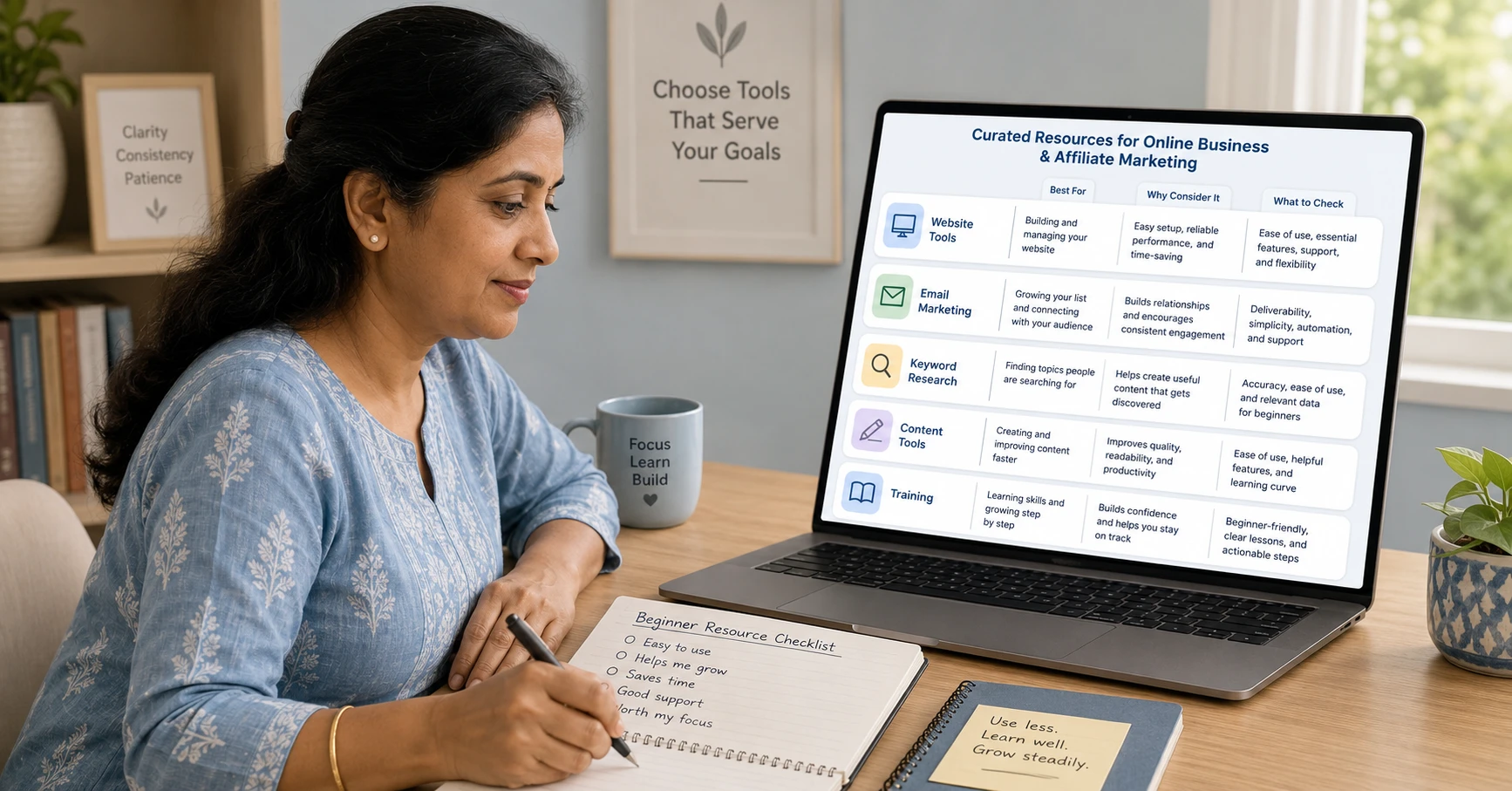
This keeps the page useful instead of turning it into a catalogue of affiliate links.
6. Use Affiliate Marketing Content Creation to Continue the Conversation
Your website is not the only place where affiliate marketing content creation happens. Email can continue the relationship after someone leaves your site.
You do not need to promote something in every email. You can share a tip, a new guide, a lesson learned, a common question, or a short tutorial.
A simple sequence might look like this:
- Welcome the subscriber.
- Deliver the promised free resource.
- Share one practical lesson.
- Link to a useful article.
- Explain a common mistake.
- Introduce a relevant product when it genuinely fits.
This gives your emails a purpose beyond selling and gives readers time to understand how you can help them.
7. Think Like an Affiliate Marketing Content Creator and Repurpose Your Best Ideas
You do not have to create every post from scratch.
One detailed article can become a Facebook post, checklist, short video, email, or series of tips.
This can help a new affiliate marketing content creator avoid constantly inventing new topics.
For example, a post called “7 Things to Check Before Joining an Affiliate Program” could become seven short social posts, one email, and one short video.
If Facebook is one of your chosen channels, my Facebook Affiliate Marketing guide explains ways to combine useful content, groups, videos, list building, and responsible promotion.
Build a Simple Affiliate Marketing Content Strategy
A beginner does not need to publish on every platform or create every format each week.
Some affiliate marketing strategies can become unnecessarily complicated because they try to combine too many platforms, products, and promotional methods at once. A simpler approach is to choose a few content formats you can manage consistently and build from there.
A manageable plan could be:
- One helpful guide.
- One comparison, review, or tutorial.
- One useful email each week.
- Two or three short social posts repurposed from the main article.
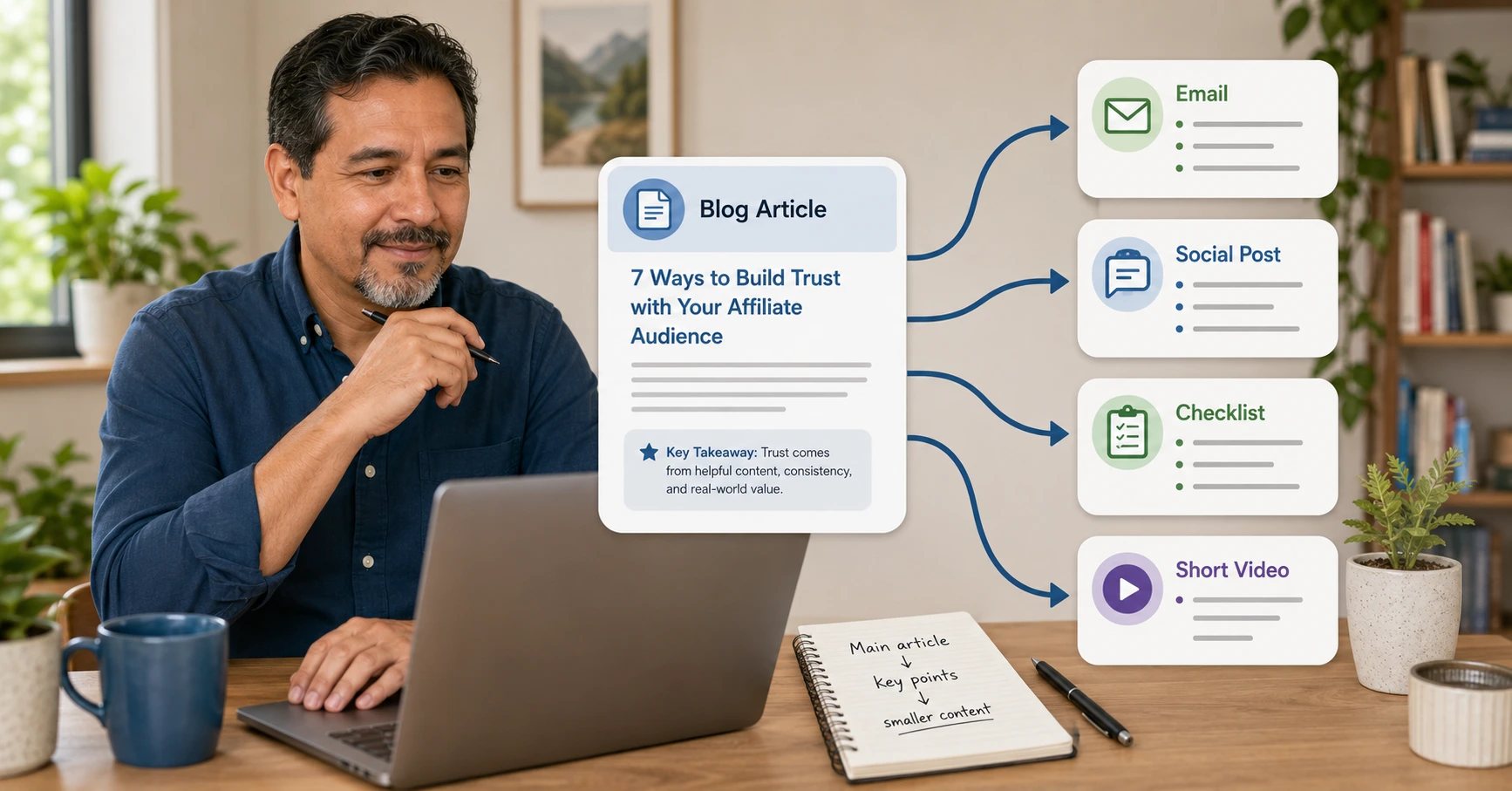
You can also group several posts around one reader problem. For example, if your audience needs help choosing email software, you could create an introductory guide, a feature checklist, one product review, a comparison, a signup-form tutorial, and a beginner mistakes post.
Those pieces then work together rather than standing alone. Someone may discover your introductory article first, move to your comparison, read a tutorial, and eventually decide whether one of the recommended tools fits their needs.
That is a more useful way to think about strategy than simply publishing more affiliate links.
Link those pages together so the reader has a clear path. For a broader planning system, see my content marketing strategy guide.
Keep Promotion Helpful, Clear and Honest
Before adding an affiliate link, ask:
- Have I explained the problem?
- Have I already given the reader useful information?
- Does this product genuinely fit the next step?
- Have I explained why I am recommending it?
- Would the article still be useful without the link?
If the answer is yes, the recommendation is more likely to feel natural.
My guide on how to promote affiliate products without being pushy goes deeper into relevance, placement, trust, and calls to action.
Transparency matters too. The UK ASA/CAP guidance explains that the CAP Code applies to affiliate marketing and that affiliate promotions should be obviously identifiable as advertising. Read Online Affiliate Marketing – ASA/CAP for guidance covering blogs, social media, and affiliate links.
A clear disclosure does not weaken good content. It helps readers understand the relationship behind the recommendation.
A Simple Four-Week Starting Plan
If planning still feels overwhelming, try this:
Week 1: Publish one educational guide that answers a beginner question.
Week 2: Create a comparison, review, or “what to look for” article.
Week 3: Publish a tutorial or checklist that helps the reader complete a task.
Week 4: Send an email, repurpose your strongest article into shorter content, add internal links, and improve anything that was unclear.
Then repeat the process around another reader problem.
You do not need to publish every day. A smaller schedule that you can maintain gives you time to improve your writing, learn basic SEO, understand your audience, and become more confident with recommendations.
As you gain experience, you can test other affiliate marketing strategies, but there is no need to add complexity simply because another marketer is using a different platform or publishing schedule. Build around what your audience needs and what you can realistically maintain.

Want a Clearer Affiliate Marketing Starting Point?
If you are trying to learn affiliate marketing while building a website, email list, traffic plan, and follow-up process, having a structured path can make the steps easier to understand.
The CB Profit Club is the training program I recommend for beginners who want a more guided approach.
There are no guaranteed results. You will still need to learn, create, test, and stay consistent.
The benefit of structured training is having a clearer sequence to follow instead of trying to piece everything together from random information.

Frequently Asked Questions
What is affiliate marketing content?
Affiliate marketing content is useful information created for an audience that may also include a relevant product or service recommendation. It can take the form of guides, tutorials, reviews, comparisons, resource pages, emails, videos, or social posts. The strongest examples help the reader first rather than simply placing affiliate links in front of them.
Do I need to write product reviews?
No. Reviews are only one format. You can recommend products naturally inside tutorials, guides, comparison posts, emails, and resource pages when the recommendation helps the reader.
How often should a beginner publish?
There is no perfect schedule. Publishing one useful article every week or two can be more sustainable than trying to publish daily. Choose a pace you can maintain and improve over time.
Can I use AI to help create affiliate content?
AI can help with brainstorming, outlines, editing, and repurposing. You should still check factual claims, add your own judgment and examples, and make sure the finished content genuinely helps the reader rather than publishing generic material at scale.
Should every blog post contain an affiliate link?
No. Some posts should simply educate, answer questions, or guide readers to another useful page. A healthy content library can include both informational articles and pages where a product recommendation naturally fits.
Final Thoughts

You don’t need to become a perfect writer or master every platform before you begin.
- Start with one reader question.
- Create one useful answer.
- Then look for the next sensible step.
Over time, your website can grow from a handful of articles into a connected library of guides, tutorials, comparisons, reviews, emails, and resources.
Strong affiliate marketing content is rarely about producing as much as possible.
It is about creating useful information that helps the right reader at the right stage.
- Keep recommendations relevant.
- Be clear about affiliate relationships.
- Avoid exaggerated promises.
- Link related articles together.
- Improve older posts as you learn.
Most importantly, give yourself permission to start before everything feels polished. Your first article may not be your best article, and that is completely fine.
Publish something useful, learn from it, and make the next piece better.
For the complete beginner roadmap, return to the Affiliate Marketing for Beginners pillar guide and continue building one step at a time.
Continue Your Online Business Journey
Explore more resources to help you build and grow your online business.
Recommended Reading
New Here?
Start with the beginner roadmap and learn the fundamentals of affiliate marketing and online business.
Start HereReady For The Next Step?
Discover the complete system I use to build and grow an online business.
Join Profit Club