

How to Get Backlinks Without Spamming or Begging for Links
Backlinks can sound like one of those SEO subjects that can become complicated very quickly.
You learn that links from other websites can help search engines discover your content. Then you start reading link-building advice and suddenly you are being told to send hundreds of emails, swap links with strangers or pay to have your website mentioned.
Learning how to get backlinks to your site does not mean pestering people for links. A better approach is to create useful material, put it in front of relevant people and give other website owners a genuine reason to reference it.
There is no guarantee that every article will earn links, but this is a more sensible way to build a website you can be comfortable putting your name behind.
This guide explains what a useful backlink looks like and nine practical ways to work towards them without turning your marketing into spam.
Affiliate Disclosure: Some links on this page may be affiliate links. If you purchase through one of these links, I may receive a commission at no additional cost to you. I only recommend products or services that I believe may be useful to readers.
What Is a Backlink?
A backlink is simply a link from another website to a page on your website.
For example, imagine you publish a beginner-friendly guide to choosing a focus keyword. Another blogger later links to it because the explanation helps their readers. That link is a backlink to your page.
Backlinks can help people discover your website directly, and search engines can use links as part of understanding pages and the wider web.
Not every backlink is valuable. A relevant editorial link is very different from one placed in an unrelated directory, forum signature or page created mainly to sell links.
If you are still getting comfortable with the broader SEO picture, this fits naturally alongside the Traffic & Growth for Beginners guide, where content, search optimisation, internal links and promotion work together.
Why “More Backlinks” Is the Wrong Starting Goal
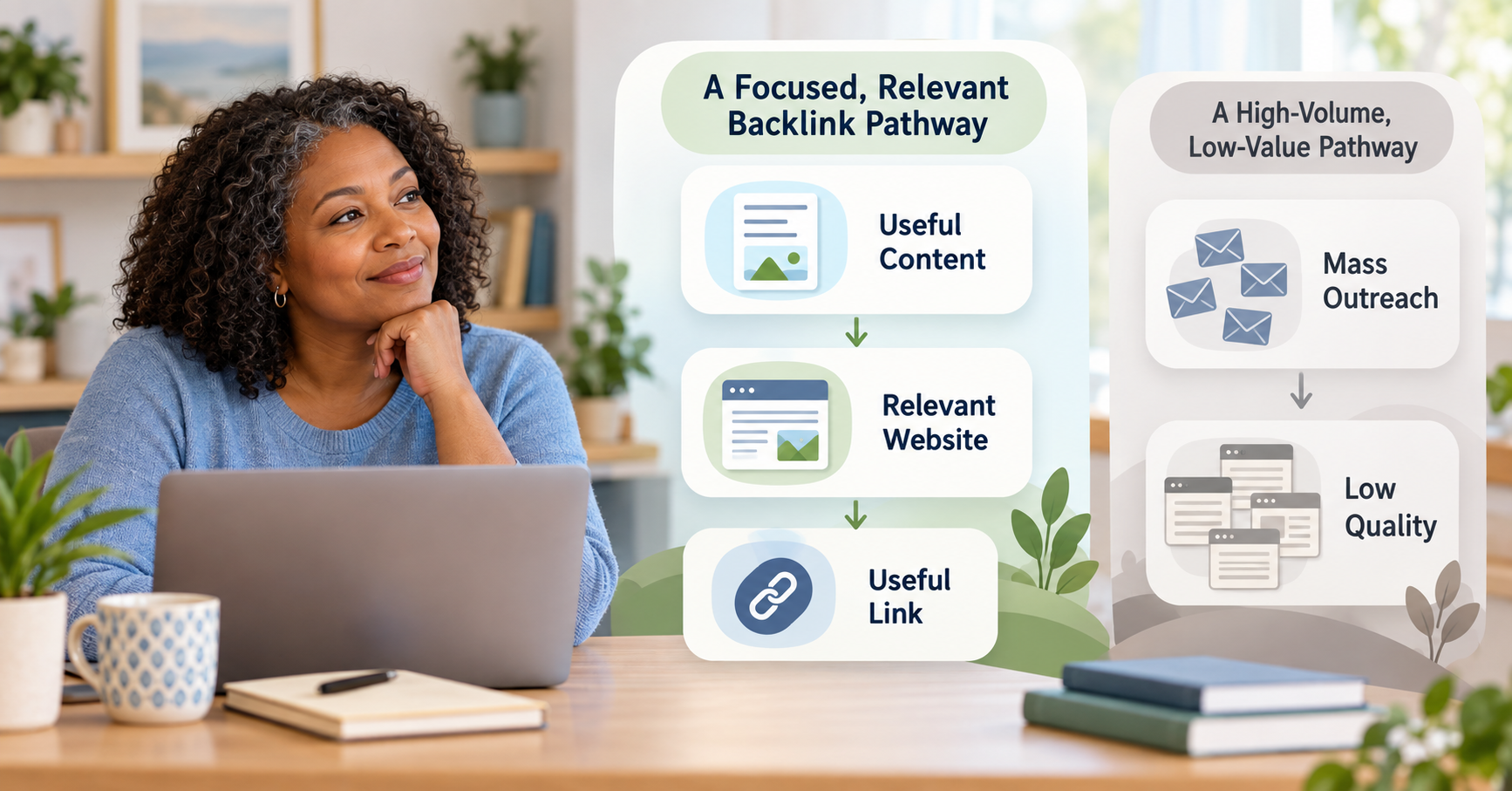
When you’re learning how to build backlinks, it is easy to turn the process into a numbers game.
You may see services promising hundreds or thousands of backlinks. The problem is that quantity tells you very little about whether those links are useful, relevant or trustworthy.
A sensible backlink has context around it. The linking page has a genuine reason to mention your content, and someone following it should arrive at a page that helps them.
Google’s current spam policies also make an important distinction here. Creating or acquiring links mainly to manipulate search rankings can fall under link spam. Examples include buying or selling links for ranking purposes, excessive link exchanges, automated link creation and low-quality directory links.
So when you are deciding how to get backlinks to your site, the better question is not “How can I get as many as possible?” It is…
“How can I create pages that the right people have a genuine reason to mention?”
How to Get Backlinks to Your Site Without Spamming People
If you’re wondering how to get backlinks to your site, the most useful place to begin is with the content you’re asking other people to reference.
There is nothing wrong with letting someone know you have created something useful. Outreach itself is not the problem.
The difference is whether you are sending a relevant message because your page may genuinely help their audience, or sending the same request to hundreds of people simply because they own a website.
Here are nine practical approaches.
1. Create Something Worth Linking To
Before thinking about outreach, look at the page you want people to link to.
Does it offer anything that would genuinely help another writer explain their subject?
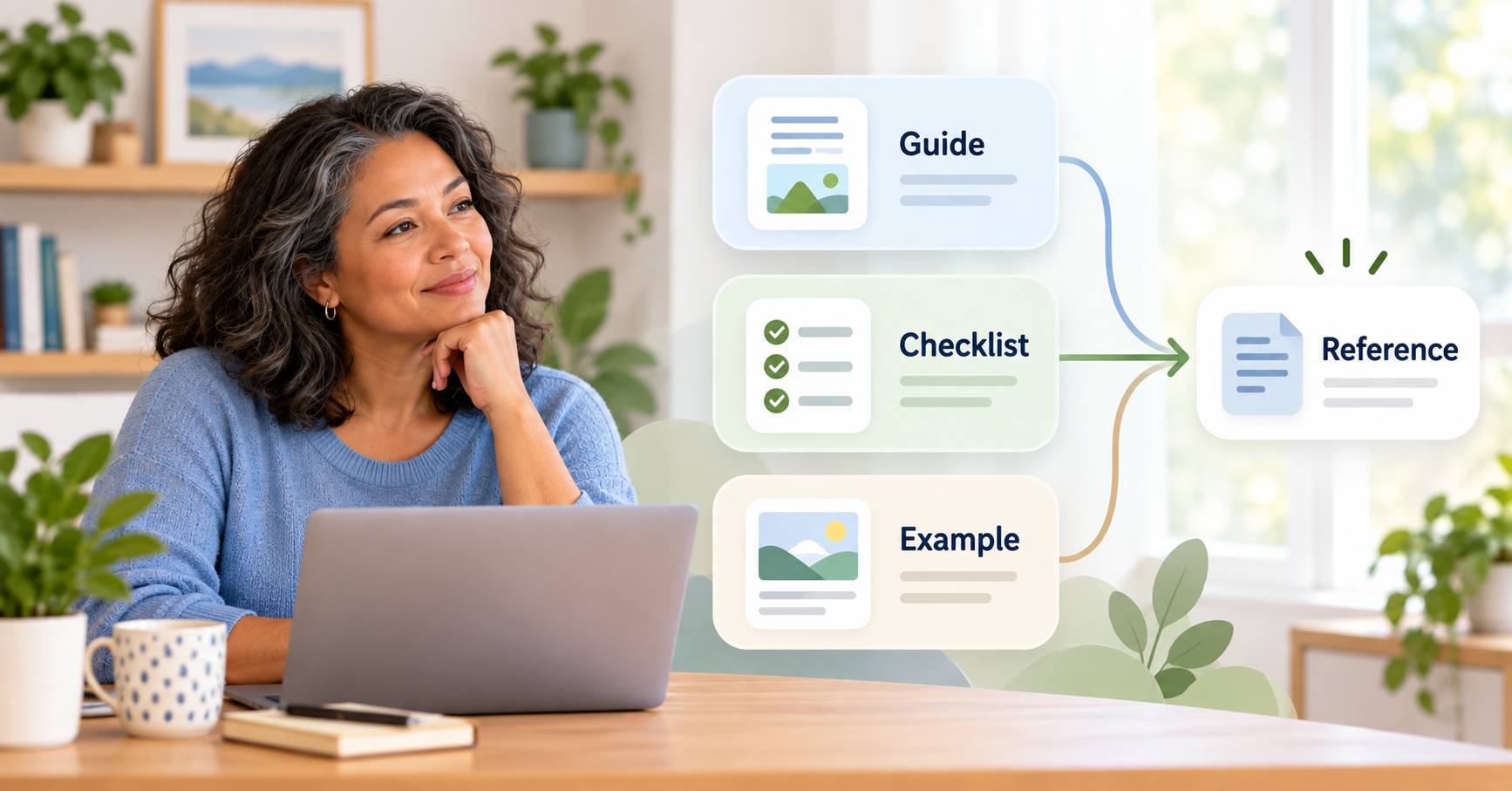
Useful link-worthy content might include a clear tutorial, an original checklist, a comparison, a useful example, a small piece of research or a template.
You do not need a huge “ultimate guide.”
A detailed beginner checklist that solves one specific problem can be more linkable than another broad article covering familiar advice.
This is also why a good content marketing strategy matters. A connected library of useful resources gives people more reasons to discover and reference your site.
2. Add Original Examples Other Articles Can Refer To
Original does not have to mean expensive research.
You could document how you organise an article around a pillar page, show a simple before-and-after example of improving a weak title, or create a small table comparing ways a beginner might promote a new post.
These details give another writer something specific to reference. If you later use the data from your own website, keep the claims in balance with the amount of data you actually have.
3. Find Pages Already Discussing the Same Problem
A practical way to learn how to get backlinks to your site is to look for websites already discussing the subject you have covered.
Suppose you publish a guide on finding long-tail keywords. You could look for articles about beginner keyword research, starting a blog or finding lower-competition topics. If your guide would genuinely improve one of those pages, there may be a sensible reason to contact the author.
- Keep the message short and specific.
- Mention the relevant section.
- Explain why your resource may help and leave the decision with them.
You are not entitled to a backlink just because you sent an email. That attitude makes your request feel more like begging.
4. Use Broken Link Building Carefully

Broken link building means finding a page that links to a resource that no longer exists, then suggesting a useful replacement.
It can work when your replacement genuinely fits. Read the surrounding paragraph and ask what the original link was helping the reader understand. If your page answers that same need well, a polite suggestion can make sense.
If it does not, move on…
5. Contribute to Relevant Websites When You Have Something Useful to Add
Guest posting can be a reasonable way to reach a different audience, but the article should exist because it is useful to that audience, not simply because you want a backlink.
Choose websites that make sense for your subject and offer an idea you can explain well. Avoid turning guest posting into a production line of thin articles with keyword-heavy links pointing back to your site.
One strong contribution can be more worthwhile than dozens of low-quality placements nobody reads.
6. Build Relationships Before You Need Anything
Learning how to get backlinks to your site doesn’t mean contacting everyone you can find. A smaller number of relevant conversations usually makes far more sense.
You do not need to “network” with people purely so you can ask for a link later.
Participate normally where your subject is discussed.
- Comment thoughtfully on an article.
- Answer a genuine question.
- Share someone else’s useful resource.
- or have a helpful conversation on social media.
Do it because the conversation is worthwhile. Over time, active participation can lead to mentions, collaborations and natural backlinks, but those are only possible outcomes rather than something you demand and expect.
This is also a useful way to think about how to get natural backlinks, that become genuinely useful and visible within your subject rather than approaching every relationship as a link opportunity.
7. Make Your Best Content Easy to Reference
Sometimes a useful article is difficult to link to because the main answer is buried.
Clear headings, concise explanations, useful examples and simple tables can make a page easier for another writer to reference.
A short, plain-English section is easier to reference than an answer buried in a long block of text. Good formatting will not automatically earn backlinks, but a confusing format can make a useful page even harder to use.
8. Promote Useful Content Without Dropping Links Everywhere
Publishing an article is not the end of the job.
Share it where the subject is genuinely relevant.
- That might mean an email to subscribers.
- A social post explaining one lesson.
- A short video.
- Pinterest content.
- or a helpful answer in a community where sharing your own resource is appropriate.
Lead with the useful idea rather than the link.
If someone can benefit from your contribution even without visiting your site, you are helping rather than simply promoting. Natural backlinks often begin with simple discovery.
Links from social media posts, YouTube descriptions and similar platforms can send visitors to your website, and technically they are links from another site. However, they generally shouldn’t be treated in the same way as an editorial backlink from a relevant website.
Their main value is often discovery: someone finds your content, finds it useful and may eventually share or reference it from their own website.
9. Ask for a Link Only When the Link Makes Sense
There will be times when a direct request is reasonable.
Perhaps another article mentions a process you have explained in more detail, or a resource page has a genuine gap your guide fills. In those cases, you can ask.
Keep the message brief. Explain why the page is relevant, identify the exact resource and make it easy for the website owner to decide. Then leave it alone.
Learning how to get backlinks to your site also means learning when not to ask.
What Makes a Backlink Worth Having?
For a beginner, “high-quality backlink” can sound as though you need links only from enormous websites.
That is not the case.
A smaller website can still provide a useful backlink when it is relevant and sends readers to your page for a sensible reason.
Ask three questions:
- Is the page relevant?
- Would a real reader follow the link?
- Does my page add something useful?
If the answer is yes, the link is probably more meaningful than one placed on an unrelated page simply because it was easy to obtain.
That is a better backlink strategy than chasing a particular score.
A Simple Backlink Routine for a Beginner Website
You do not need to turn link building into a full-time job. For most people, link building for beginners works better as a small, regular activity than as a large outreach campaign.
- Start by creating the best article you reasonably can.
- Promote it through the channels you already use.
- Then identify a small number of relevant pages or people who may genuinely benefit from knowing it exists.
One short session each week looking for a few sensible opportunities is enough to begin learning how to get backlinks to your site without making it a daily chore.
At the same time, keep working on the wider Traffic & Growth basics. Backlinks can support SEO, but they do not replace useful content, good site structure, internal linking or matching search intent.
Once you understand how to get backlinks to your site in a natural way, you can make it a small part of your regular content-promotion routine rather than a separate SEO project.
Backlinks are only one part of the picture. If you’re working on growing your audience more broadly, my guide to how to increase website traffic organically explains several other practical ways to help more people discover your site.
Backlink Mistakes Worth Avoiding
Avoid mass-emailing generic requests, buying links for ranking purposes, joining large reciprocal-link schemes, using automated backlink software or adding keyword-rich links to irrelevant comments and forums.
Be careful with offers that promise many “high-authority” links without explaining where they come from. The aim is to earn relevant references gradually as your website becomes more useful and visible.
Would You Like Some More Structured Help?
If you’d like some more structured help putting your online business together, you can also take a look at CB Profit Club. It provides step-by-step training designed to help you work through the different parts of building an online business without trying to figure everything out at once.
Have a look through the details and decide whether it fits where you are at the moment.
Frequently Asked Questions

How Do You Get Quality Backlinks to Your Website?
Quality backlinks usually come from relevant websites that have a genuine reason to reference your content. Start by creating something useful and specific, then make sure people who discuss that subject have a reasonable chance of discovering it. You don’t need links from the biggest websites on the internet. A relevant link from a smaller, trustworthy site can still be useful if it sends the right reader to a page that genuinely helps them.
Can I Get Backlinks Without Asking Anyone?
Yes. Natural backlinks can appear when people discover your content through search, social media, email, communities or recommendations and decide to reference it themselves. A newer website has a smaller audience, though, so sensible promotion can help. You do not have to ask everyone for a link, but you do need to make useful content discoverable.
Should I Buy Backlinks?
Buying links for the purpose of manipulating search rankings is not a sensible long-term SEO strategy. Google lists buying or selling links for ranking purposes as an example of link spam. Paid advertising and sponsorship can be legitimate, but those links need to be treated appropriately.
Are Directory Backlinks Useful?
Some legitimate directories can be useful when they help real people find relevant businesses or resources. The problem is submitting your site to large numbers of low-quality directories purely to create backlinks. Relevance and usefulness matter more than the number of listings you can collect.
How Long Does It Take to Build Backlinks?
There is no reliable timetable. A useful article may earn a link quickly, months later or not at all. A new website usually needs time to publish worthwhile content, become discoverable and build relationships. Treat backlinks as part of gradual website growth rather than something that must reach a particular number by a deadline.
Final Thoughts

Learning how to get backlinks to your site becomes easier when you stop treating links as things you have to collect.
Your first job is to give people something worth referencing.
- Create useful content.
- Add examples that are genuinely yours.
- Make your best pages easy to understand.
- Promote them in relevant places.
- Contact people selectively when there is a real reason your resource may help their audience.
Some of that work will lead to backlinks and some will not. That is normal when you are learning how to get backlinks to your site in a sustainable way.
For now, choose one strong article on your site and ask:
What could I add to this page that would make another writer genuinely comfortable recommending it?
That is a much better place to start than sending another hundred or so emails.
Continue Your Online Business Journey
Explore more resources to help you build and grow your online business.
Recommended Reading
New Here?
Start with the beginner roadmap and learn the fundamentals of affiliate marketing and online business.
Start HereReady For The Next Step?
Discover the complete system I use to build and grow an online business.
Join Profit Club