

Beginner Social Media Marketing: A Complete Guide to Growing Your Business Online
Social media is one of the most powerful marketing channels available today. Yet many business owners feel overwhelmed when they first start.
- Which platform should you use?
- How often should you post?
- What type of content actually works?
And perhaps the biggest question of all:
- How do you turn followers into customers?
If you’ve been asking these questions, you’re not alone.
This beginner social media marketing guide will walk you through everything you need to know to build a strong foundation, attract the right audience, and create a strategy that supports your business goals.
Whether you’re a small business owner, freelancer, coach, affiliate marketer, or entrepreneur, this guide will help you understand the basics and avoid the mistakes that keep most beginners stuck.
Affiliate disclosure: This article may contain affiliate links. If you purchase through one of these links, I may earn a commission at no additional cost to you. I only recommend resources that I believe may be useful for beginners.
What Is Social Media Marketing?
Social media marketing is the process of using social media platforms to promote your brand, build relationships with your audience, drive website traffic, and generate leads or sales.
Popular social media platforms include:
- TikTok
- X (formerly Twitter)
- YouTube
The goal isn’t simply to collect followers.
The goal is to create valuable content that attracts the right people and encourages them to take action.
That action could be:
- Visiting your website
- Joining your email list
- Downloading a free resource
- Purchasing a product
- Signing up for a service
Successful social media marketing focuses on creating trust before asking for a sale.
These practical steps can also help you build trust online through honest content, consistent messaging and careful recommendations.
Why Social Media Marketing Matters for Beginners
Many new business owners assume they need a large advertising budget to compete online.
The reality is that social media gives beginners access to audiences that were once only available to major brands.
Some key benefits include:
Low Start-up Cost
Social media can also form part of a low-cost online business for beginners when it is combined with helpful content, a website and other free traffic methods.
Creating social media profiles is free. While paid advertising can accelerate results, many businesses grow successfully through organic content.
Direct Communication
Social media allows you to engage directly with potential customers.
You can answer questions, solve problems, and build credibility in real time.
Brand Awareness
Consistent posting helps people become familiar with your brand.
The more often your ideal audience sees valuable content from you, the more likely they are to remember your business when they’re ready to buy.
Traffic Generation
Social media can drive visitors to:
- Your website
- Blog posts
- Landing pages
- Affiliate offers
- Online stores
Learn how social media fits alongside SEO, email and content marketing in this beginner guide to traffic and growth strategies.
This makes it a valuable part of a complete digital marketing strategy.
Choosing the Right Social Media Platform
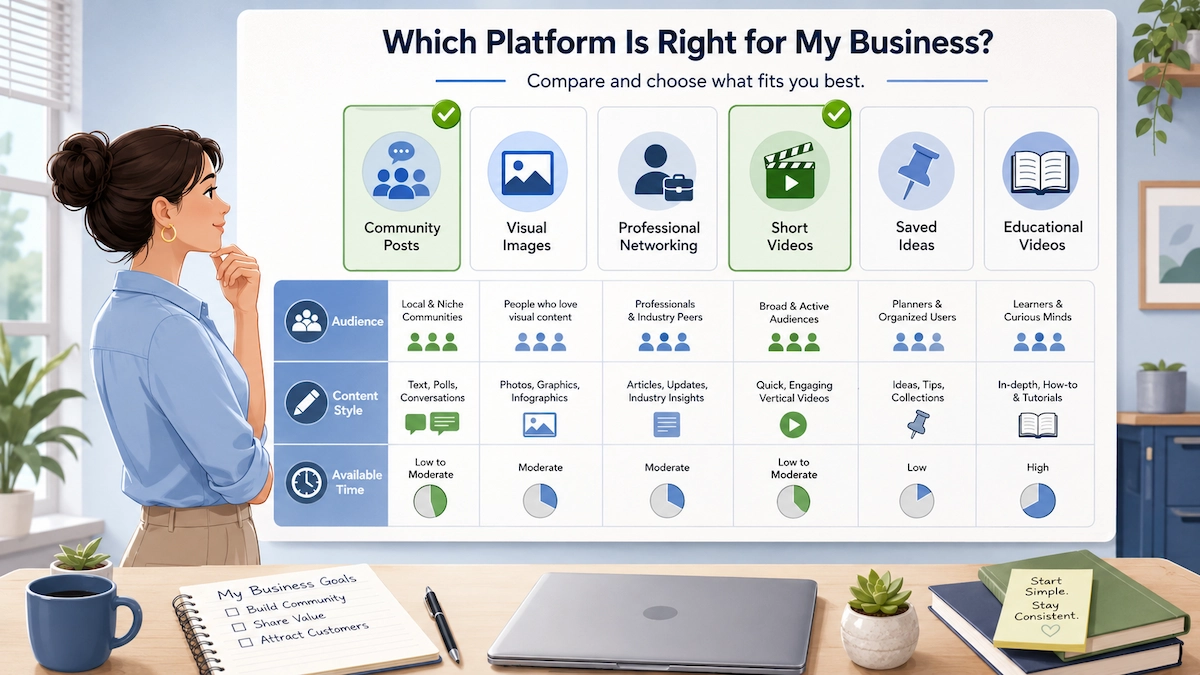
One of the biggest mistakes beginners make is trying to be everywhere at once.
Instead, focus on one or two platforms where your target audience spends the most time.
Best for:
- Local businesses
- Community building
- Groups
- Paid advertising
For a more detailed platform example, see this Facebook affiliate marketing guide.
Best for:
- Visual brands
- Lifestyle businesses
- Coaches
- E-commerce
Best for:
- B2B marketing
- Consultants
- Service providers
- Professional networking
TikTok
Best for:
- Short-form video content
- Brand awareness
- Reaching younger audiences
Best for:
- Bloggers
- E-commerce stores
- DIY, food, fashion, and home niches
YouTube
Best for:
- Tutorials
- Product reviews
- Educational content
- Long-term organic traffic
Choose the platform that aligns with your audience rather than chasing trends.
The Australian Government’s guide to social media for business offers additional advice on choosing platforms, planning content and measuring your results.
Understanding Your Target Audience
Before creating content, you need to understand who you’re trying to reach.
Ask yourself:
- What problems do they have?
- What goals are they trying to achieve?
- What questions do they ask repeatedly?
- What content do they already consume?
The better you understand your audience, the easier it becomes to create content they actually care about.
A simple audience profile might include:
- Age range
- Occupation
- Interests
- Pain points
- Desired outcomes
Every piece of content should speak directly to that person.
Creating a Beginner Social Media Marketing Strategy
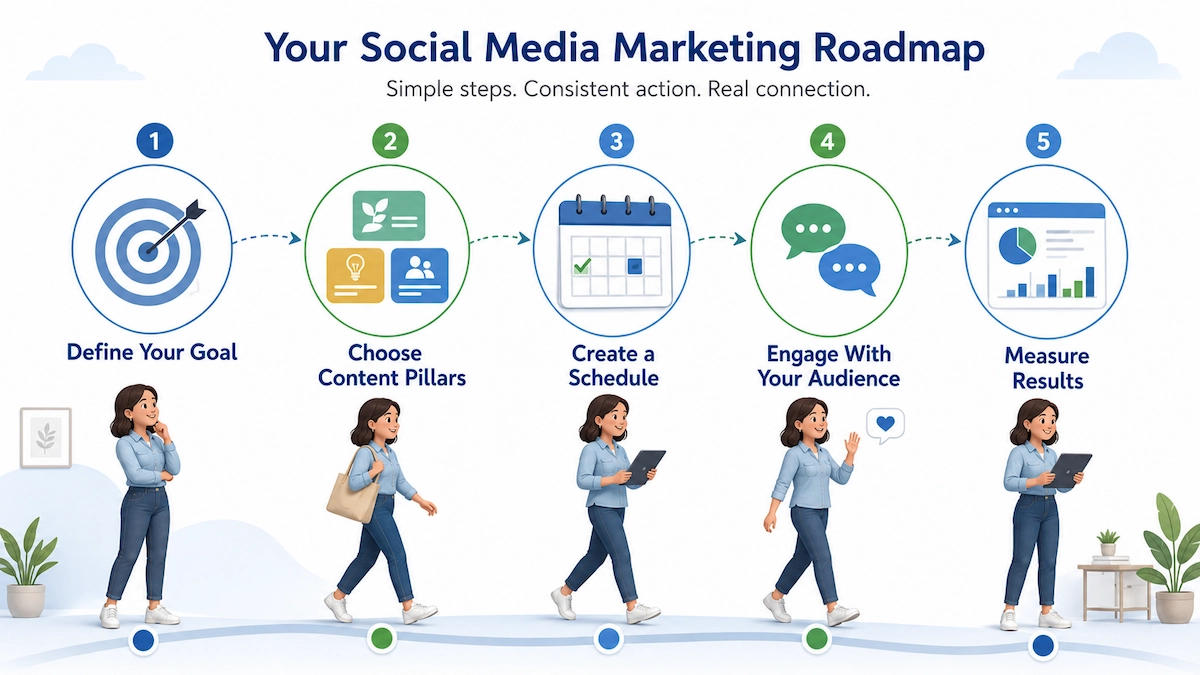
A social media strategy doesn’t have to be complicated.
Start with these five steps.
Step 1: Define Your Goal
Your goal might be:
- Brand awareness
- Website traffic
- Lead generation
- Sales
- Community growth
Having a clear objective helps you measure success.
Step 2: Create Content Pillars
Content pillars are recurring topics you regularly discuss.
For example:
A fitness coach might use:
- Nutrition tips
- Workout advice
- Success stories
- Mindset content
A marketing business might use:
- Social media tips
- Content creation
- Case studies
- Industry trends
Most businesses perform well with 3-5 content pillars.
A clear content marketing strategy can help you turn your main topics into a practical publishing plan.
Step 3: Create a Posting Schedule
Consistency beats intensity.
Posting three times every week for a year is usually more effective than posting three times a day for two weeks and then disappearing.
A beginner schedule could be:
- Monday: Educational content
- Wednesday: Personal story
- Friday: Promotional content
Step 4: Engage With Your Audience
Social media is not a billboard.
Respond to:
- Comments
- Direct messages
- Mentions
- Questions
Engagement helps build trust and increases visibility.
Step 5: Measure Results
Track metrics such as:
- Reach
- Engagement
- Click-through rate
- Website traffic
- Leads generated
Review your results monthly and adjust your strategy.
Content Ideas for Beginner Social Media Marketing
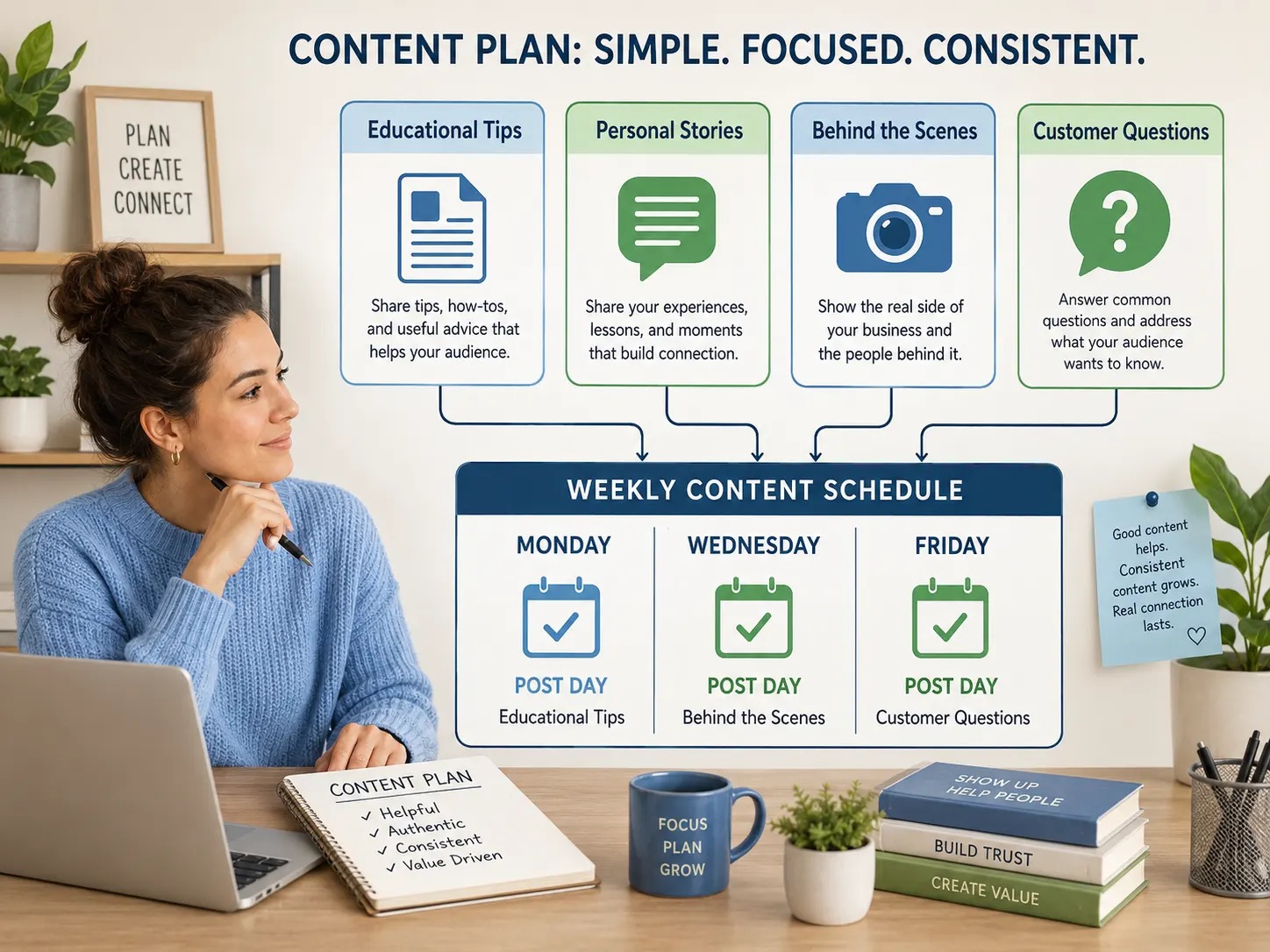
Many beginners run out of content ideas quickly.
The good news is that your audience often wants simple information.
Here are content formats that consistently perform well.
Educational Posts
Teach something useful.
Examples:
- How-to guides
- Tutorials
- Quick tips
- Industry insights
Personal Stories
Stories help people connect with your brand.
Share:
- Lessons learned
- Challenges overcome
- Business experiences
- Customer success stories
Behind-the-Scenes Content
Show how your business operates.
Examples:
- Daily routines
- Workspace setups
- Project updates
- Product creation
Frequently Asked Questions
Answer common questions from customers.
This creates useful content while reducing objections.
Case Studies
Demonstrate results through real examples.
People trust evidence more than claims.
Common Social Media Marketing Mistakes Beginners Make
Avoiding these mistakes can save months of frustration.
Posting Without a Plan
Random content creates random results.
Develop a strategy and follow it consistently.
Focusing Only on Selling
People follow accounts for value.
If every post is a sales pitch, engagement will decline.
A useful guideline is:
- 80% value
- 20% promotion
Learn how to promote affiliate products without being pushy by balancing helpful content with relevant recommendations.
Ignoring Analytics
Data reveals what your audience wants.
Pay attention to your top-performing posts.
Comparing Yourself to Large Brands
Major companies often have entire marketing teams.
Focus on your own progress.
Quitting Too Soon
Many businesses stop posting before seeing results.
Social media marketing is a long-term investment.
Consistency compounds over time.
Tools That Make Social Media Marketing Easier
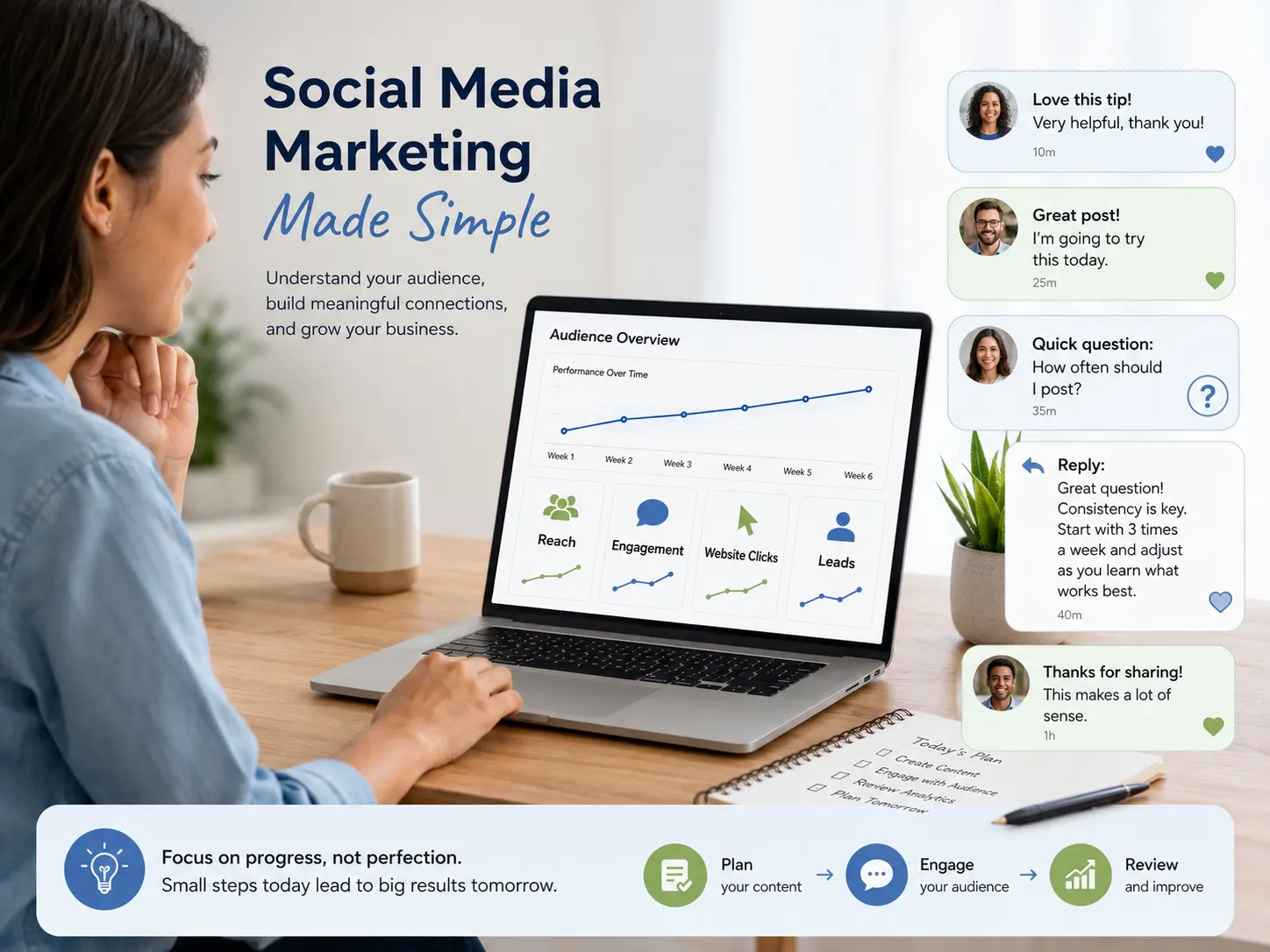
As your content efforts grow, tools can help streamline the process.
Useful categories include:
Content Scheduling Tools
These allow you to plan and publish content in advance.
Benefits include:
- Time savings
- Consistency
- Better organization
Graphic Design Tools
Visual content typically receives higher engagement.
Design tools help create:
- Social graphics
- Infographics
- Promotional images
Analytics Tools
Analytics help identify:
- Top-performing content
- Audience behaviour
- Growth opportunities
AI Content Tools
Many marketers now use AI tools to:
- Generate content ideas
- Create captions
- Draft posts
- Repurpose content
This can significantly reduce the time spent creating content.
Optional Training for Affiliate Marketing Beginners
Learning social media marketing from separate articles and videos can sometimes feel overwhelming. You may understand individual tactics but still be unsure how they fit into a complete affiliate marketing plan.
A structured training program can help by giving you a clearer order to follow, practical examples and ongoing guidance.
Affiliate disclosure: I may earn a commission if you purchase through the link below, at no additional cost to you.
ClickBank Profit Club
ClickBank Profit Club is an optional resource for beginners who want structured affiliate marketing training rather than trying to piece everything together alone.
The program may be worth exploring if you are looking for guidance on areas such as:
- Choosing and promoting affiliate offers
- Creating marketing content
- Building an audience
- Using email and follow-up systems
- Developing a more organised marketing routine
It is not required to follow the social media strategy in this guide, and no training program can guarantee traffic, sales or income. Before joining, review the current inclusions, conditions and any optional paid upgrades to decide whether the program suits your goals and budget.
Continue to focus on the fundamentals covered in this guide: help your audience, create useful content, post consistently and review your results.
The Future of Social Media Marketing
Social media continues to evolve.
However, the fundamentals remain surprisingly consistent.
Businesses that succeed tend to focus on:
- Building relationships
- Creating helpful content
- Understanding their audience
- Staying consistent
- Measuring results
Algorithms change.
Platforms rise and fall.
Human psychology remains largely the same.
People engage with content that helps them solve problems, achieve goals, or feel understood.

Frequently Asked Questions About Beginner Social Media Marketing
How do beginners start social media marketing?
Start by focusing on one or two social platforms that match your goals. Set clear objectives, share consistent and engaging content, and interact with your audience. Use analytics to track performance and refine your strategy over time.
Which social media platform is best for beginners?
The best platform is usually the one your target audience already uses.
Facebook may suit local businesses and community-based brands, while Instagram works well for visual content. LinkedIn can be useful for professional services and business-to-business marketing, while Pinterest and YouTube may provide longer-lasting traffic for educational content.
Instead of joining every platform, begin with one that matches your audience, content style and available time. Learn how it works before adding another.
How often should a small business post on social media?
A beginner could start by posting two or three times each week.
The ideal schedule depends on the platform, audience and type of content you create. However, maintaining a realistic schedule is more important than posting frequently for a short period and then disappearing.
Choose a schedule you can manage consistently, review your results and gradually adjust your posting frequency.
Do I need thousands of followers for social media marketing to work?
No. A smaller audience can still produce meaningful results when it includes the right people.
A business with a few hundred interested and engaged followers may receive more website visits, enquiries or sales than an account with thousands of people who rarely interact.
Focus on attracting relevant followers, answering their questions and creating content that helps them take the next step.
How long does social media marketing take to produce results?
Social media marketing usually takes time, particularly when you are relying on organic content rather than paid advertising.
You may begin receiving engagement and profile visits relatively quickly, but building trust, website traffic and consistent leads can take several months. Results depend on your niche, platform, content quality, posting consistency and how well you understand your audience.
Review your progress monthly instead of judging the strategy after only a few posts.
Do beginners need to pay for social media advertising?
No. Beginners can start with organic social media content and learn what their audience responds to before spending money on advertising.
Organic posts can help you test topics, messages and content formats without a large budget. Paid advertising may become useful later when you have a clear offer, a suitable landing page and evidence that your message connects with the right audience.
Avoid paying to promote content simply because an organic post received little engagement.
Final Thoughts
Beginner social media marketing doesn’t have to be complicated.
- Start with one platform.
- Focus on helping your audience.
- Create content consistently.
- Learn from your analytics.
- And most importantly, give your strategy enough time to work.
Many successful businesses started with zero followers and a simple commitment to show up consistently.
You don’t need to be an expert before you begin.
You need to begin before you become an expert.
Choose your platform, create your first piece of content, and take the next step today.
Continue Your Online Business Journey
Explore more resources to help you build and grow your online business.
Recommended Reading
New Here?
Start with the beginner roadmap and learn the fundamentals of affiliate marketing and online business.
Start HereReady For The Next Step?
Discover the complete system I use to build and grow an online business.
Join Profit Club