
The Complete Guide to Marketing Automation for Small Business: Affiliate Marketing Edition
1. Introduction: A New Era for Small Business Marketing
The digital marketplace is crowded, but today, small businesses have access to tools that once belonged only to big brands. Affiliate marketing, boosted by marketing automation for small business, allows entrepreneurs to build online income streams with minimal risk and real scalability. With the right approach and tools, even a lean operation can compete—and win—online.
This guide maps out how affiliate marketing works for small businesses, why automation is critical now, and each step needed to set up a streamlined, revenue-generating system.
Affiliate disclosure: This article may contain affiliate links. If you purchase through one of these links, I may earn a commission at no additional cost to you. I only recommend resources that I believe may be useful for beginners.
2. Understanding Affiliate Marketing for Small Business
Affiliate marketing remains a cornerstone of digital income strategies for small business owners. At its heart, this model is straightforward: businesses and marketers promote products or services offered by another company and earn a commission for each sale or lead generated through their unique affiliate links.
If you are still learning how affiliate marketing works, begin with our complete affiliate marketing for beginners guide. It explains how to choose a niche, find suitable programs, create helpful content and build trust before introducing automation.
For small business owners, this approach offers key advantages:
- No need for product development: Focus on marketing and relationships rather than manufacturing or inventory.
- Low risk, flexible scaling: Start small without upfront costs and expand as you see success.
- Diverse revenue streams: Promote multiple offers across various industries to avoid overdependence on one market.
Affiliate marketing lets small businesses focus on what they do best—connecting with their audiences and delivering value.
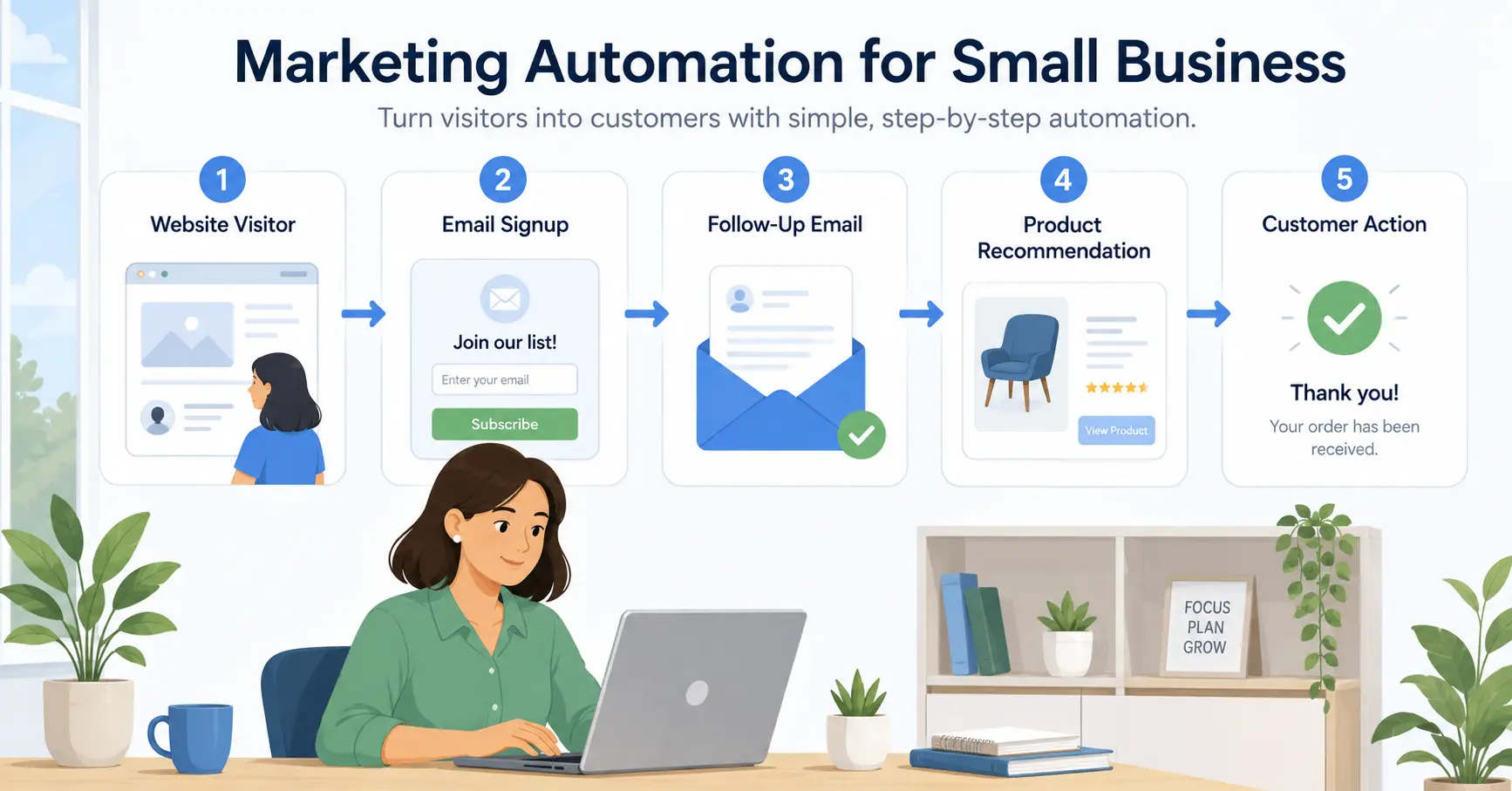
3. Why Marketing Automation Is a Game Changer
Modern small businesses operate on tight schedules and limited resources. This is where marketing automation truly shines.
Marketing automation for small business refers to using software and platforms to automate repetitive tasks—such as email marketing, social media posts, and lead nurturing—so you can engage leads and customers even when you’re not actively working.
Main benefits include:
- Productivity and time savings: Schedule campaigns and automate follow-ups.
- Nurturing leads at scale: Build trust with your audience over time without manual outreach.
- Improved tracking and optimization: Easily monitor what’s working and refine your approach.
When affiliate marketing and automation converge, small businesses can create efficient, almost hands-off funnels that drive results.
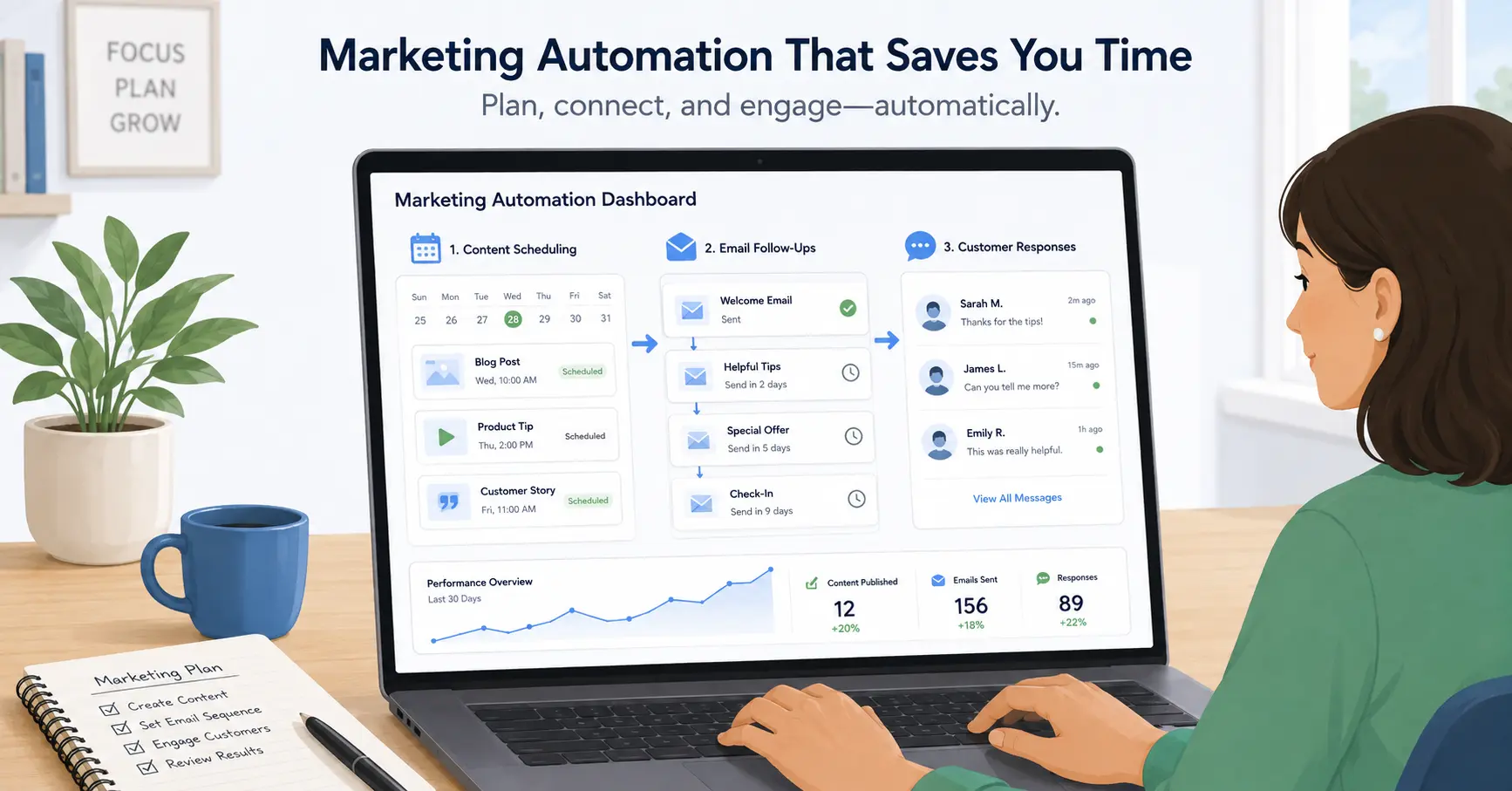
4. Step-by-Step Guide to Affiliate Marketing and Automation
a. Define Your Niche and Audience
Choosing the right niche and audience is the foundation for success. For small businesses:
- Identify areas of interest or expertise: Start where you already have credibility or passion.
- Research market demand: Tools like Google Trends, SEMrush, or Ubersuggest can highlight profitable keywords and trending topics.
- Evaluate affiliate program availability: Make sure there’s a good supply of reputable offers in your area.
Popular small business-friendly niches include health and wellness, personal finance, software and tech tools, digital education, and lifestyle products.
b. Join Relevant Affiliate Programs
After defining your niche, use these checks to choose an affiliate program that fits:
- Affiliate networks: Consider Amazon Associates, ShareASale, CJ Affiliate, Impact, ClickBank, and other established platforms.
- Direct brand partnerships: Many brands run their own affiliate programs outside networks—often with better terms.
- Check quality and relevance: Only promote products that solve problems for your audience and maintain your brand’s reputation.
Tip: Read reviews and test offers where possible before recommending them to your followers.
c. Set Up Your Online Presence
A professional, optimized web presence is essential—even for the smallest operation.
- Secure a domain: Choose a name that reflects your niche and is easy to remember/share.
- Use reliable hosting: Bluehost, SiteGround, or WP Engine are popular with small businesses.
- Build your site: WordPress makes it easy to create blogs and landing pages for affiliate campaigns.
- Create valuable content: Focus on helpful articles, actionable tips, reviews, and guides that naturally incorporate your affiliate links.
Your website is your home base for all online promotions. Keep it updated, secure, and SEO-friendly.
d. Build and Nurture Your Email List
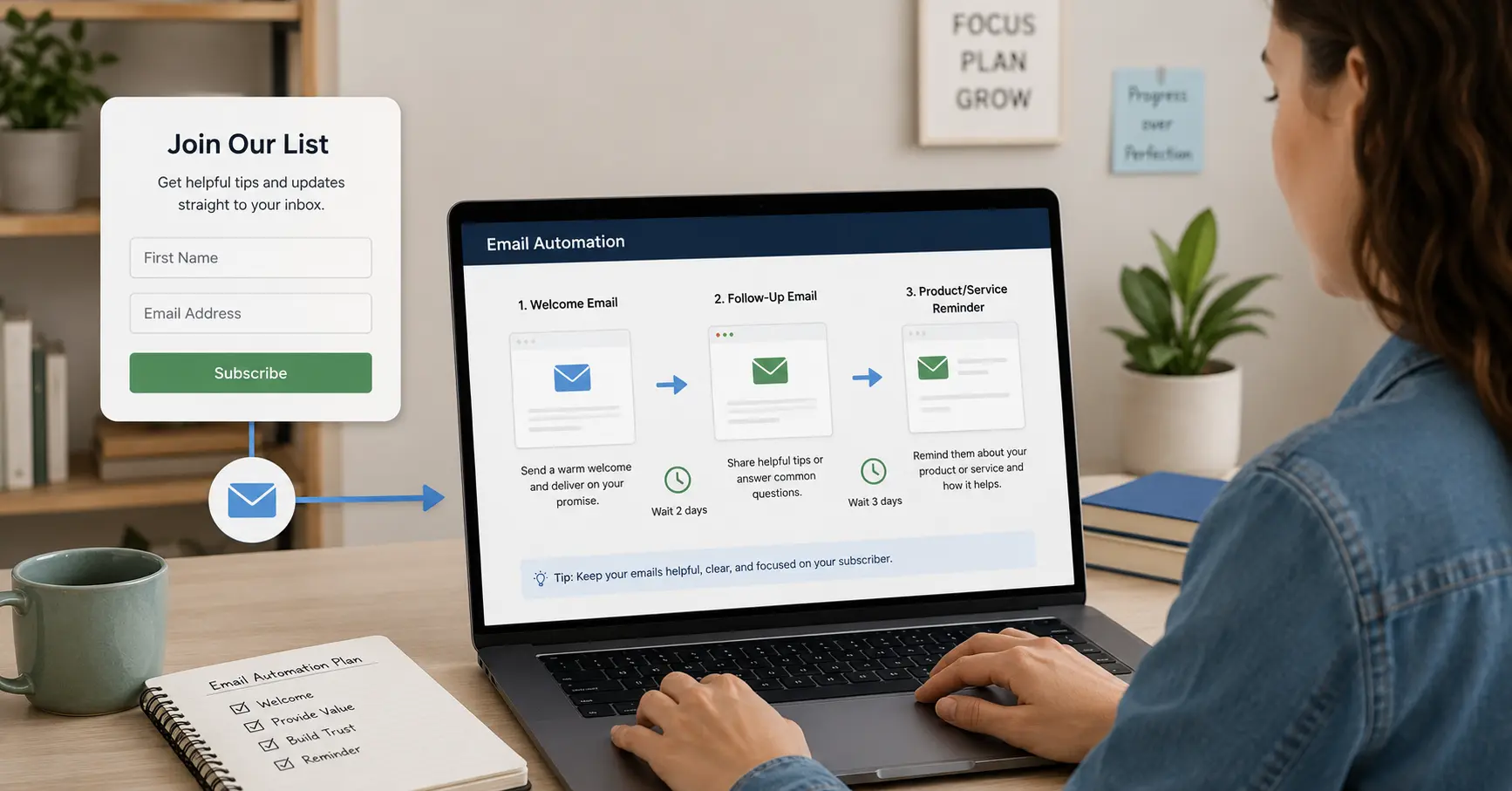
Email marketing remains the most effective channel for affiliate sales and lead nurturing:
- Offer a lead magnet: Create a free resource (eBook, checklist, video series) tailored to your niche in exchange for email signups.
- Automate follow-ups: Use marketing automation tools for small business like Mailchimp, ConvertKit, GetResponse, or ActiveCampaign to set up “drip” campaigns.
- Segment your audience: Send targeted content that matches subscribers’ interests and stage in the customer journey.
- Balance value and promotion: Prioritize helpful information with subtle, relevant affiliate recommendations.
How to do it:
- Create opt-in forms (on your site, landing pages, and social profiles).
- Set up automated email sequences (e.g., a welcome series followed by educational content and affiliate offers).
- Regularly clean your list to ensure high deliverability and engagement.
If you operate in Australia, review the ACMA guidance on avoiding spam before setting up automated promotional emails, as businesses must follow rules covering consent, sender identification and unsubscribe options.
e. Automate Your Sales Funnel
Automation enables you to run affiliate campaigns 24/7—even as a solo entrepreneur.
- Autoresponders and drip campaigns: Deliver pre-written messages to subscribers based on their behavior and interests.
- Link management: Use tools like Pretty Links or ThirstyAffiliates to organize and track affiliate URLs.
- Social automation: Schedule posts and monitor performance using Buffer, Hootsuite, or SocialBee.
- Retargeting: Implement Facebook or Google remarketing pixels to re-engage previous site visitors.
Automation brings consistency and scalability, freeing you to focus on strategy and growth. An automated webinar funnel can be another useful part of that system.
f. Drive Consistent Traffic
More traffic equals more affiliate revenue. Effective, modern methods for small businesses include:
- Search Engine Optimization (SEO): Optimize your content for keywords related to your offers and industry.
- Content marketing: Share tips, reviews, and case studies via your blog and guest posts in reputable online publications.
- Paid advertising: Run targeted ads on Google, Facebook, or Instagram to reach new audiences quickly.
- Influencer and partnership outreach: Collaborate with like-minded bloggers or social media creators for additional reach.
- Social media engagement: Actively participate in relevant groups and forums; don’t just schedule—join the conversation.
Consistency and experimentation are key as you learn which channels work best for you. For a beginner-friendly explanation of SEO, content marketing, social media, email and other traffic sources, read our complete Traffic and Growth guide.
5. Popular Marketing Automation Tools for Small Businesses
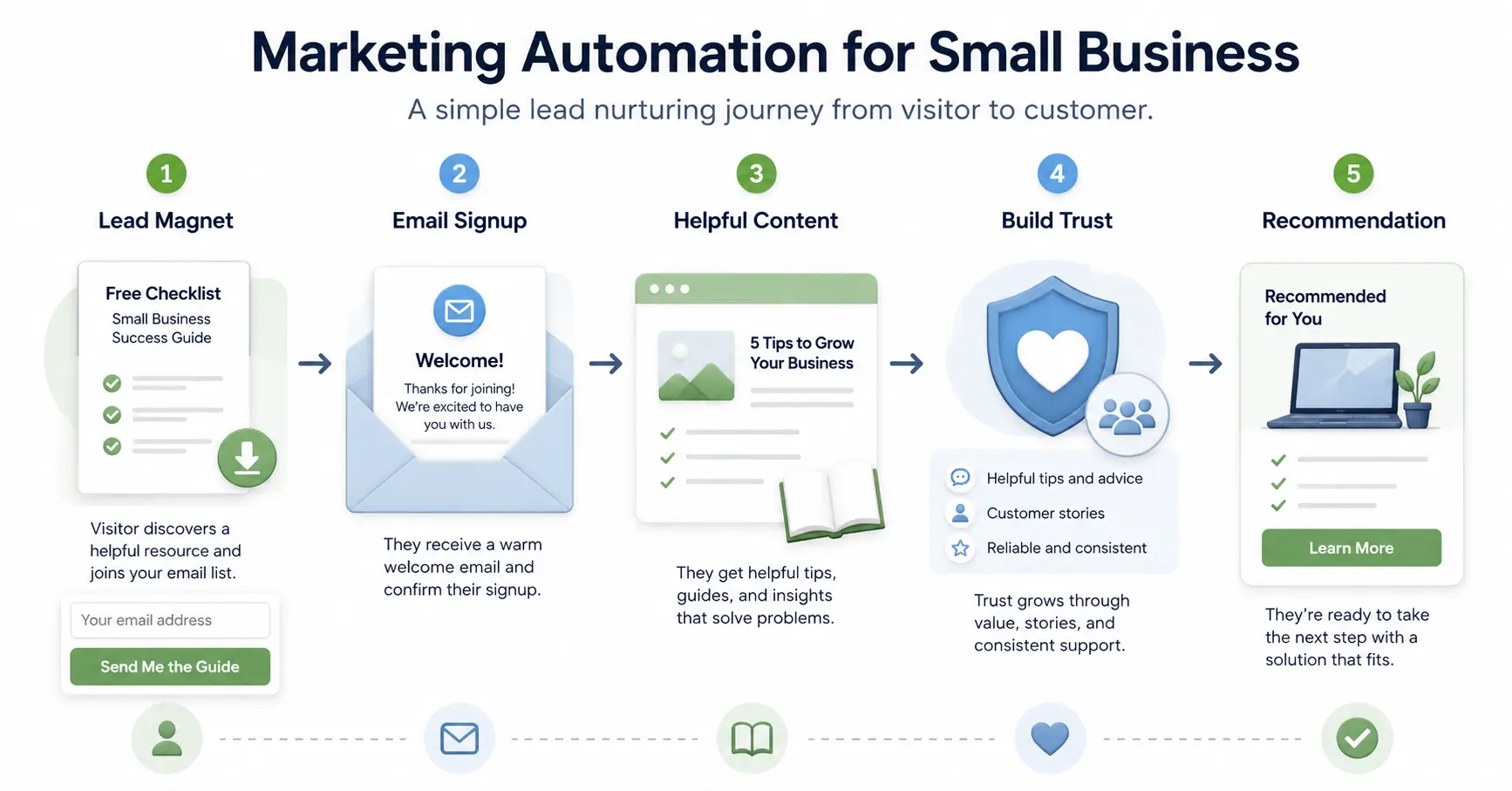
There’s a growing ecosystem of platforms built for small business marketing automation. Here are several widely adopted options:
- Email Marketing Automation: ConvertKit, Mailchimp, GetResponse, ActiveCampaign.
- Social Media Automation: Buffer, Hootsuite, SocialBee.
- Landing Page Builders: Leadpages, Clickfunnels, Elementor.
- Affiliate Link Management: Pretty Links, ThirstyAffiliates.
- CRM & Subscriber Management: HubSpot CRM, Zoho CRM.
Most tools offer free trials and affordable plans tailored for small business needs.
6. Done-For-You Solutions: When to Consider Them
Some vendors now offer “done-for-you” affiliate marketing systems designed for busy small businesses. These packages typically include:
- Turnkey websites preloaded with affiliate offers
- Automated email sequences
- Professional branding and copy
- Traffic-generation resources or templates
Pros:
- Save time and get started quickly
- Leverage expertise you may not have in-house
- Minimal setup required
Cons:
- Less control over branding and flexibility
- Ongoing costs or fees may apply
- May not suit all niches or audiences
Choose this path if you want to accelerate your launch or have limited capacity for tech setup, but always vet providers for relevance and credibility.

7. Common Questions About Marketing Automation and Affiliate Marketing
Can small businesses really compete with larger brands?
Yes. Automation tools and strong affiliate programs level the playing field, allowing small businesses to build targeted, loyal audiences and generate real results—even without big budgets.
How do I choose the right marketing automation tool?
Start by clarifying your main needs. Email marketing, social scheduling, CRM integration, and budget are key factors. Test a few platforms on trial before committing.
What’s the fastest way to grow my affiliate revenue?
Focus initially on a single channel that best matches your audience, such as SEO or email, and refine your strategy as you see results. Don’t overlook the power of personalization and ongoing engagement.
Is automation “set and forget”?
No system is truly maintenance-free. While automation handles repetitive tasks, periodic updates, A/B testing, and strategy tweaks maximize long-term success.
Consider A Done-For-You Business Model
If setting up a fully automated affiliate marketing business sounds daunting, there’s a done-for-you business model you can explore. Imagine having a system where everything is ready for you—a professionally designed website, an email follow-up series promoting top affiliate products, video shorts for easy promotion, and guest post opportunities for extra traffic.
This business model simplifies the entire process, allowing you to focus on growing your income while everything else is managed for you. To learn more about this done-for-you affiliate marketing opportunity and how it can help you build a profitable online business, click here to watch the free webinar and get started today.
8. Conclusion: Taking the Next Step Toward Scalable Online Revenue
Small business success in the digital age depends on smart systems, not endless hours. By pairing affiliate marketing with robust marketing automation for small business, entrepreneurs can create income streams that are flexible, scalable, and dynamic.
Affiliate marketing is one of the easiest ways to level the playing field, and with automation, it becomes a powerful tool for generating passive income. Get started today and take your first steps toward building a scalable online business.
Automation can make some affiliate marketing tasks easier, but it works best when the right foundations are already in place. For a complete overview of choosing a niche, finding suitable programs, creating helpful content and building trust, read our Affiliate Marketing for Beginners guide.
Whether you’re looking to diversify income, free up your time, or build a resilient online business, start by focusing on the basics outlined here. Experiment, adjust, and let automation handle the busywork—so you can focus on growth and results.
Continue Your Online Business Journey
Explore more resources to help you build and grow your online business.
Recommended Reading
New Here?
Start with the beginner roadmap and learn the fundamentals of affiliate marketing and online business.
Start HereReady For The Next Step?
Discover the complete system I use to build and grow an online business.
Join Profit Club