

Is Affiliate Marketing a Scam? What Beginners Should Know
If you have spent any time looking into affiliate marketing, it is easy to see why people become suspicious.
You may have seen large earnings screenshots, promises of “passive income,” expensive courses or claims that almost anyone can make money quickly with very little work. When those messages do not match reality, the natural question is: Is Affiliate Marketing a Scam?
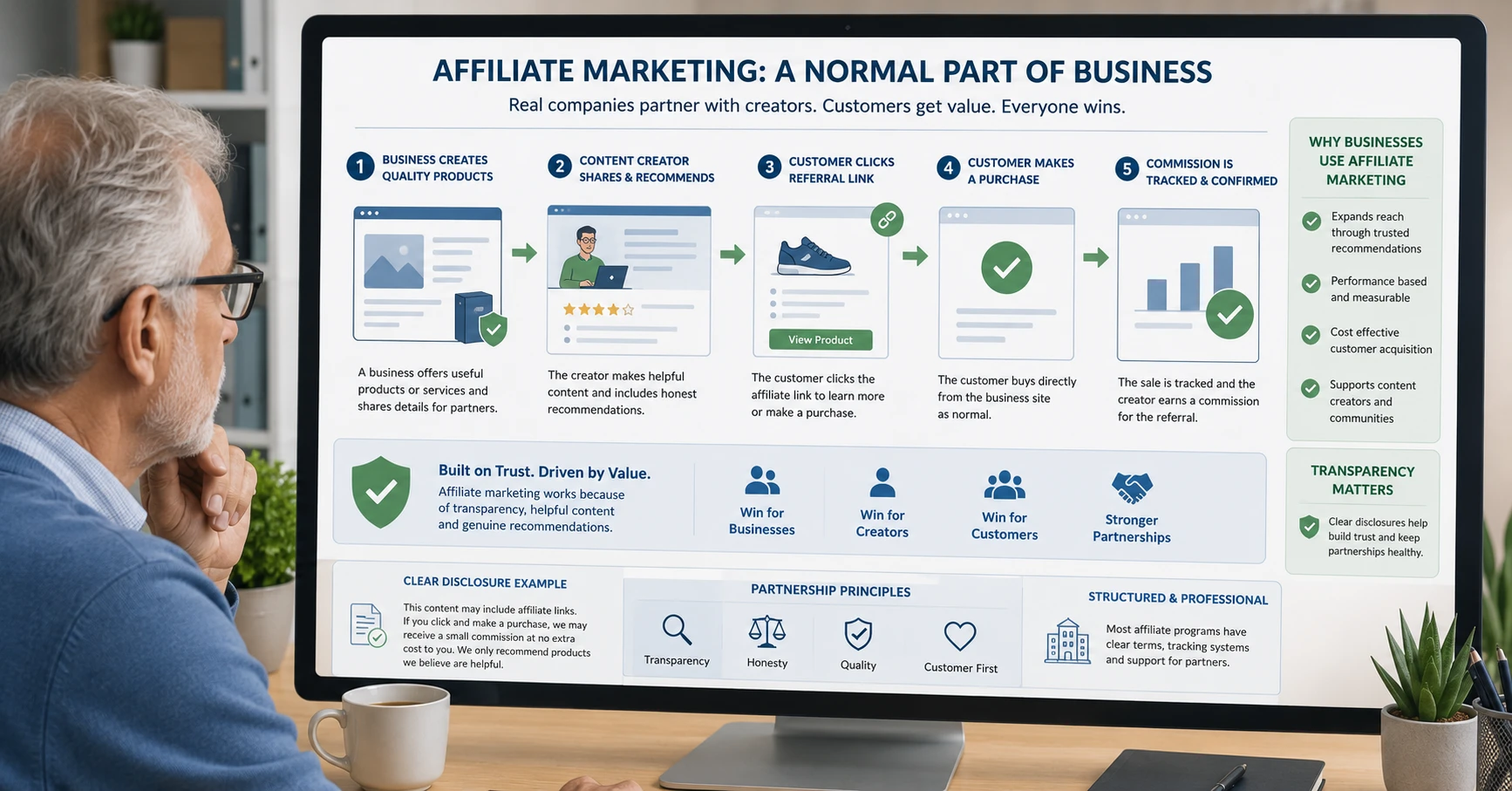
The short answer is no. Affiliate marketing itself is a business model in which a company pays a commission when an affiliate refers a customer who completes an agreed action, such as making a purchase.
That does not mean every affiliate program, product, course or person promoting affiliate marketing is trustworthy.
The important distinction is between the business model and the way some people use it. This guide explains that difference, the warning signs to watch for and how to assess an opportunity more carefully.
Affiliate disclosure: This article may contain affiliate links. If you purchase through one of these links, I may earn a commission at no additional cost to you. I only recommend products or services that I believe may be useful to readers.
Is Affiliate Marketing a Scam?
No. Affiliate marketing is not automatically a scam.
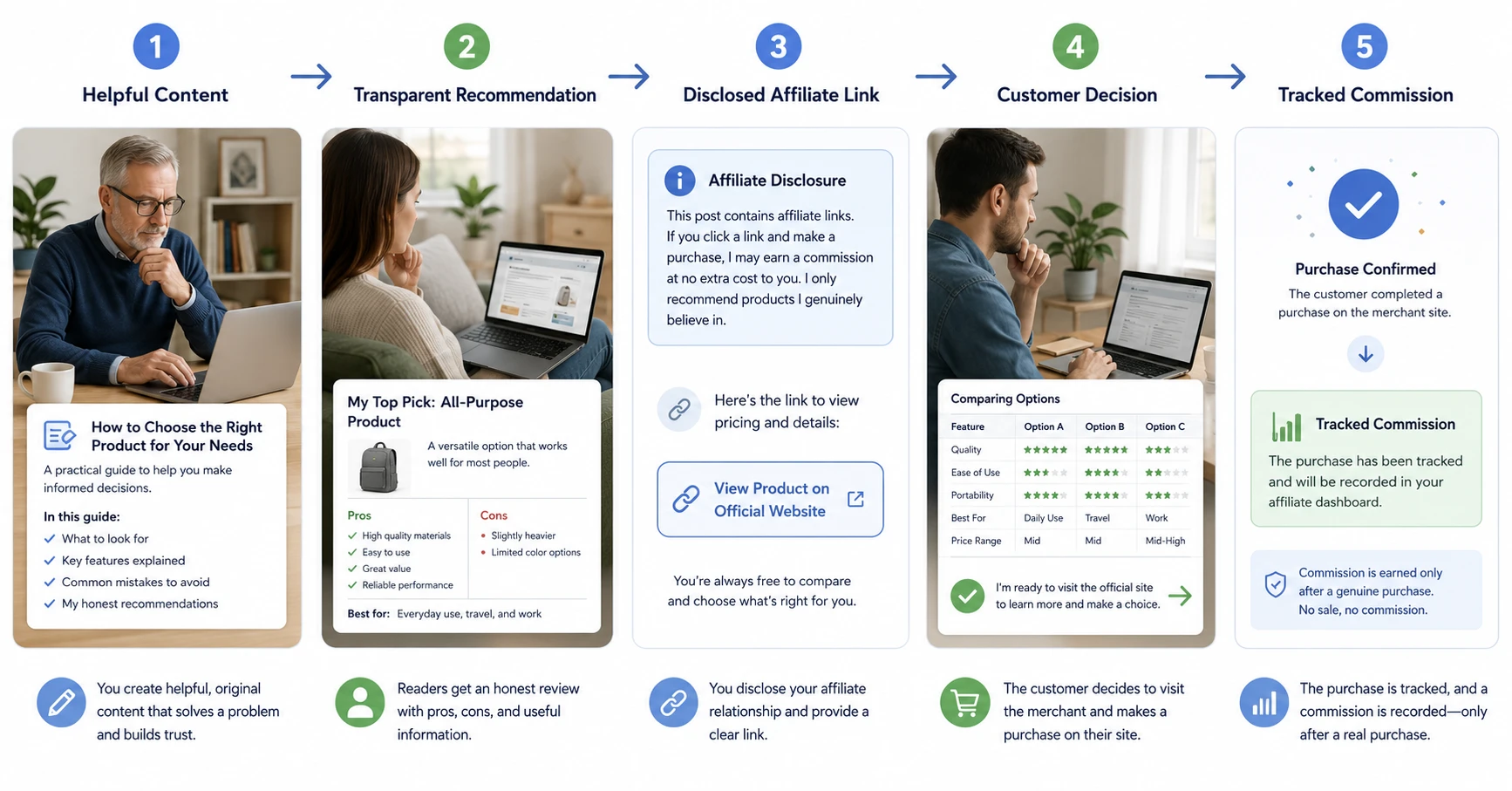
In simple terms, it is a referral arrangement. You recommend a product or service using a tracked link. If someone takes a qualifying action through that link, the company may pay you a commission.
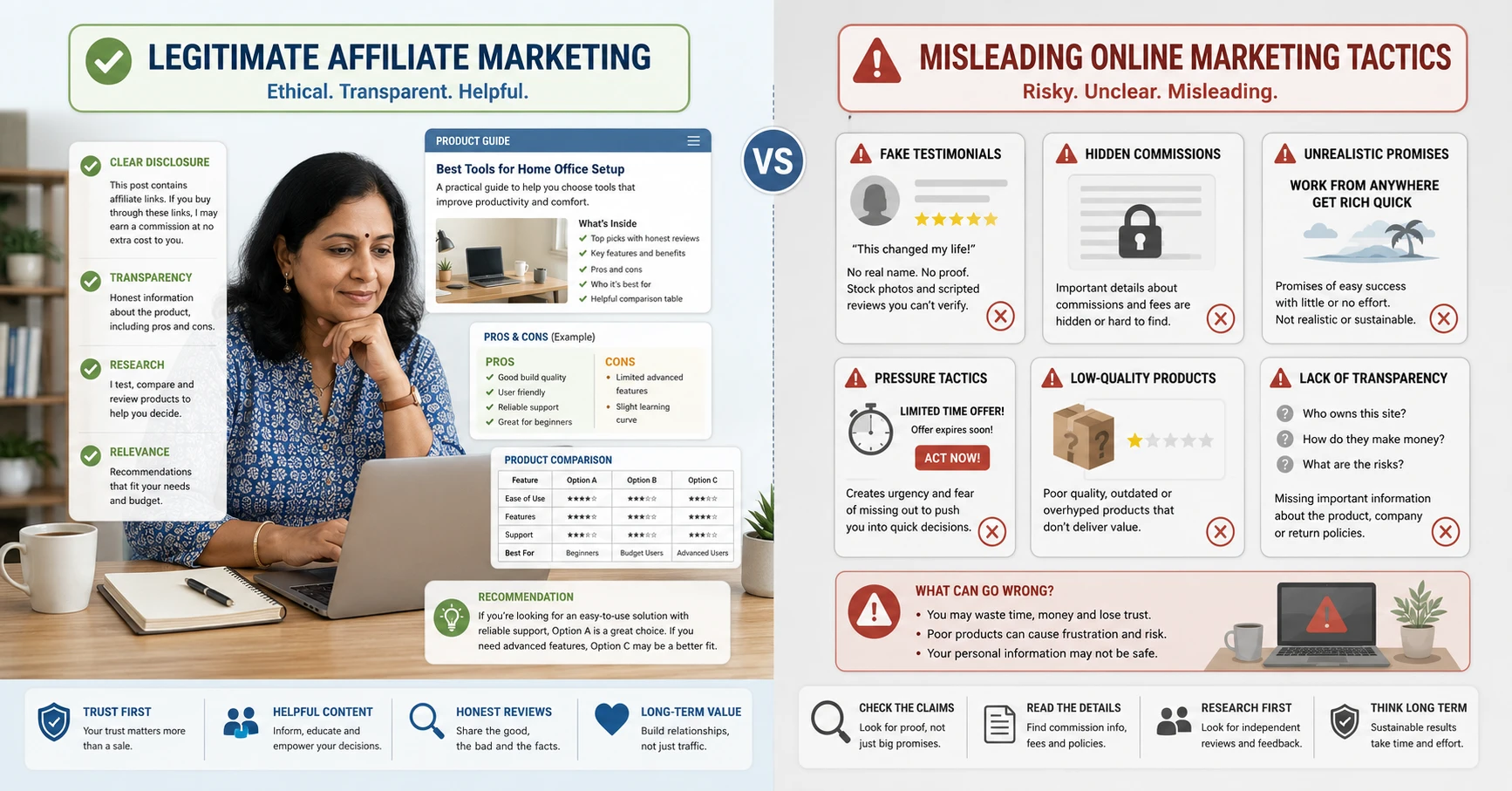
The problem starts when an offer relies on misleading claims, poor-quality products, hidden conditions, fake testimonials or unrealistic promises about how much money somebody is likely to make.
If you’re completely new to the model, my guide to what affiliate marketing is and how it works explains the basic process before you start thinking about programs, commissions and promotion.
If you’d prefer to hear this explained rather than read through every detail, the video below looks at the same question from a beginner’s point of view. It covers why affiliate marketing can sometimes look suspicious, what separates a genuine affiliate business from a questionable offer, and the warning signs worth watching for.
The video gives you the main picture, but there are still a few practical details worth looking at before you decide whether an affiliate offer is trustworthy. In the sections below, we’ll look more closely at common warning signs, how legitimate affiliate marketing differs from scams, and what you can check before joining a program.
Why Does Affiliate Marketing Sometimes Look Like a Scam?
Affiliate marketing often gets mixed together with the wider “make money online” industry. That is where much of the confusion comes from.
A genuine affiliate arrangement can sit beside advertisements promising large incomes with little work, expensive coaching programs, questionable products and people showing only their best results. To a beginner, all of that can look like the same thing.
It isn’t.
The U.S. Federal Trade Commission warns consumers to be cautious about business opportunities that promise guaranteed income, large returns or a “proven system.” Australia’s Scamwatch gives similar advice about offers promising high income for little effort or requiring people to pay money before they can earn.
So rather than asking only, “is affiliate marketing a scam?”, it helps to ask:
- What exactly am I being offered?
- How does the money flow?
- What evidence supports the claims?
Affiliate Marketing and Affiliate Marketing Scams Are Not the Same Thing
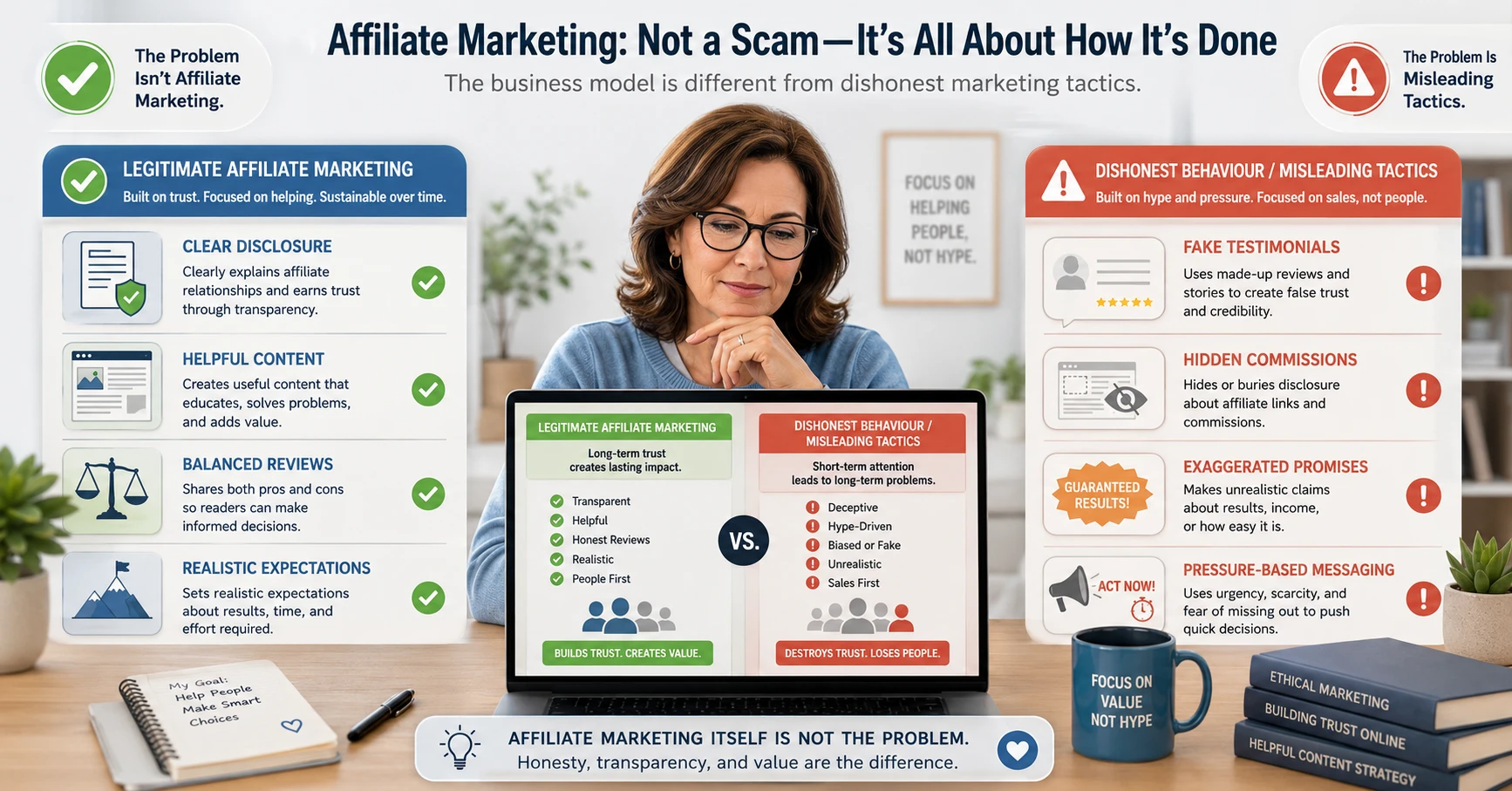
A legitimate affiliate program normally has a real product or service, clear program terms and a defined way of calculating commissions.
The affiliate creates useful content or recommendations that may introduce the product to the right audience. The business handles the sale and delivery, while the affiliate may receive a commission for an eligible referral.
An affiliate marketing scam works differently. The product may have little real value, the earnings claims may be exaggerated, or the main purpose may be to persuade people to pay money into the opportunity rather than serve genuine customers.
A commission does not make something dishonest by itself. What matters is whether the product is genuine, the claims are supportable and the customer is being treated fairly.
If your main concern is whether the business model itself is genuine, I’ve also looked more closely at whether affiliate marketing is legitimate and what beginners should realistically expect from it.
7 Affiliate Marketing Scam Warning Signs
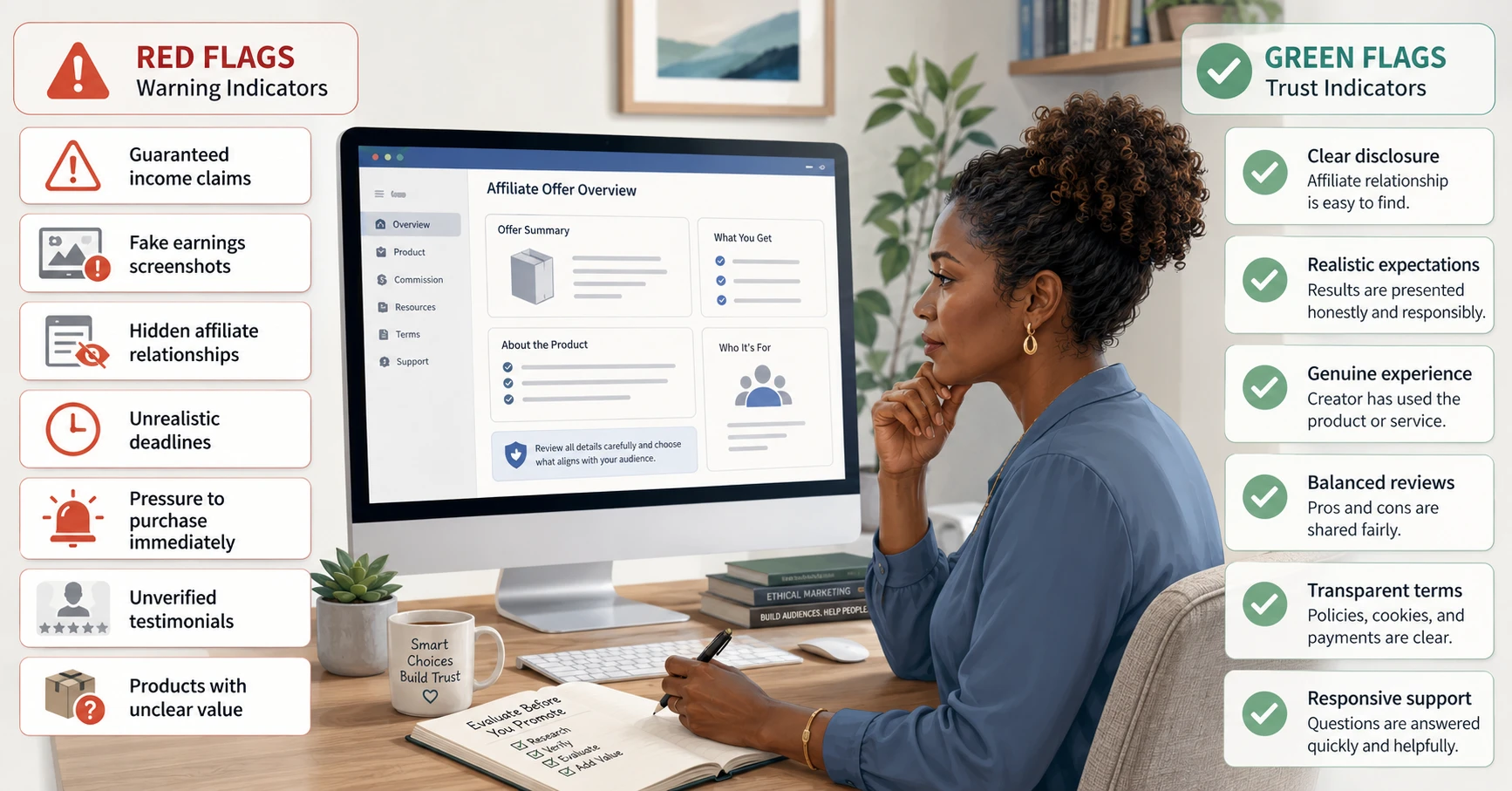
Before paying for a program, buying training or promoting an offer, look carefully at how it is presented.
- Guaranteed or unusually easy income. Be cautious when an offer suggests that earnings are guaranteed, quick or require very little work.
- Pressure to buy immediately. Artificial deadlines and repeated “last chance” messages should make you slow down rather than speed up.
- The product is difficult to understand. You should be able to explain what is being sold, who it helps and why a normal customer would buy it.
- Recruitment matters more than customers. If the main emphasis is bringing more paying participants into the system, investigate carefully.
- Testimonials do most of the selling. Success stories are not proof that you will receive the same result. Look for clear information about the product, costs and work involved.
- The real cost keeps increasing. A low entry price followed by repeated expensive upgrades can turn an inexpensive offer into a much larger commitment.
- Important details are vague or hidden. A trustworthy program should make it reasonably clear how commissions are earned, when they are paid and what promotional methods are allowed.
One warning sign does not automatically prove something is a scam. It does mean you should stop and investigate further.
Is Affiliate Marketing a Pyramid Scheme?
Legitimate affiliate marketing and a pyramid scheme are not the same thing.
With normal affiliate marketing, commissions are tied to customer purchases or other qualifying actions. You do not usually earn simply because another person becomes an affiliate.
Pyramid schemes place much more emphasis on recruiting new participants and the payments associated with that recruitment. In Australia, the ACCC says it is against the law to participate in, or persuade someone to participate in, a pyramid scheme, and identifies recruitment payments as a defining feature.
A simple question can help: where does the money ultimately come from?
If the business depends mainly on real customers buying a useful product or service, that is very different from a system that depends mainly on a continuing supply of new paying recruits.
So now the problem cannot be affiliate commissions alone. The real issue becomes dishonesty. This is why it matters to promote affiliate products responsibly rather than rely on hype. That changes the entire claim.
Can You Trust Affiliate Product Recommendations?
Sometimes, but you should not trust a recommendation simply because it appears in a blog post, video or social media account.
A better question is whether the person making the recommendation gives you enough information to make your own decision.
A useful affiliate review should explain what the product does, who it may suit, its advantages, its limitations and any important alternatives. It should also make the affiliate relationship clear.
The FTC says affiliate relationships should be disclosed clearly and conspicuously so readers understand that the person making the recommendation may receive a commission.
This is also part of building trust. My guide to building trust online looks more closely at transparency, useful content and giving readers enough information to make their own decisions.
How to Check an Affiliate Program Before You Join
Don’t choose an affiliate program only because the commission looks attractive.
Start with the company and the product. Is there a genuine business behind it? Can you understand what customers are buying? Are the refund, payment and affiliate terms reasonably clear?
Then look at the audience fit. A product can be legitimate and still be a poor choice for your readers. The better fit is a product that solves a real problem your audience already has.
You should also read the promotional rules. Some programs restrict paid advertising, email marketing, brand bidding or particular social platforms. Ignoring those rules can lead to lost commissions or a closed account.
If you’re comparing different programs, my guide to choosing an affiliate program goes through the main things worth checking before you apply or start promoting it.
What About Expensive Affiliate Marketing Courses?
A high price does not automatically make a course a scam, just as a low price does not automatically make it worthwhile.
The question is whether the training provides useful value for the cost and whether the claims are realistic.
Before buying, look at what is included, any additional costs, the refund terms and how much work the training expects you to do. Be particularly cautious when the marketing focuses heavily on income examples or pressures you to buy immediately.
Good training can give you a clearer sequence to follow. It cannot remove the need to learn, create content, attract visitors, test ideas and improve over time.
Does Failing at Affiliate Marketing Mean It Was a Scam?
No.
Someone can join a legitimate affiliate program, create content and still earn little or nothing. That may be disappointing, but a poor result does not by itself prove fraud.
Affiliate results depend on many things, including the audience, product, content quality, traffic, buying intent and commission terms. There are too many variables for honest results to be guaranteed.
If you’re starting out, it is more useful to concentrate on building skills and understanding what your audience needs than to set an income target based on somebody else’s results.
How to Approach Affiliate Marketing More Safely
Start small enough that you can learn without putting unnecessary money at risk.
Choose an audience you understand, create useful content around genuine questions and join only a small number of programs that fit that audience. Read the terms before promoting anything and disclose affiliate relationships clearly.
Research products before recommending them. If you haven’t personally used a product, don’t write as though you have. Explain what you can verify and make the limitations clear.
Once you’ve chosen something suitable to recommend, how to promote affiliate products responsibly explains how to do that without turning every piece of content into a sales pitch.
For the wider process, the Affiliate Marketing for Beginners guide brings together niche selection, programs, content, links, trust, traffic and gradual improvement in one place.
It is also worth understanding the common affiliate marketing mistakes beginners make, because many problems come from rushing into too many products, chasing commissions or expecting results too quickly.

Frequently Asked Questions About Affiliate Marketing Scams
Is affiliate marketing a scam for beginners?
No. Affiliate marketing itself is not a scam for beginners, but beginners can be targeted by misleading offers because they may not yet know what realistic results or normal program terms look like. Treat guaranteed earnings, pressure to buy quickly and vague products as reasons to investigate further. Start with a small budget, learn how genuine affiliate programs work and research any company before paying for training.
Are there real affiliate marketing scams?
Yes. Scammers can use the language of affiliate marketing, online business, commissions or work-from-home opportunities to make an offer appear legitimate. Warning signs include guaranteed income, large upfront payments, fake testimonials, unclear products and systems that depend heavily on recruiting new paying participants. The existence of these scams does not mean every affiliate program is fraudulent.
How can I tell if an affiliate program is trustworthy?
Look for a genuine company, a real product or service, understandable program terms, clear commission rules and contact information. Check how the business earns money and whether normal customers would buy the product without becoming affiliates themselves. Read independent information rather than relying only on the sales page. If important details are difficult to find, take more time before deciding.
Is affiliate marketing a pyramid scheme?
Legitimate affiliate marketing is not a pyramid scheme. In a normal affiliate arrangement, you earn a commission for referring customers who buy products or complete qualifying actions. A pyramid scheme relies heavily on payments connected with recruiting new participants. If an opportunity concentrates more on bringing paying members into the system than serving genuine customers, investigate it carefully.
Can affiliate marketing be done honestly?
Yes. Honest affiliate marketing starts with helping the audience rather than forcing a sale. Choose suitable products, explain both strengths and limitations, avoid unsupported claims and disclose when you may earn a commission. A commercial relationship and a useful recommendation can exist together when the reader is given enough information to make their own decision.
Final Thoughts
So, is affiliate marketing a scam?
The business model itself is simply a way for companies to pay for referrals or sales. The risk comes from people, products and offers that use misleading claims, unrealistic promises or dishonest tactics around that model.
You don’t need to become suspicious of every affiliate link, and you don’t need to accept every income claim at face value either.
Look at what is actually being sold, how the company makes money, what the terms say and whether the recommendation gives you enough information to decide for yourself.
If you’re considering affiliate marketing, continue with the Affiliate Marketing for Beginners guide, choose one sensible area to learn first and build from there. A genuine opportunity will still make sense after you’ve taken the time to look at it carefully.
Continue Your Online Business Journey
Understanding that affiliate marketing is a legitimate business model is only the beginning. The next step is learning how to use it responsibly as part of a broader online business strategy.
You do not need to master everything at once. Begin with the fundamentals, choose one clear direction and gradually build the skills needed to create helpful content, attract visitors and recommend suitable products.
New Here?
Visit the Start Here page for a simple beginner roadmap covering online business foundations, affiliate marketing, and traffic growth.
Ready to Learn Affiliate Marketing Without the Hype?
Affiliate marketing is not a shortcut, but the right guidance can help you avoid common mistakes and build your online business more responsibly.
Join the CB Profit Club for Free beginner-friendly training, practical guidance and a clearer step-by-step approach to affiliate marketing.
Continue Your Online Business Journey
Explore more resources to help you build and grow your online business.
Recommended Reading
New Here?
Start with the beginner roadmap and learn the fundamentals of affiliate marketing and online business.
Start HereReady For The Next Step?
Discover the complete system I use to build and grow an online business.
Join Profit Club

