

How to Start Affiliate Marketing for Beginners: 7 Simple Steps
Affiliate marketing can look confusing when you first discover it.
You may see people talking about links, commissions, traffic, niches, and email lists.
It can feel like you need advanced skills before you begin.
You don’t.
Learning how to start affiliate marketing becomes much easier when you follow a clear process.
You need a clear topic, a helpful platform, suitable products, and a simple plan.
Getting started with affiliate marketing becomes easier when you focus on one step at a time.
This guide explains how to start affiliate marketing from the beginning without chasing shortcuts or buying every tool you see.
To start affiliate marketing, choose a clear niche, understand your audience, select a content platform, join suitable affiliate programs, publish helpful content, add your links honestly, and build steady traffic. Compare these affiliate marketing niches for beginners before committing to a topic.
You do not need a large audience or expensive tools, but you do need patience and a clear plan.
Affiliate disclosure: This article may contain affiliate links. If you purchase through one of these links, I may earn a commission at no additional cost to you. I only recommend resources that I believe may be useful for beginners.
What Is Affiliate Marketing?
Start with this fuller explanation of what affiliate marketing is if the commission model is still unfamiliar.
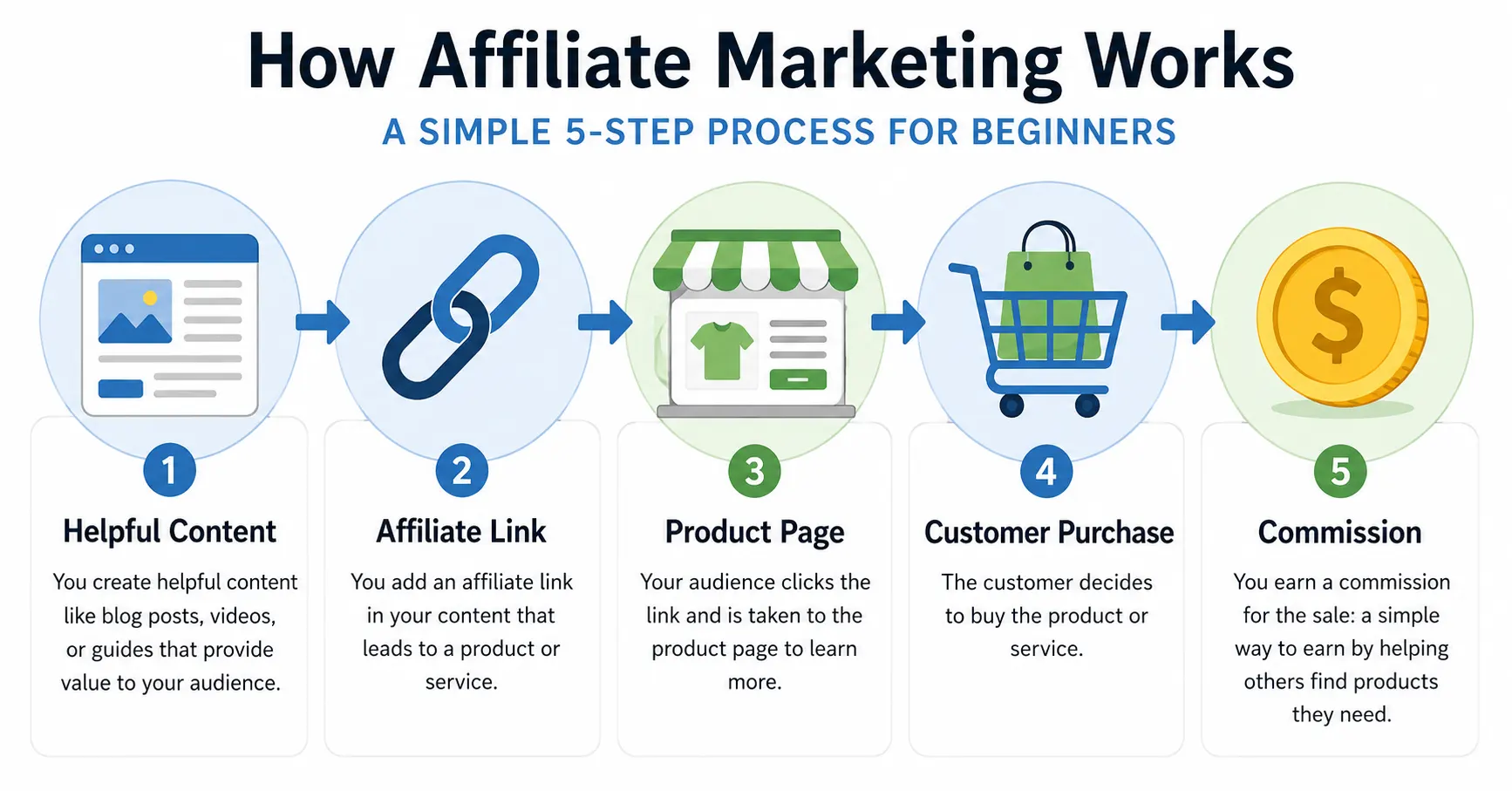
Affiliate marketing is a way to earn a commission by recommending another company’s product or service.
You join an affiliate program and receive a unique tracking link.
Then you place that link inside the helpful content.
When someone clicks your link and completes a qualifying purchase, the company may pay you a commission.
The basic process looks like this:
Helpful content → Affiliate link → Product page → Sale → Commission
Your main job is not pushing links.
Your job is helping people make better choices.
Affiliate marketing can appeal to people looking for a flexible way to build something around their existing commitments.
If you are retired or approaching retirement, you may also find these online income ideas for seniors helpful when comparing your options.
What Do You Need Before You Start?
You do not need a large budget, a marketing degree, or thousands of followers.
You need a few basic building blocks:
- A topic and audience
- A place to publish content
- A suitable affiliate program
- A simple way to attract visitors
- Time to research and create helpful content
- A method for tracking clicks and results
Many beginners also ask how to start affiliate marketing with no money. Free platforms can help you begin, but a simple website gives you more long-term control.
When learning how to start affiliate marketing, focus on building these basics before searching for advanced strategies.
You also need realistic expectations.
Affiliate marketing is simple to understand, but it takes work to build.
- Your first articles may receive little traffic.
- Your first recommendations may not produce sales.
That does not mean the model has failed.
It means you are still gathering information.
- Each article teaches you more about your audience.
- Each click shows which topics attract interest.
- Each conversion shows which problems people are ready to solve.
Think of the early stage as building a useful library.
The stronger that library becomes, the more chances people have to discover your content and follow your recommendations.
If you would like to see how another beginner approached this decision, I explain why I chose affiliate marketing and the simple business model I decided to follow.
Can You Start Affiliate Marketing With No Money?
You can start affiliate marketing without paying for expensive software or training.
Free publishing platforms, social media, video platforms, and email tools can help you begin.
You can also join many affiliate programs without paying an application fee.
However, free platforms give you less control.
A basic domain name and website can provide a more stable home for your content.
Your website can also grow into a long-term business asset.
Start with the tools you can afford. Upgrade only when a paid tool solves a clear problem or saves you valuable time.
If you are wondering, “How can I start affiliate marketing as a beginner?”, begin by choosing a clear topic and audience.
Step 1: Choose a Clear Topic
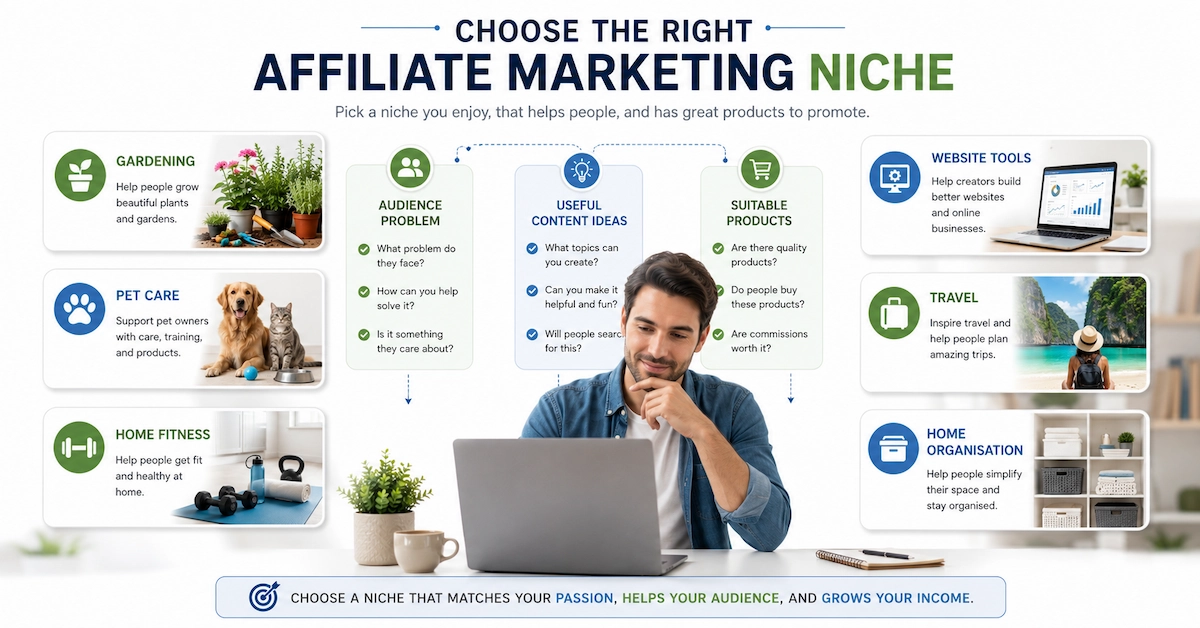
Start with one topic you can discuss for months or years.
This topic is often called your niche. It helps you attract a specific audience and choose relevant products.
Good beginner niches solve clear problems.
Examples include:
- Home fitness
- Pet care
- Gardening
- Budget travel
- Website building
- Home organisation
- Online business tools
Avoid choosing a niche only because it appears profitable.
You will need to research products, answer questions, and create useful content regularly.
Ask yourself:
- What problems do people have in this topic?
- Can I create at least 30 helpful content ideas?
- Are there products or services people already buy?
- Can I explain the topic in simple language?
A focused niche makes every later step easier.
Step 2: Understand the People You Want to Help
You do not need a huge audience.
You need to understand a specific group of people.
Think about what your readers want, what they fear, and what stops them from acting.
For example, a beginner building a website may worry about cost, technical setup, and choosing the wrong hosting plan.
Your content can explain those choices without making the reader feel foolish or lost.
- Write down five common questions your audience asks.
- Then turn each question into an article, video, email, or social post.
This approach keeps your content useful. It also stops you from promoting random products that do not match your audience.
Step 3: Choose Your Main Content Platform
You need somewhere to publish useful content and place your affiliate links.
A website is a strong long-term choice and an asset.
You can start an affiliate marketing website with a domain name, basic hosting, and a simple WordPress setup.
It gives you control over your content and lets search engines send visitors to your articles.
You can also begin with:
- YouTube
- An email newsletter
- A social media platform
However, social platforms can change their rules or reduce your reach.
A practical beginner setup includes:
- A simple WordPress website
- One useful article each week
- One email signup form
- One traffic channel supporting the website
Facebook can be a suitable platform for affiliates who want to publish helpful posts, participate in Groups and build a community. Read this Facebook affiliate marketing guide for a practical platform-specific strategy.
Do not try to master every platform at once.
Choose one main platform and build it steadily.
Step 4: Find Suitable Affiliate Programs
Once you understand your topic and audience, look for products that solve real problems.
You can find affiliate marketing programs for beginners through individual company websites, affiliate networks, software businesses, course platforms, and major retailers.
These arrangements are not all managed in the same way. Read what an affiliate network is to understand the difference between joining a network and applying directly to one company.
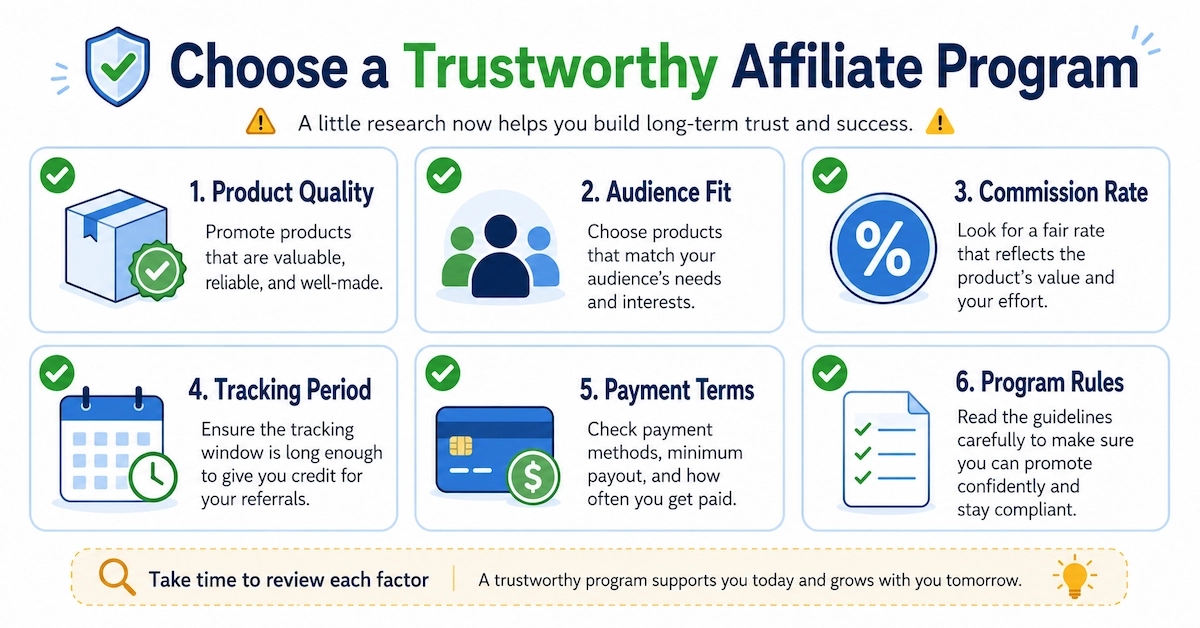
One of the best affiliate marketing tips for beginners is to check the program carefully before applying.
Before joining a program, check:
- The product’s quality and reputation
- Whether it suits your audience
- The commission rate
- The tracking period
- The payment method
- The minimum payout
- The program’s rules
- Whether the company provides useful support
Do not choose a product only because it pays a high commission.
A smaller commission from a trusted product can be better than a large commission from something your readers do not need.
It also helps to understand how different payment structures work. This guide to affiliate commission explains percentage, fixed, recurring, tiered and other common models in simple terms.
Start with one to three programs.
Learn how each program works before adding more.
Before placing your first link, it helps to understand what affiliate links are and how referral tracking works.
Step 5: Create Content That Helps Before It Sells
One of the most important parts of learning how to start affiliate marketing is creating content that helps people before trying to sell anything.
Your articles should answer real questions and help readers complete a task.
Google also recommends creating helpful, reliable, people-first content that leaves readers feeling they have learned enough to move closer to achieving their goal.
The affiliate recommendation should support that task.
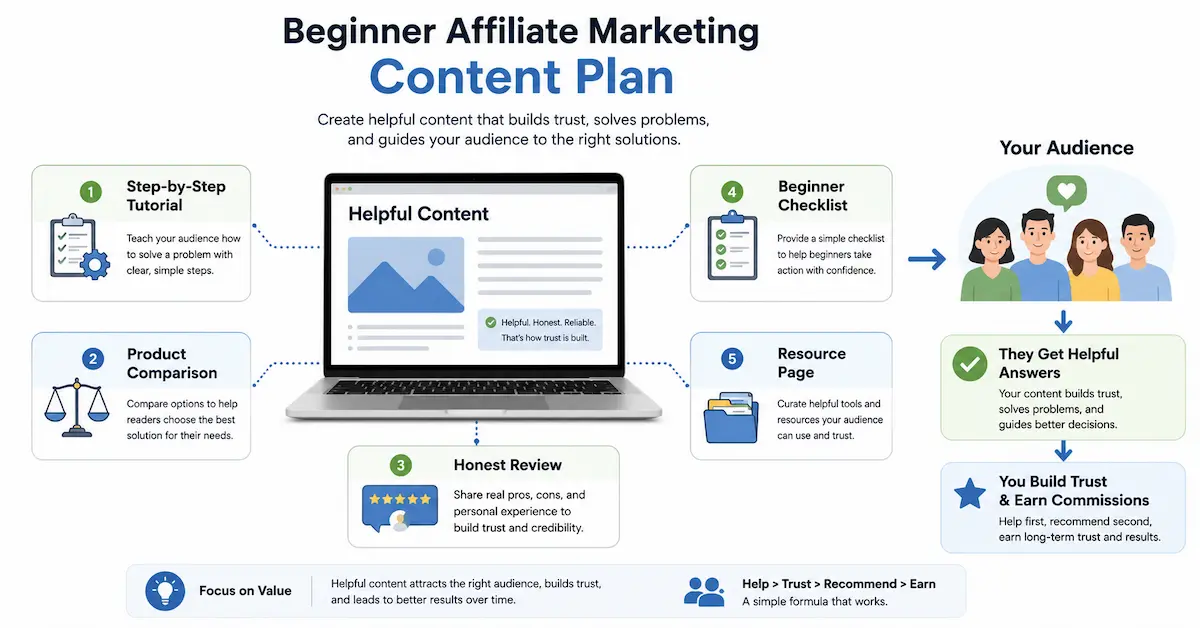
Useful affiliate content includes:
- Step-by-step tutorials
- Product comparisons
- Honest reviews
- Beginner checklists
- Best-tools articles
- Mistakes-to-avoid articles
- Case studies
- Resource pages
Imagine that you promote an email marketing tool.
A weak article says:
“This tool is amazing. Click here to buy it.”
A helpful article explains how to start an email list.
It covers the features beginners need, what the tool costs, where it may fall short, and who should consider it.
Readers can tell when content exists only to make a sale.
Give them enough information to make their own decision.
That builds trust and improves the quality of your recommendations.
Step 6: Add Affiliate Links Clearly and Honestly
Place affiliate links where they help the reader take the next step.
A link may appear after you explain a product, inside a comparison table, or near a clear call to action.
Avoid filling every paragraph with links.
You should also include a clear affiliate disclosure.
Tell readers that you may earn a commission when they buy through your links.
Keep the disclosure easy to notice and easy to understand.
Do not hide it at the bottom of a long page.
Follow the rules of each affiliate program and the disclosure requirements that apply in your country.
For ready-to-adapt wording, see these affiliate disclosure examples and placement tips for beginners.
Honesty protects your audience and strengthens your credibility.
Before promoting your first offer, it helps to understand why affiliate marketing is sometimes called a scam and which warning signs can damage trust. This 17-question affiliate marketing guide explains what a legitimate, transparent approach should look like.
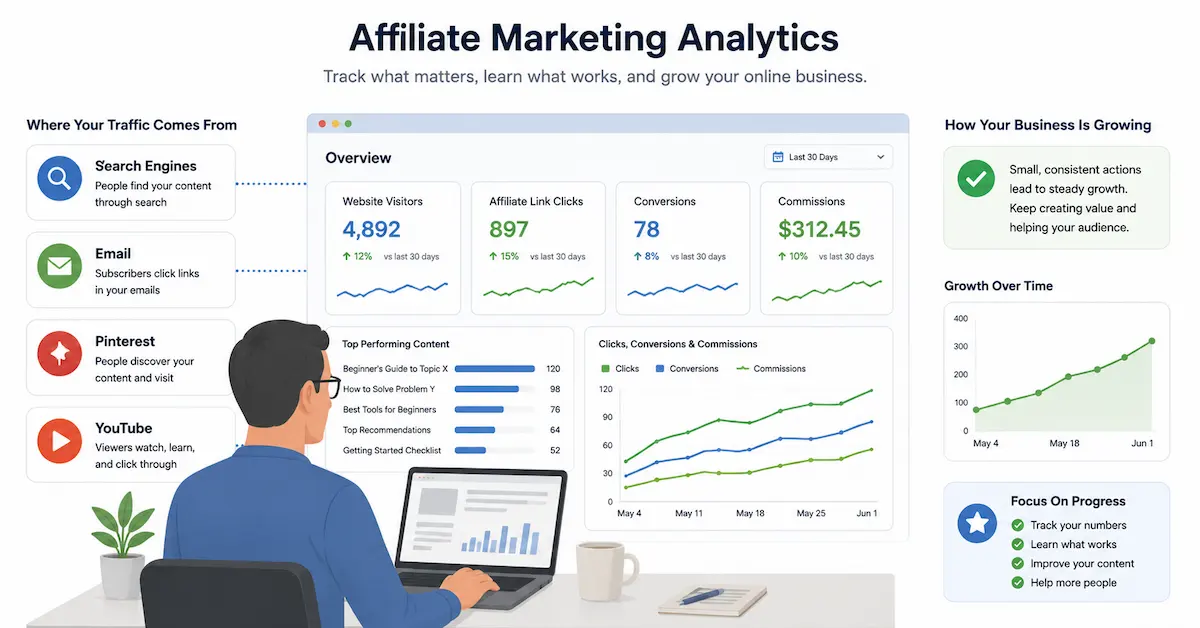
Step 7: Build Traffic and Track Your Results
Affiliate links cannot earn commissions when nobody sees them.
Choose one traffic method that matches your skills and platform.
- Search engine traffic works well for detailed articles.
- Pinterest can support visual topics.
- YouTube suits demonstrations and reviews.
- Email helps you build a direct relationship with readers.
Start with one method and learn it properly.
Track a few simple numbers:
- Visitors to each article
- Affiliate link clicks
- Click-through rate
- Sales or leads
- Conversion rate
- Earnings by article
- Earnings by affiliate program
Do not judge your progress after one week.
Your first goal is not a large income.
Your first goal is proving that your content can attract the right visitor and generate a useful action.
You now understand how to start affiliate marketing using a simple seven-step process.
The next stage is turning those steps into a manageable action plan.
You do not need a complicated setup to start an affiliate marketing business.
You need a useful platform, focused content, relevant offers, and steady traffic.
Once you have content, traffic and a basic email follow-up process in place, you can begin simplifying repetitive work. This guide explains how affiliate marketing and automation can work together as your business develops.
A Simple 90-Day Beginner Plan
During the first month, choose your niche, set up your platform, and research 20 content ideas.
During the second month, publish four to eight strong pieces of content.
Join one or two suitable affiliate programs.
During the third month, improve your articles, add internal links, build one traffic channel, and review which pages receive clicks.
This plan will not guarantee quick income.
It will give you a real foundation.
Common Affiliate Marketing Mistakes
Use this checklist of affiliate marketing mistakes beginners should avoid before expanding to more programs or traffic channels.
Many beginners join too many programs and promote too many unrelated products.
Others copy product descriptions, publish thin reviews, or expect sales without building traffic.
Avoid these common mistakes:
- Choosing a niche that is too broad
- Buying tools before you need them
- Promoting products you do not understand
- Hiding affiliate disclosures
- Writing only sales-focused content
- Ignoring search intent
- Giving up before content gains traction
Simple work done consistently beats a complicated plan you cannot maintain.
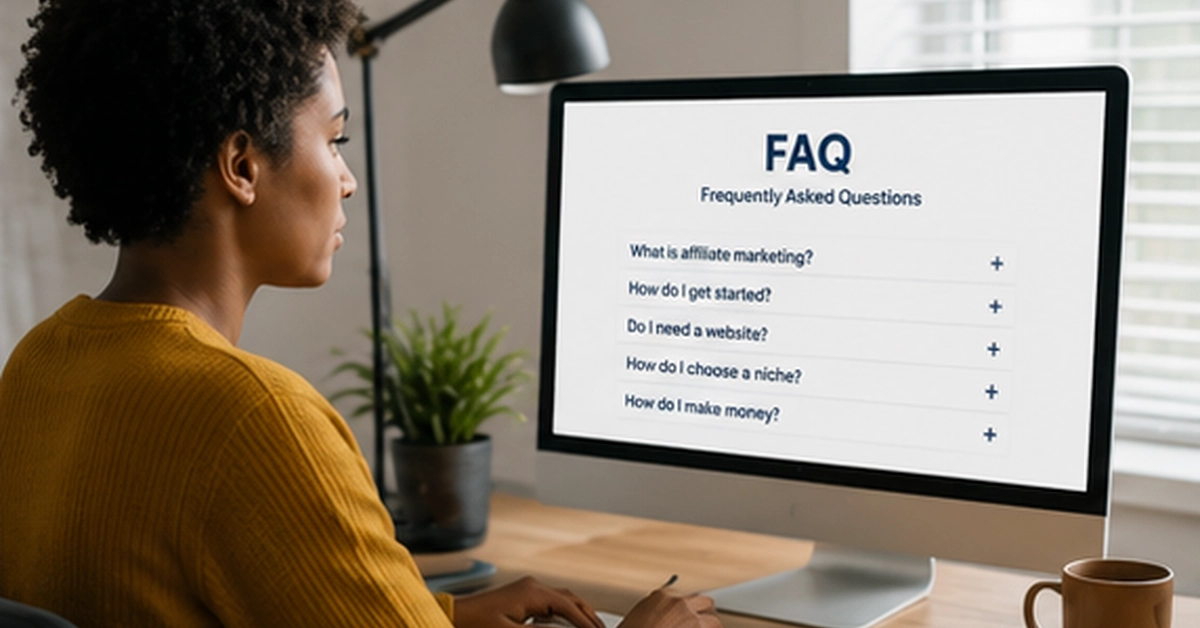
Frequently Asked Questions
How do I start affiliate marketing as a complete beginner?
Choose one clear topic and one group of people to help.
Set up a simple content platform, research suitable products, and join one or two trusted programs.
Publish useful content before concentrating on sales. Then choose one traffic method and track your clicks.
Can I start affiliate marketing with no money?
Yes, you can begin with free publishing and social platforms.
However, a domain name, website hosting, and an email tool can give you more control.
Start with the smallest setup you can manage. Spend money only when a tool solves a real problem.
Do I need a website for affiliate marketing?
No. Some people use YouTube, Pinterest, email, or social media.
A website is still useful because you control the content and can attract search traffic over time.
It also gives your business a central home.
How many affiliate programs should a beginner join?
One to three programs are enough at the start.
This lets you learn the rules, create focused content, and track results properly.
Joining many programs too early often leads to scattered content and weak recommendations.
How long does affiliate marketing take to work?
There is no fixed timeline.
Results depend on your niche, content quality, traffic method, competition, and consistency.
Some people earn an early commission. Others need many months before their traffic and content begin producing steady results.
Can beginners make money with affiliate marketing?
Yes, but income is not guaranteed.
Beginners improve their chances by choosing a clear audience, creating useful content, recommending suitable products, and tracking what works.
Treat affiliate marketing as a real content business, not a quick-money system.
Want to see how affiliate marketing works?
A good training program can help you understand products, traffic, content, and commissions in a more structured way.
See the full details for CB Profit Club here
Final Thoughts
Learning how to start affiliate marketing becomes easier when you follow the right order.
- Choose a topic.
- Understand your audience.
- Create helpful content.
- Recommend suitable products.
- Disclose your links.
- Build traffic.
- Track your results.
You do not need to know everything before you begin.
You need one useful next step and the patience to keep improving.
Ready to Build Your Affiliate Marketing Foundation?
Do not wait until every detail feels perfect.
Choose one topic. Write down five audience questions. Publish your first helpful article.
Then improve the process as you learn.
For the complete beginner framework, read our Affiliate Marketing for Beginners guide.
It explains how affiliate marketing works, why trust affects your results, and how all the supporting steps fit together.
Continue Your Online Business Journey
Explore more resources to help you build and grow your online business.
Recommended Reading
New Here?
Start with the beginner roadmap and learn the fundamentals of affiliate marketing and online business.
Start HereReady For The Next Step?
Discover the complete system I use to build and grow an online business.
Join Profit Club